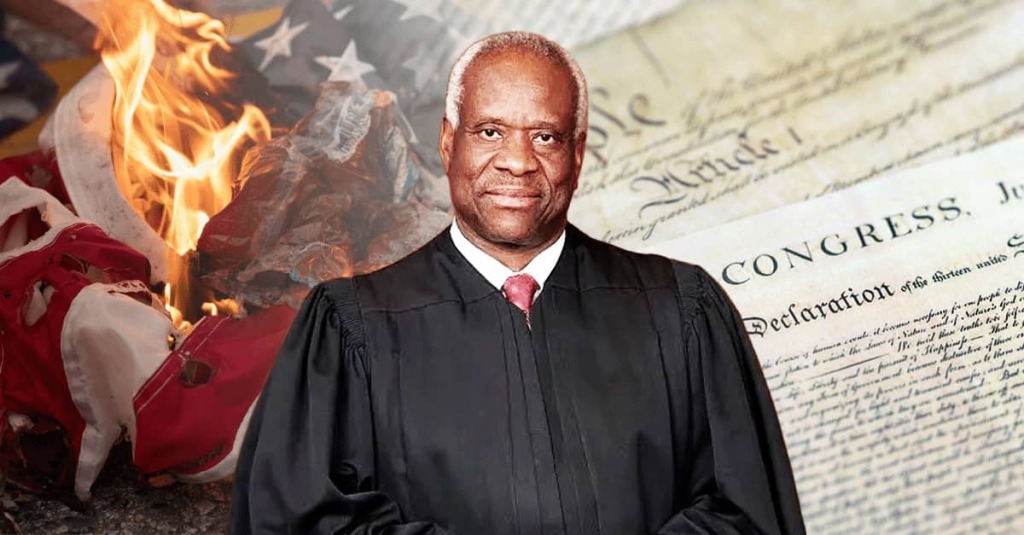
After years of federal pressure that sidelined Christian foster families, the Trump administration has reversed course, restoring religious liberty and opening the door for more families to care for vulnerable children.
The collision between religious liberty and federal policy is no longer confined to courtrooms. It is unfolding in the daily lives of America’s most vulnerable children. During the Biden era, a new troubling pattern emerged: Christian families were pushed out of foster care and adoption because they refused to abandon their biblical convictions.
At the center of this conflict was a federal rule that pressured states to exclude Christian families unwilling to affirm gender ideology. While many progressive states embraced the policy, other states resisted that overreach, including Texas, which sued over the policy.
Health and Human Services Secretary Robert F. Kennedy Jr. addressed the issue during a recent congressional testimony. “President Trump and First Lady Trump’s vision for foster care is one family for every one child. Currently, there are two children for every available foster family because the Biden administration was excluding an entire class of foster families due to their religious beliefs. This is unacceptable, and we are changing that,” Kennedy said.
Texas prevailed in its lawsuit in 2025, as U.S. District Judge Jeremy Kernodle rejected the Biden administration claim that “safe and proper care” requires so-called gender-affirming practices for children. “Even today it is very much disputed that the ‘safe and proper care’ of a child would include affirming the child’s ‘gender identity’ when it’s inconsistent with the child’s biological sex,” Kernodle wrote. He also noted that the “new and experimental nature” of such treatments shows they were never part of the law’s original meaning.
This ruling did more than clarify legal boundaries. It exposed a deeper problem. When government excludes Christian families, it does not create fairness or “neutrality.” It creates a system that fails the children it claims to protect.
The foster care system is already under strain. There are not enough families to take in children who have been removed from unstable or abusive homes.
According to national data analyzed by the Christian Alliance for Orphans (CAF), hundreds of thousands of children are in foster care at any given time, and many wait months or even years for permanent placement. Caseworkers are overwhelmed, agencies are understaffed, and the need for stable homes continues to exceed supply.
When Christian families are driven out, the crisis only deepens. These families are not peripheral. They have always been at the heart of foster care in America. Time and again, Christian homes have welcomed sibling groups, teenagers, and children with special needs when no one else would. Their faith calls them to serve, and they have answered that call with open arms.
Remove Christian families from that equation, and systemic strain becomes a crisis. When there aren’t enough families, the system doesn’t pause and wait for the right placement. Children are moved to whatever bed happens to be open, whether it serves them well or not. In many cases, that means group homes, where younger kids are housed with older teens carrying deep trauma, addiction struggles, or serious behavioral issues.
In other cases, children end up sleeping in offices or hospitals. They rest on cots and keep their few belongings in trash bags. There is no steady caregiver and no sense of home.
The government is saying it is better for a child to sleep under harsh lights in an office, surrounded by strangers, than to be welcomed into a loving Christian home.
That is not compassion. That is ideology taking the place of common sense and decency.
States like Oregon, Massachusetts, and Vermont implemented similar policies under the Biden administration, only to see them challenged in court. In each case, the outcome pointed in the same direction. The government cannot condition foster care participation on the abandonment of sincerely held religious beliefs.
The principle is clear. The government can set standards in foster care to make sure children are safe and caregivers are capable, but it cannot screen out families because of their beliefs. Once it starts drawing those lines, it steps beyond constitutional limits and undermines the system it is supposed to support.
Scripture speaks directly to this responsibility. “Religion that is pure and undefiled before God… is to visit orphans and widows in their affliction” (James 1:27). Christians have long taken these teachings seriously, opening their homes and stepping into difficult situations at personal sacrifice.
For Christian families, participating in foster care and adoption are acts of obedience. These families step into brokenness to offer hope, stability, and the healing that only faith can bring.
Forcing these families to choose between their abandoning their faith and serving children is a betrayal of both justice and common sense.
Foster care succeeds when it welcomes every qualified family, not when it excludes those who refuse to bow to political ideology. True diversity includes families of faith serving alongside others, united by a commitment to care for children. Pushing out Christian families does not make the system stronger. It makes it weaker.
Children thrive in families, not institutions. In a home, they find love and the foundation they need to succeed. But when children are left in group homes or bounced between placements, they face far greater risks, including homelessness, addiction, and even prison.
These are not just statistics. They are real consequences that shape lives for years to come.
There is also a constitutional truth at stake. The First Amendment protects the free exercise of religion. When government demands that families abandon their faith to serve, it crosses a line that no free nation should ever cross.
Religious liberty is not secondary. It is a cornerstone of American life. The Constitution does not ask citizens to set aside their faith to serve others. It protects their right to live out their beliefs, especially when caring for children in need.
This ruling also reminds us that foster care has always been a responsibility of the states, not Washington D.C. When federal agencies impose ideological mandates, they trample on state authority and disrupt systems that have served local communities for generations.
But court victories are not enough. Too many in government and society now treat Christian convictions as obstacles rather than the protected freedoms they truly are.
That mindset is wrong and extremely dangerous. It tells Christian families that their faith disqualifies them from serving where they are needed most. It drives away willing families at a time of crisis. Worst of all, it robs children of the chance to know the love and stability that only a family can give.
This issue personally matters to me as my own parents fostered children during my upbringing. We welcomed multiple children into our home, children who needed stability, care, and a sense of belonging. My father and mother chose to foster children based on their Christian convictions. The traits some in government have sought to deny are the very values that motivated their desire to help children in need of a home.
Foster care should never be a place for political agendas. It should be a safe haven for children who have already suffered too much.
If we truly care about children, the path forward is clear. Remove unnecessary barriers. Protect religious liberty so Christians can open their homes and faithfully serve. And focus on what matters most: giving children the love, safety, stability, and hope they deserve.
Children in crisis don’t need ideology – they need families. If you believe no child should be denied a loving home because of government hostility toward faith, stand with us. Your support helps defend religious liberty, strengthen families, and ensure that those willing to serve are never pushed aside when children need them most. Make a tax-deductible gift today.