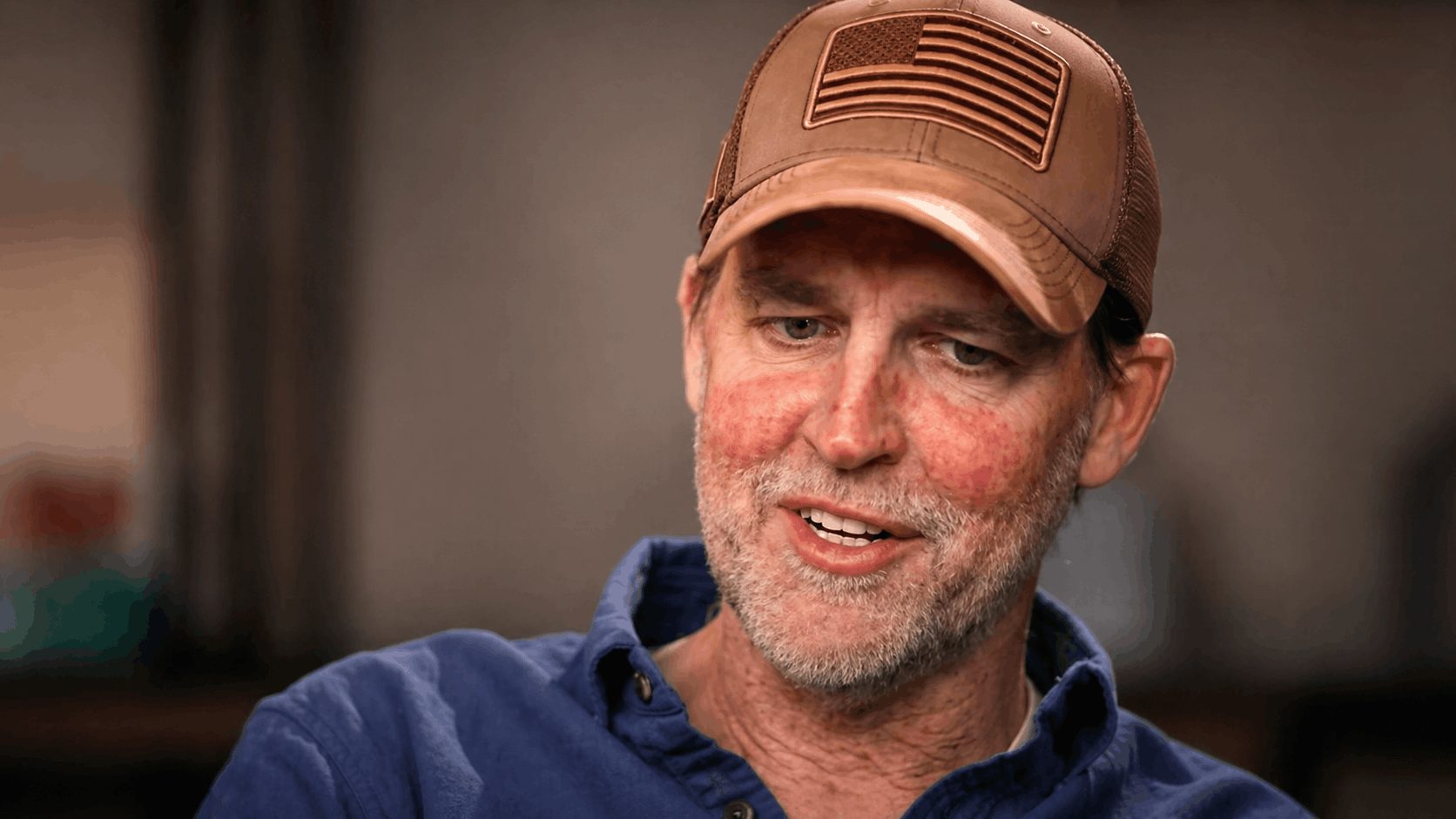
A terminal diagnosis stripped away every illusion. What Ben Sasse now sees about suffering, God’s sovereignty, and the human condition is exactly what America has lost and desperately needs to recover.
Former Nebraska Sen. and former University of Florida President Dr. Ben Sasse sat down with CBS News on 60 Minutes this past week to discuss what dying from stage 4 pancreatic cancer has taught him about God, about life, and about this country.
Sasse was diagnosed in December 2025 and he was told that he had three months to live. Sasse fully believes and lives as though every moment is given to him by the grace of God and that there are no mistakes with God’s planning or His timing.
Because of an experimental drug, his tumor volume has been reduced by 76 percent. No, isn’t cured, and yes, he is still terminal, but his life has so far been preserved. As a result, Sasse is telling the truth as only he can tell it about his faith in Christ, God’s sovereignty in the midst of dying, and the glory of the Gospel.
All of this was spoken powerfully by a man stripped of every comfortable illusion in life. So, what can we take away from Sasse’s testimony?
First, suffering is not an accident; it is providential.
Sasse opened the 60 minutes interview with CBS by saying, “There are no maverick molecules in the universe.” Those words were first used by the late, great Dr. R.C. Sproul, reformed pastor and theologian, the founder of Ligonier Ministries, and author of Chosen by God and The Providence of God.
What it communicates is that while cancer exists and while death still reigns in our mortal bodies, God is in absolute control and He know the number of our days, the strands of hair on our head, and while His eye is on the sparrow, He watches over you and me.
God is not distant; He is ever present. God is not agnostic; He cares. Even with cancer, God is ultimately sovereign over every atom and molecule in the universe. Every malignant cell. Every diagnosis. God is in charge. Everyday Sasse wakes up and takes his medication. That too is appointed by God.
Romans 8:28 declares that all things work together for the good of those who love God and are called according to His purpose. It is what separates biblical Christianity from mere moralistic, therapeutic, deistic religion that treats God as a cosmic problem-solver who shows up just as surprised as you are when life doesn’t go according to your plan and the unexpected happens.
Sasse does not believe in an impotent, therapeutic God. He believes in the God who reveals His sovereign will, who is characterized by holiness and by love. And because Sasse believes in a powerful God who cares, he is not bitter about suffering or about cancer. He is grateful.
He told the New York Times’ Ross Douthat something that should be understood and preached in every pulpit: “I wouldn’t want a sovereign God to defer to all my prayers with a ‘yes.’ I’m not omniscient.”
Garth Brooks — not a theologian — said it like this, “Some of God’s greatest gifts are unanswered prayers.”
Second, suffering sanctifies what comfort destroys.
James, the brother of Jesus, said this, “Count it all joy, my brothers, whenever you face trials of many kinds, because you know that the testing of your faith produces perseverance. Let perseverance continue its work in you that you may be mature and complete, not lacking anything” (James 1:2-4, NIV).
Sasse said it like this: “Suffering is not salvific, but it is sanctifying.”
That is precisely how suffering can be used of God — not to harden our hearts but to soften them. Suffering does not save. Cancer does not save. Death does not save. But it is in those valleys of imminent death, terminal cancer, and unspeakable suffering that God uses those things to minister to us in unmistakable ways.
Ben Sasse made it clear that while cancer kills, Christ saves. According to Sasse, cancer has done something to him that a comfortable Senate seat and a university presidency could not. It has killed the lie that comfort so often creates.
“The lie I want to tell myself,” Sasse said, “is that I’m at the center of everything and am going to be around forever.”
Cancer destroyed that lie. And in destroying it, it gives something better. It gave him the truth. He said he tells a lot more truth now than he used to.
This is what the great Puritan preacher David Brainerd understood in the American wilderness, sick and dying and more fruitful for the Kingdom than any comfortable man of his age. Brainerd wrote: “It is good for me to be afflicted that I may die wholly to this world and all that is in it.”
Before the American Revolution, Brainerd was a pioneering missionary who preached the Gospel, led revivals in New Jersey, New York, and Pennsylvania, believed in a big sovereign God who loves and who saves and who comforts and is ever present. Brainerd died at the age of 29.
The Apostle Paul put persecution, cancer, and sudden death in this way: “The sufferings of this present time are not worth comparing with the glory that is to be revealed to us” (Romans 8:18).
In other words, there is a future glory that is eternal and far weightier than what this passing world does have to offer, either in pleasure or in pain. Nothing in this life is trivial, but in light of eternity, in light of God’s future glory, in light of all that is yet to be revealed, it cannot compare.
Finally, we are a nation that has forgotten what it means to be human.
Ben Sasse’s sharpest diagnosis was not about his cancer. It was about us.
He said that the center of life is not government and not politics but your neighborhood, your family, your community, what happens at your dinner table. He said that you cannot love 330 million people, but you can love your family, your congregation, your neighbors, and with maturity, extend that love outward to your nation. St. Augustine taught us from that foundation, which also is the bedrock that built Western civilization.
Sasse said we are going through a profound period of confusion about what it means to be human, and as far as it concerns nature and ontology, he is exactly right.
We have traded thick communities for thin ones, dining tables for digital devices, local belonging for national abstractions. We are atomized, anxious, and increasingly unmoored from the places and people that once gave life meaning and purpose.
Ben Sasse is dying. But he is more alive to these eternal truths which will not pass away. And in a very real sense, when Ben Sasse is buried, he will be more alive than any of us who are still dying.
Jesus said, “I am the resurrection and the life. He who believes in Me, though he may die, he shall live… whoever believes in me shall never die” (John 11:25-26).
Sasse may have terminal cancer, but he is telling the truth like never before — about suffering, death, the Gospel, and a future glory that is imperishable. This is the story that a nation who has forgotten what is means to be human desperately needs to hear.
If you believe truth is not found in comfort, but in Christ, stand with us. Your support equips us to confront cultural confusion with biblical clarity and raise a generation grounded in what actually lasts. Make a tax-deductible gift today.