The Christian humor site won its latest battle against government censorship when a federal judge found that the Aloha State’s law forcing content creators to put a “fake” disclaimer on satire and parody posts is unconstitutional.
A U.S. district court judge has ruled that a Hawaii law ostensibly designed to “thwart the use of deep fake and generative artificial intelligence technologies to influence elections” is unconstitutional, immediately blocking the law from going into effect.
Act 191, also known as SB 2687, was passed in 2024 and signed into law by Gov. Josh Green, D. It criminalized the distribution of “materially deceptive” videos, images, audio recordings, or written material about political candidates or elections.
However, there was no exemption for parody and satire, as the law required that any such content include a clear disclaimer stating that it was fake.
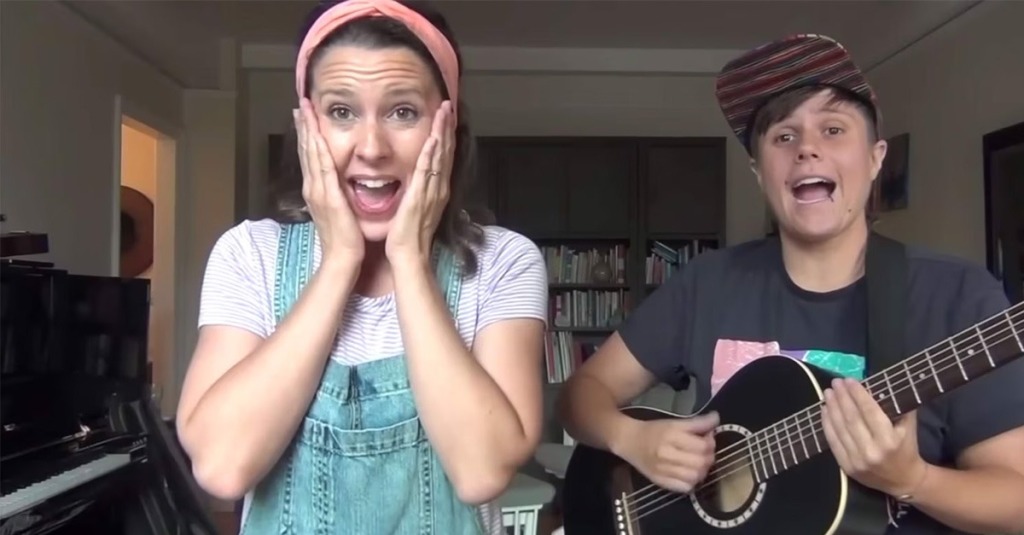
Christian satire organization The Babylon Bee and social media creator and humorist Dawn O’Brien had challenged the law, arguing that forcing satirical content to carry a disclaimer diminishes its power and impact.
The plaintiffs further argued that the law violated their First Amendment right by restricting speech and compelling them to communicate a message they would not otherwise convey.
They also argued that the law’s vagueness violated the 14th Amendment by granting the government arbitrary enforcement powers over speech.
Judge Sharilyn A.S. Park ruled that because Act 191 violated constitutional rights by restricting speech based on content, the state needed to show that the law was the least restrictive means of protecting elections.
But Hawaii did not argue that the law was the least burdensome method available, only that other methods would be less effective.
Those alternatives included counter-speech, increasing digital and political literacy, and the creation of a database of deceptive content.
Park wrote,
“State Defendants’ expert agrees that ‘with strengthened media literacy skills and greater political sophistication, people can be more likely to identify political deepfakes and less likely to believe that they are accurate.’ Defendants’ expert’s only reservation with increased literacy as a viable alternative appears to be that developing such skills in the electorate ‘would require a larger investment of resources’ compared to a ban. Such a reason has been rejected by the Supreme Court for it has made clear that ‘[t]he First Amendment does not permit the State to sacrifice speech for efficiency.’”
Park also ruled that existing laws, including those governing defamation and election fraud, already address much of the conduct Act 191 sought to prohibit.
Ultimately, Park found that the law violated not only the First Amendment rights of The Babylon Bee and O’Brien but also their due process rights under the Fourteenth Amendment. She wrote:
“Rather than require actual harm, Act 191 imposes a risk assessment based solely on the value judgments and biases of the enforcement agency—which could conceivably lead to discretionary and targeted enforcement that discriminates based on viewpoint…In this case, the ultimate consequence of indeterminate compliance lines and the risk of discriminatory enforcement is a chilling effect on First Amendment speech.”
Park granted the plaintiffs’ request for summary judgment, meaning that the judge decided the case on its merits without requiring it to go to trial.
Matthew Hoffman, legal counsel with Alliance Defending Freedom (ADF), which represented The Babylon Bee, celebrated the decision. He stated,
“The court is right to put a stop to Hawaii’s war against political memes and satire. The First Amendment doesn’t allow Hawaii to choose what political speech is acceptable and censor speech in the name of ‘misinformation.’ That censorship is both undemocratic and unnecessary.”
The Babylon Bee has frequently been at the center of free speech debates.
In 2022, the outlet was suspended from Twitter after naming former Health and Human Services Deputy Secretary Dr. Rachel Levine as “Man of the Year” in response to USA Today’s decision to name Levine, a male who claims to be a woman, as one of its “Women of the Year.”
Elon Musk contacted The Babylon Bee to confirm the suspension. That incident became part of the broader public debate that preceded Musk’s eventual purchase of Twitter, now X, and his stated commitment to restoring free speech protections on the platform.
In 2024, The Babylon Bee sued California over two laws that were similar to Act 191. Gov. Gavin Newsom, D, had supported the measures after a parody video, clearly marked as satire, had used AI to depict a candidate saying things he had not said.
U.S. District Judge John Mendez ruled that both of those laws are unconstitutional, and California agreed not to enforce them against The Babylon Bee.

Laws like Act 191 are not merely attempts to protect voters from being misled by AI-generated content. Existing laws already address defamation and election interference, including false claims that a candidate has withdrawn from a race.
Many social media platforms require some form of disclaimer stating that content is generated by AI, though those statements are much less intrusive than the one mandated by Act 191.
In practice, laws like Act 191 aim to stifle satire. Satire can be very effective in driving home a point about the flaws of a political official or their position on an issue.
In every funny parody or satirical post, there must be a kernel (or sometimes much more) of truth or it isn’t funny. The Babylon Bee’s content has possessed far more than a kernel of truth. No matter how off the wall they initially sound, scores of Babylon Bee articles and memes have come true, showing the truly absurd nature of politics.
Politicians don’t like being mocked, and they don’t like the flaws of their policies being exposed in a way everyone can understand.
That, coupled with government’s implicit disregard for the public, is the real foundation for laws like Act 191.
AI is certainly not without its problems, and media that makes it appear that a candidate said or did something without clearly being satire have their dangers.
That is the risk of freedom.
But government getting involved is usually worse than the risks of free speech.
We can have a debate over AI content and what the right solutions to problems about it are.
But laws that require satire to have a government mandated warning conspicuously plastered across the screen are not the answer and opening that door will lead to the future loss of freedom and government censorship.
Once government is allowed to censor political speech, there are those who will abuse it. America learned that during the past several years when posting the wrong message, even clearly satirical ones, about COVID, elections, transgenderism, or other controversial topics got people cancelled, fired, and even sentenced to prison.
Government can never be allowed to decide what is “harmful speech” because it will use that power to manipulate debates, elections, and people.
It isn’t the “materially deceptive” satire that Americans must worry about, it’s the deceptive nature of censorship and government-compelled speech.
If you like this article and other content that helps you apply a biblical worldview to today’s politics and culture, consider making a donation here.