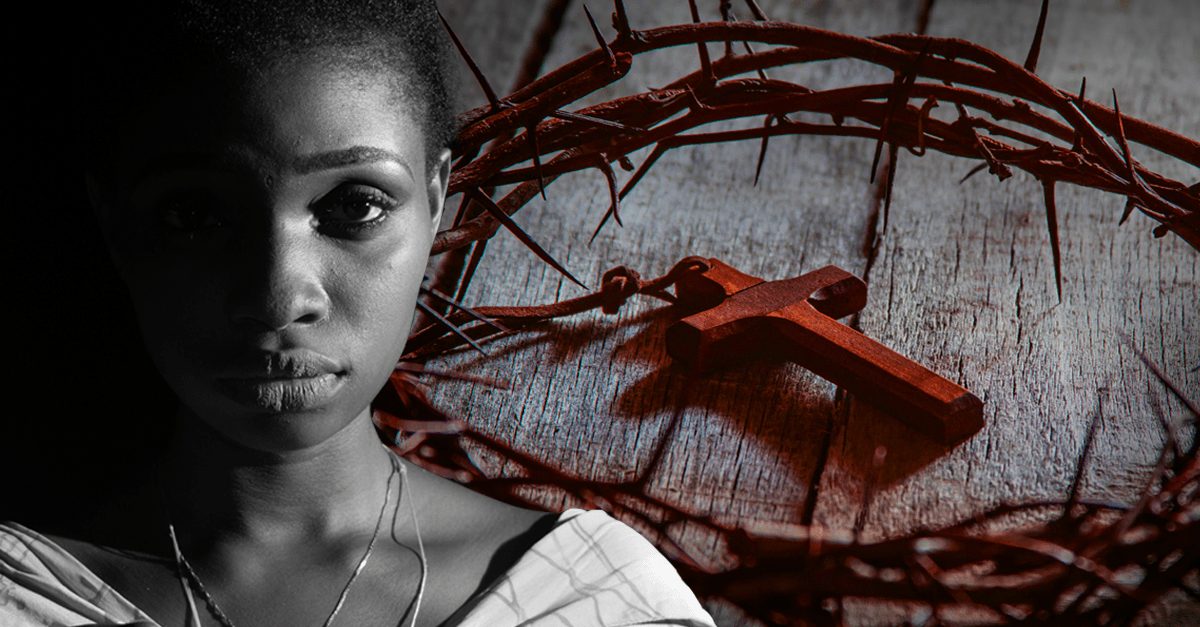
Christianity is now the most persecuted religion in the world, but in Nigeria and other places where believers are suffering most, the Gospel is spreading with a power and urgency that cannot be ignored or stopped.
Around the world, crosses are being torn down, churches burned, pastors imprisoned, and believers forced into hiding and killed.
Many in the West assume that such pressure must be shrinking Christianity. But the opposite is happening.
Where persecution is fiercest, Christianity is not withering, it is growing. Faith is rising in the very places where governments and extremists try hardest to silence it.
This paradox is not new. The early Church grew in the shadow of Roman lions and persecution. Today, the pattern continues across several continents. The testimonies are undeniable, and the global Church must pay attention.
Recent research confirms what Christian advocates have been warning for years: Christianity is now the most persecuted religion in the world. The Cato Institute, citing findings from Open Doors, reports that more than 360 million Christians live under significant persecution. That means one in seven Christians face imprisonment, violence, discrimination, or death simply for following Jesus.
Nations such as North Korea, Afghanistan, Somalia, Libya, Yemen, and Nigeria rank among the most dangerous places for believers.
In these countries, owning a Bible, attending a worship service, or sharing the Gospel can result in beating, arrest, or death. Thousands are imprisoned, tortured, or murdered each year because they refuse to deny Christ.
Much of this oppression is approved or ignored by governing authorities. China continues its campaign of surveillance and regulation, removing crosses from buildings and installing cameras inside churches. North Korea imprisons entire families for possessing Scripture. Extremist groups across the Middle East and Africa openly target Christians for execution. Yet persecution is not stopping the Gospel. In many places, it is fueling it.
One of the most striking modern examples is in northern Nigeria. According to Aid to the Church in Need, Christianity is spreading quickly there despite unrelenting violence.
Boko Haram, Islamic State West Africa Province, and Muslim Fulani herdsmen have terrorized Christian communities for more than a decade. Villages have been burned, children abducted, and pastors murdered. Open Doors estimates that 50,000 Nigerian Christians have been killed since 2014 and nearly 4 million have been displaced.
Despite this horrific suffering, the Church is growing.
Bishop Habila Daboh of Zaria sees an increase in young men applying to enter the seminary, many claiming God is calling them to preach peace and hope in a land torn apart by hatred. He says these young men want to preach Christ as the One who brings peace and love in a time of fear.
The bishop describes how Christian schools have become essential to survival. Education gives children a future, strengthens moral foundations, and lifts families out of desperation. Christian ministries and churches are becoming centers of safety and healing. When a family loses everything, the church community often becomes the only place left to go.
In the below video, a Nigerian congregation gathers in their burned-out church and worship Christ even as they mourn.
History shows that persecution often has this effect. It purifies the faith and forces believers to rely on God rather than cultural comfort. It also turns the Church into a refuge when society collapses. Hardship drives people to look for truth, hope, and eternal meaning — and they find it in Christ.
Persecution also spreads the Gospel as believers flee danger and carry their testimony with them. The early Church scattered under persecution in Jerusalem and planted new churches throughout the Roman Empire. The same dynamic is at work today.
Tertullian’s ancient statement still rings true: “The blood of the martyrs is the seed of the Church.”
Growing awareness of persecution has led to increasing calls for the United States to provide moral clarity. In response over the weekend, President Donald Trump spoke out about the persecution of Nigerian Christians, calling the ongoing violence a crisis the world can no longer ignore. His administration has redesignated Nigeria as a Country of Particular Concern for religious persecution, and he is now putting stronger pressure on the Nigerian government and greater scrutiny on how U.S. aid is used to try to stop the killing.
Even rapper Nicki Minaj thanked President Trump for his recent social media post addressing the persecution of Christians in Nigeria.
“Reading this made me feel a deep sense of gratitude. We live in a country where we can freely worship God. No group should ever be persecuted for practicing their religion,” Minaj said on X.
“We don’t have to share the same beliefs in order for us to respect each other. Numerous countries all around the world are being affected by this horror & it’s dangerous to pretend we don’t notice. Thank you to The President & his team for taking this seriously. God bless every persecuted Christian. Let’s remember to lift them up in prayer.”
The United States can play a key role in addressing this crisis. Religious liberty is a core American principle. When the U.S. uses its voice and its resources, nations pay attention. American leadership can help protect persecuted Christians through diplomatic pressure and humanitarian aid. It is not a partisan issue but a moral one.
There is a tragic irony in all of this. In nations with the freedom to worship, Christianity is often declining. Churches in the West lose membership and close down due to a lack of interest. Yet believers in persecuted areas risk their lives to gather for worship or to own a single page of Scripture. Their courage exposes the spiritual complacency of the comfortable Church.
The persecuted Church reminds us of the importance of our faith and the value of religious freedom. Their steadfastness should stir the American Church to wake up, stand firm, and rediscover a living faith worth living and dying for.
This is the pattern found throughout Scripture and history. God brings life out of death, strength out of weakness, and revival out of persecution. The cross was history’s greatest act of injustice, yet it unleashed the hope of salvation.
Today, the story continues. When earthly powers try to crush the Church, the Gospel spreads even more. In China, the underground Church has grown from about one million believers in 1949 to at least 60 million today. In Iran, where converting to Christianity risks prison or worse, the Church is growing at one of the fastest rates in the world. In Nigeria, the Church continues to multiply even as violence increases.
Persecution is evil and should never be celebrated. Believers must pray for justice and work to protect those who suffer. But persecuted Christians themselves often say that suffering forces them to walk closer to Christ.
Where persecution is intense, the Church grows in strength. In the darkest places, the light of Christ shines bright. Attempts to crush the Gospel have never succeeded. Governments or extremists cannot stop the power of God.
The persecuted Church’s courage is a call to the global Church. We must stand with them, refuse to compromise the truth for the sake of comfort, and always take heart in knowing that the Gospel will never be silenced.
If you like this article and other content that helps you apply a biblical worldview to today’s politics and culture, consider making a donation here.