Judge Allen Winsor’s reminder that school libraries have always had the discretion to decide which books can be included on or removed from its shelves could influence other cases in the ongoing battle over what ideas are appropriate for children.
A federal judge has ruled that a Florida school board did not violate the First Amendment when it removed a children’s book featuring two male penguins raising a chick in a victory for officials who argue they have the authority to keep LGBTQ-themed material out of school libraries.
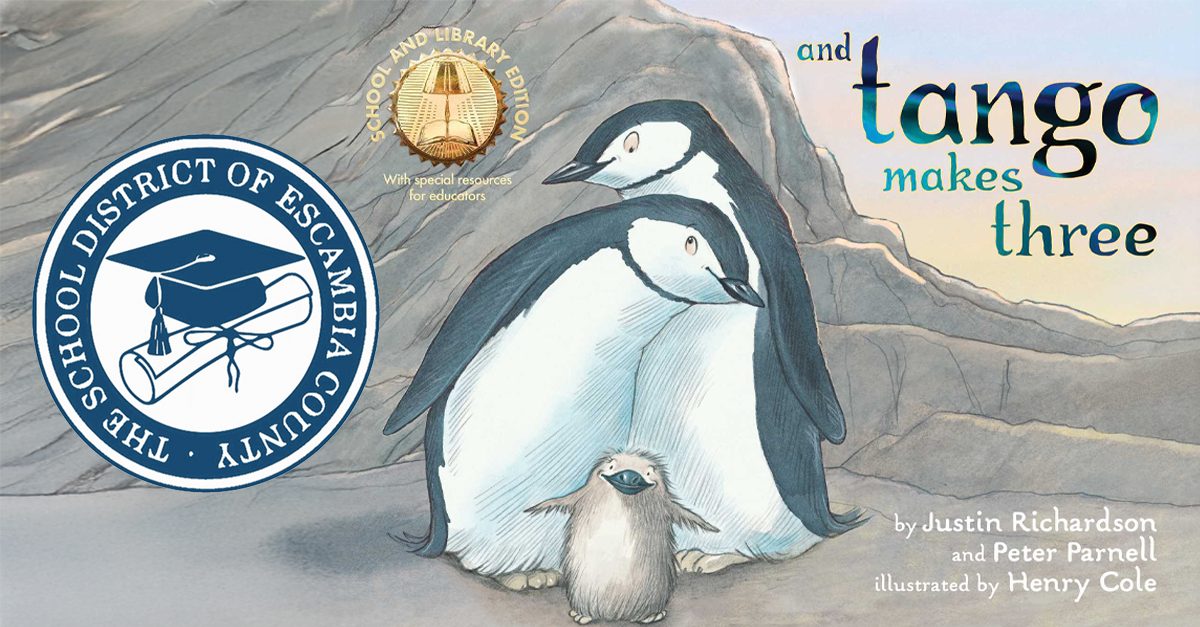
Chief U.S. District Judge Allen Winsor ruled on September 30 that the Escambia County School Board acted within its rights when it removed the book And Tango Makes Three from its library shelves. The 2005 book tells the true story of two male penguins at New York’s Central Park Zoo who hatch and raise a chick together and has long been at the center of debates over LGBTQ representation in schools.
The book’s authors and a student filed the lawsuit in 2023. They argued that the removal amounted to unconstitutional viewpoint discrimination, claiming that the government cannot ban books based on disagreement with their message.
Judge Winsor rejected that argument, saying the First Amendment does not give authors a right to have their book placed in a government library, nor does it guarantee students access to any specific viewpoint through a school library.
“The government does not create a forum for others’ speech by purchasing books for a public library,” Winsor wrote. He added that the book remains available through other sources, meaning its viewpoint is not being censored from public discourse.
Winsor emphasized that libraries have always exercised discretion over which books to include in their collections. “By definition, libraries must have discretion to keep certain ideas—certain viewpoints—off the shelves,” he wrote, noting that for more than two centuries, libraries have chosen books based on what they deem “appropriate quality.”
The judge said the Escambia County School Board was engaging in “government speech,” not facilitating a public forum. In doing so, he cited Shurtleff v. City of Boston, a 2022 Supreme Court case involving viewpoint discrimination in a public forum. In that case, the court said that when the government opens a forum to private speakers, it cannot exclude views it dislikes. Winsor ruled that library collections are not included as this type of forum.
He also pointed to another case, Little v. Llano County, that reinforced that library curation is government speech and not subject to the same First Amendment constraints as public forums.
By removing And Tango Makes Three while the book remained available elsewhere, the judge said the school board was within its own First Amendment rights, as the act of selection or exclusion is itself protected government expression.
The ruling is one of the clearest yet in a growing national debate over whether schools can remove books with themes related to gender identity or sexuality. More than 20 states have passed laws restricting school content deemed “inappropriate,” sparking legal battles over the limits of free speech and parental control.
Mat Staver, founder and chairman of Liberty Counsel, a conservative legal group that supported the school board, praised the decision, explaining that school officials have a responsibility to protect children.
“School boards have the discretion to keep inappropriate material off the bookshelves and away from children,” he said. “Gender ideology has no place in public education and school officials should protect children from indoctrination.”
Attorneys for the book’s authors and student plaintiffs have since appealed the ruling to the 11th Circuit U.S. Court of Appeals.
Still, Judge Winsor’s legal reasoning in this case could influence similar cases nationwide as courts weigh how far government officials can go in removing materials they consider unsuitable for children and determine whether such decisions are unconstitutional censorship.
The case also opens up another question. If courts allow library officials to remove LGBT-themed books from the shelves, does that mean they could one day remove Christian or pro-family books and content as well?
It’s a legitimate concern, observers say. Had the judge gone on to say that libraries must remove books promoting other beliefs in the name of so-called balance, that could open the door to new lawsuits targeting faith-based content. But that was not the decision in this case and it is why the wording of this decision matters so much.
As we reported previously, 13 Tennessee libraries removed children’s content on transgender issues. In that situation, the decision was based on the content being inappropriate for minors rather than only on ideology that could potentially apply to Christian content.
In contrast, the state of Illinois in 2023 made it illegal to remove any sexually explicit books from public libraries. HB 2789 says the state should “encourage and protect the freedom of libraries and library systems to acquire materials without external limitation and to be protected against attempts to ban, remove, or otherwise restrict access to books or other materials.”

The Florida ruling reminds believers of a critical truth: The battle over books in schools is ultimately a battle over worldviews. Jesus told us that “everyone, after he has been fully trained, will be like his teacher” (Luke 6:40). What children see and read shapes who they become. That is why this debate matters so deeply for Christian parents, churches, and communities.
The court affirmed that school boards have both the authority and responsibility to decide which ideas are placed before children. The principle stands that someone will disciple the next generation, and the only question is: Who?
As Christians, we cannot sit on the sidelines. Scripture calls parents the primary spiritual influences of their children (Deuteronomy 6:6-7). Public schools may support or undermine that duty, but they should never replace it. That means local engagement matters. School boards hold significant power, and believers must remain involved with those in these roles to safeguard children from harmful ideologies and promote truth.
Even if some books are removed from libraries, culture will continue to promote messages through media, entertainment, and peers. Shielding children is not enough. We must also prepare them. Teaching them what Scripture says about family, identity, and God’s design helps them develop discernment and stand firm in a confused world.
God has entrusted Christian parents and grandparents with truth and influence. We must steward these areas with boldness. The next generation is watching, and what we tolerate or teach today will shape what they believe tomorrow.
If you like this article and other content that helps you apply a biblical worldview to today’s politics and culture, consider making a donation here.