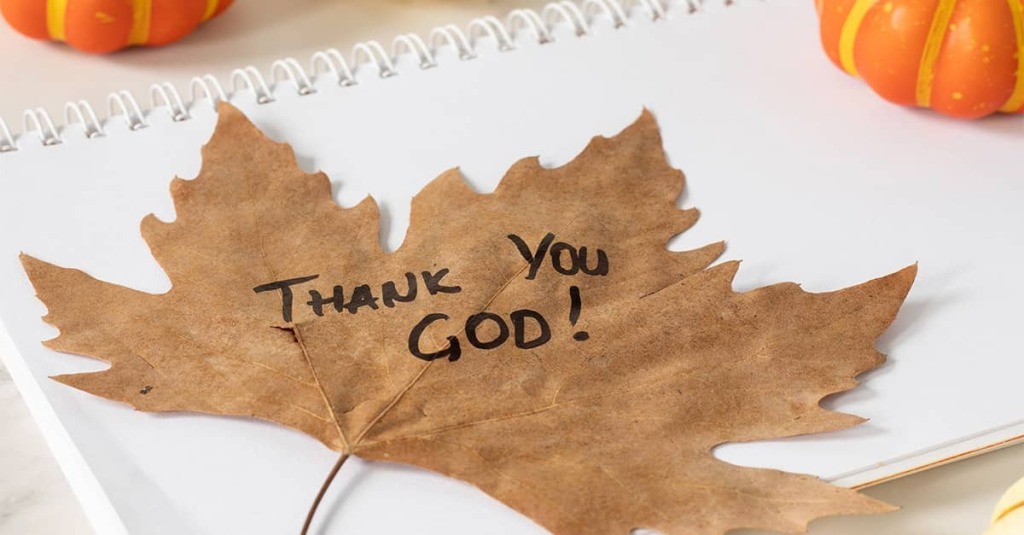
A secular culture has kept the language of thanksgiving while rejecting the Giver. Why the Church alone can remind the nation from whom its blessings flow.
As Americans gather for Thanksgiving on Thursday, they say they are feeling more gratitude than ever, but ironically, that ought to concern the Church more than it encourages her.
An annual study, led by Philip Watkins, emeritus professor of psychology at Eastern Washington University, and conducted with Gracianna Winery, recently found that gratitude has reached its highest level since the study began in 2020, with researchers suggesting the increase could show that “more individuals now value gratitude as a tool for personal well-being.” Meanwhile, a YouGov poll released on November 19 reported that 92 percent of Americans say they are thankful this year, about the same as in 2025.
Neither mentions God, however, and that silence is the most revealing finding of all.
A tool is something a man picks up when it serves him and sets down when it stops working. Therapeutic gratitude, meaning thankfulness prized for what it does for the person who feels it, rejects the Giver quietly by never mentioning Him, while open grievance rejects Him outright.
Scripture treats gratitude as a debt owed to a Giver, which is why the psalmist asks, “What shall I render to the LORD for all His benefits to me?” (Psalm 116:12).
What we are now watching is a secular culture that has kept the vocabulary of thanksgiving while refusing to name the One to whom thanks is owed.
The First National Proclamation
When Congress asked President George Washington in 1789 to recommend a National Day of Thanksgiving, he did not treat gratitude as a feeling. He described it as the “duty of all Nations to acknowledge the providence of Almighty God.” Before Washington listed a single blessing, he named the One who gave them.
Washington listed among those blessings “the civil and religious liberty with which we are blessed,” a liberty that includes the freedom of Christian families to give thanks to God out loud and to teach their children why. Washington then asked Americans to pray that God would “pardon our national and other transgressions.” The first presidential Thanksgiving held thanks and confession together, because a people that knows whom it is thanking also knows to whom it must answer.
Thanksgiving and Penitence in 1863
Abraham Lincoln’s 1863 Thanksgiving proclamation declared that “No human counsel hath devised nor hath any mortal hand worked out these great things.” The proclamation, drafted by Secretary of State William Seward and issued by Lincoln, calls those blessings gifts from God, who, “while dealing with us in anger for our sins, hath nevertheless remembered mercy,” and then calls on Americans, “with humble penitence for our national perverseness and disobedience,” to pray for the war’s widows, orphans, and sufferers and for the healing of the nation.
In the middle of a civil war, the president told a wounded nation that its suffering was tied to its sin and that its blessings were mercy it had not earned. He also named the danger this year’s surveys describe, calling the nation’s blessings “so constantly enjoyed that we are prone to forget the source from which they come.”
Lincoln treated that forgetting as a temptation to resist, but 163 years later, it has settled in as the cultural default.
The Root of Ingratitude
Paul explains why that forgetting is so dangerous. In Romans 1:21, he writes of humanity, “For although they knew God, they did not honor Him as God or give thanks to Him, but they became futile in their thinking, and their foolish hearts were darkened.”
Unthankfulness comes before the idols. A culture that stops thanking God will find something else to worship, and the self is always the nearest candidate.
The pattern goes back to Eden, where the serpent asked in Genesis 3:1, “Did God actually say, ‘You shall not eat of any tree in the garden’?” The serpent’s question cast doubt on the Giver’s goodness, and the fall of man was a fall from gratitude into grievance.
Even the science of gratitude assumes a giver. Watkins defines the emotion as recognizing that “someone else is largely responsible for this benefit.” Strip away the Benefactor, and gratitude becomes one more strategy for feeling better.
James 1:17 names the Benefactor plainly: “Every good gift and every perfect gift is from above, coming down from the Father of lights.”
The Grievance Against Thanksgiving
Today, some Americans are being taught to meet Thanksgiving with grief. On November 14, the American Civil Liberties Union (ACLU) of Wyoming published a guide to decolonizing the holiday, which means removing what activists regard as colonial influence from it. The guide urges families to “acknowledge that all land in the United States is Indigenous land” and to “challenge the false and harmful Thanksgiving origin story.”
In November 2025, Berkeley Unified School District in California directed families to its Rethinking Thanksgiving Teaching Guide, and the California History-Social Science Project at the University of California, Davis, hosted a teacher event titled “Decolonizing Thanksgiving in the Classroom.”
In Plymouth, Massachusetts, Indigenous people and their allies have gathered on Cole’s Hill, which overlooks Plymouth Rock, each Thanksgiving since 1970 for the National Day of Mourning organized by the United American Indians of New England. In 2021, PBS NewsHour reported the gathering’s message as “No Thanks, No Giving.”
The colonial record contains real sin, as every nation’s record does, and Christians have no interest in defending it. However, these materials ask for something else. In effect, they invite Americans, and especially American children, to regard the Founding itself as something to mourn. That is a secular inversion of Thanksgiving, because it keeps the language of confession while removing the God to whom confession is made.
Grief without a God who forgives has nowhere to go. It can name wrongs, but it cannot pardon them or reconcile former enemies. The claim that the continent is indigenous land treats it as a possession passed between human claimants, but Psalm 24:1 settles the question: “The earth is the LORD’s and the fullness thereof, the world and those who dwell therein.”
The Church’s Answer
The Church can hold gratitude and confession together because both sit at the center of the Gospel. Every Christian’s thanksgiving begins at the cross, where Christ alone bore the penalty for sin and reconciled to God people who deserved judgment.
The same gift is offered to the reader who has spent this year thankful to no one in particular. The Giver he has never named gave His own Son for sinners, and the first true thanks any man offers begins with receiving Him.
Paul provides the pardoned sinner’s response in 2 Corinthians 9:15: “Thanks be to God for His inexpressible gift!” That gratitude rests on a finished work, which is why believers can “give thanks in all circumstances” (1 Thessalonians 5:18).
Christian households have an opportunity this Thanksgiving that their neighbors do not. Before the turkey is carved, a father can open the Scriptures to Psalm 107:1, “Oh give thanks to the LORD, for He is good,” so his children hear plainly whom this family is thanking. Families can confess their own sins and those of their nation with the honesty Washington and Lincoln asked for.
The stakes are concrete. Will a child, taught in November to mourn the founding, ever be told to whom a nation gives thanks? Will the Thanksgiving table name the Giver aloud, or offer thanks to no one in particular?
Father God, You have given this nation far more than it has acknowledged and far less judgment than it has deserved. Forgive our national and personal transgressions.
Have mercy on our neighbors with the United American Indians of New England who will spend this Thanksgiving mourning on Cole’s Hill, and let them hear of the Savior who turns grief into thanksgiving.
We also pray for those who have made grievance their focus and are teaching children to make it theirs. Open their eyes to the Giver of every good gift and give the children in their care parents and teachers who will tell them whom to thank.
In Jesus’ name, Amen.
If you like this article and other content that helps you apply a biblical worldview to today’s politics and culture, consider making a donation here.