A new bill on Capitol Hill would require warning labels, collection kits, and provider-arranged burial or cremation for children killed by chemical abortion.
For thousands of American women, an abortion no longer begins in a medical facility. It begins with pills delivered through the mail or picked up at a pharmacy. What follows may unfold in a bedroom or bathroom, sometimes without anyone else present.
But what happens when a woman discovers that ending her pregnancy involves far more than taking a few pills?
That uncomfortable question is at the heart of the Don’t Flush Babies Act, introduced on November 5 by Rep. Sheri Biggs, R-S.C., and co-sponsored by Rep. Michael Cloud, R-Texas.
The proposal seeks to put a spotlight on what happens to first trimester children following chemical abortion.
In a tweet, Biggs explained, “Abortion pill providers have allowed countless women to abort their children at home without advising on proper disposal, leading to fetal, medical, and other biological remains entering our sewer systems. If at-home abortion pills can be provided under current law, then I am going to make sure they are regulated responsibly.”
The legislation would require abortion pills to carry warnings against flushing fetal remains and provide collection kits with instructions for their proper handling, and for abortion providers to establish a process so they could receive the remains and arrange burial or cremation. The medications would also have to show an image depicting a fetus at 10 weeks’ gestation (the latest point in pregnancy when abortion pills are deemed safe).
Yet the bill raises an even more important question: How many women truly understand what they may experience when they take abortion pills? The answer deserves serious attention, as abortion pills have fast become the dominant method for terminating pregnancy.
Not a Magical Solution
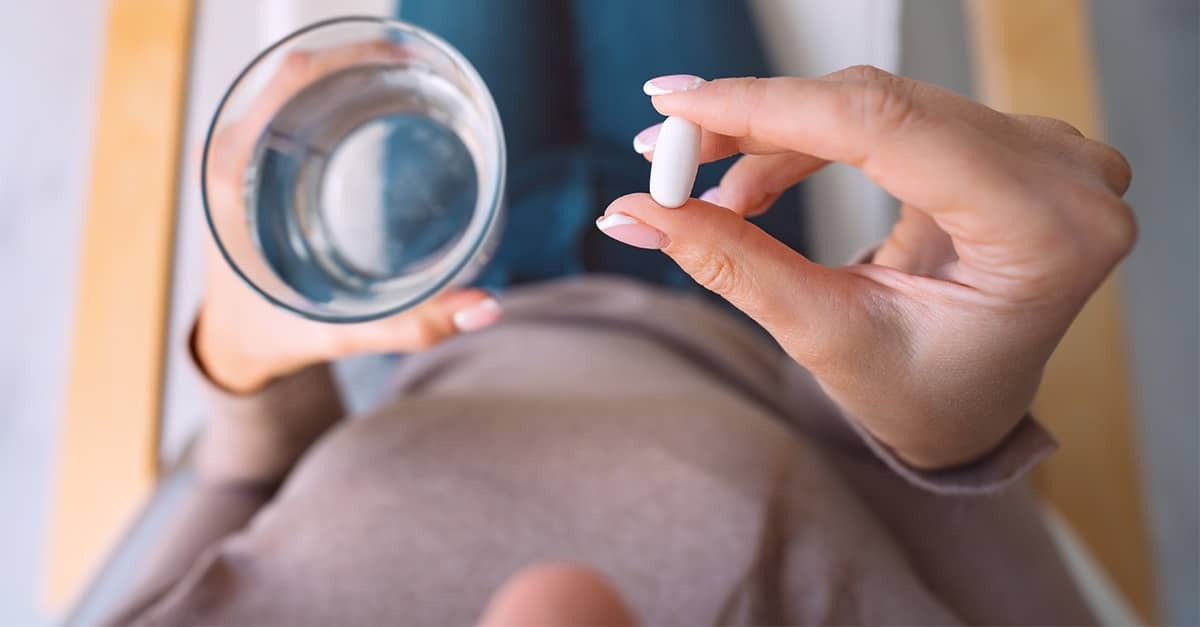
Chemical abortion is often advertised as a convenient alternative to a surgical procedure. Some people even refer to it as a “Do It Yourself” abortion. A woman, in the privacy of her own home, takes a two-drug regimen: mifepristone, which blocks progesterone, followed by misoprostol, which causes uterine contractions and expels the pregnancy.
But the process is not as simple as swallowing a few pills and watching a pregnancy somehow magically disappear. The first part of the drug regimen starves the child of progesterone until it dies, and the second induces labor and delivery. The mother, depending on how far along she is in her pregnancy, might even end up holding a tiny dead child in her hand.
According to the Food and Drug Administration (FDA), women can also experience significant cramping, hemorrhaging, nausea, vomiting, infection, and even death. And such complications require emergency medical treatment in more than 1 in 10 cases, according to the largest known analysis of all-payer insurance data on abortion pill use.
These complications do not affect all women, but all women still deserve clear explanations of what the drugs do, what they may physically experience, and when they should seek medical attention.
They also deserve to know that the pregnancy tissue they expel may include recognizable fetal remains, depending on the gestational age involved. By 8 to 10 weeks of pregnancy, the developing child has a face, arms, legs, fingers, and toes. Yet a woman who has been told to expect something resembling a heavy menstrual period may be unprepared to see that she has actually delivered a dead baby.
For some women, that discovery becomes a devastating memory.
Unprepared for What They Saw
Consider the experience of a woman identified as Megan Rhiann, whose story was reported by Live Action. Megan said she underwent a chemical abortion at approximately eight weeks of pregnancy. She described severe pain, heavy bleeding, and vomiting. But nothing prepared her for the worst part.
“I saw my baby,” she recalled. “My baby was basically fully formed. I could see its fingers, its eyes, its feet. It was basically a fully formed baby. I was not told that would happen…I wasn’t told that the sac was see-through. I wasn’t told anything…That night will never leave my memory.” She later described the abortion as the “most traumatic experience of my life.”
Another woman, identified as Natalia, shared a similarly heartbreaking experience in another Live Action report. After taking abortion pills at home when she was 10 weeks along, she pushed out her unborn child while sitting on the toilet. “It wasn’t like a heavy period. It was like a baby!” she recalled. “And I looked down and I just looked up and I just — I can’t look anymore. It’s a child!”
Natalia described flushing the toilet in shock before retreating to her bedroom, where she says she remained alone for three days and bled so much that it soaked through the mattress. She continues to struggle with the experience.
Former Planned Parenthood director turned pro-life advocate Abby Johnson has also described her own chemical abortion, including severe pain, heavy bleeding, and a night spent on her bathroom floor.
These testimonies raise serious concerns about how many women are prepared for what may happen when they take abortion pills. Women deserve more than a consent form to sign. They deserve clear, honest information about what they may experience before deciding to undergo a chemical abortion.
A Growing Issue That Can’t Be Ignored
The importance of this discussion becomes clearer when examining abortion trends. According to the Guttmacher Institute, an organization that supports abortion rights, medication abortions accounted for approximately 64 percent of clinician-provided abortions in 2023, compared with 53 percent in 2020.
Meanwhile, federal regulation remains controversial. The FDA requires certified prescribers, patient counseling, and safety information for mifepristone, but the agency no longer requires doctors to see patients in-person during an office appointment before prescribing the medication nor is there any requirement for a follow-up appointment.
That change has led to all kinds of abuse. Abortion pills are now routinely prescribed by out-of-state physicians during a single telehealth session, a situation that requires the physician to trust the patient’s word about her health and how long she’s been pregnant.
And certified pharmacies can take orders and deliver the pills directly to recipients, even in pro-life states. But they’re not just mailed to pregnant patients; online pharmacies have taken orders from abusive boyfriends and others, who have tricked or forced women into taking the pills against their will. In one infamous case, Dr. Margaret Carpenter, a New York abortionist, has been charged with conspiring with the mother of a pregnant teen to force her into taking the pills. The alleged crime was discovered after the teen ended up in the ER with severe hemorrhaging.
Human Dignity Does Not End with Death
Horrifyingly, an unknown number of fetal corpses are being flushed into public sewer systems or disposed of in landfills, a fact that raises critical public health and moral concerns.
The Don’t Flush Babies Act recognizes that a tiny abortion victim is still a human being, not medical waste or trash, and therefore deserving of the same respectful treatment in death as anyone else.
The Bible tells us that every person is made in the image of God (Genesis 1:27). Psalm 139:13-16 reminds us that God knows each of us even before we are born. Human life has value regardless of a child’s stage of development, the circumstances of pregnancy, or whether that child is wanted. That worth does not end with death, and it should be reflected in how unborn children are treated after an abortion.
Even if it passes, the Don’t Flush Babies Act will not resolve America’s abortion crisis. Nor will warning labels and collection kits address every concern surrounding chemical abortion.
But the legislation forces Americans to confront grim realities too often left out of the conversation. Unborn children are human beings, and they deserve recognition of their humanity and the right to dignity, even when their lives have been ended.
If you like this article and other content that helps you apply a biblical worldview to today’s politics and culture, consider making a donation here.