After being fired for answering student-initiated queries on abortion and Israeli-Gaza conflict with honesty and nuance, a veteran U.K. teacher is fighting back against the expanding boundaries of a new form of academic cancel culture.
The effort to censor those with dissenting views in the U.K. took another turn recently when a Christian teacher was dismissed for honestly answering student questions about her views on contentious political and social issues.
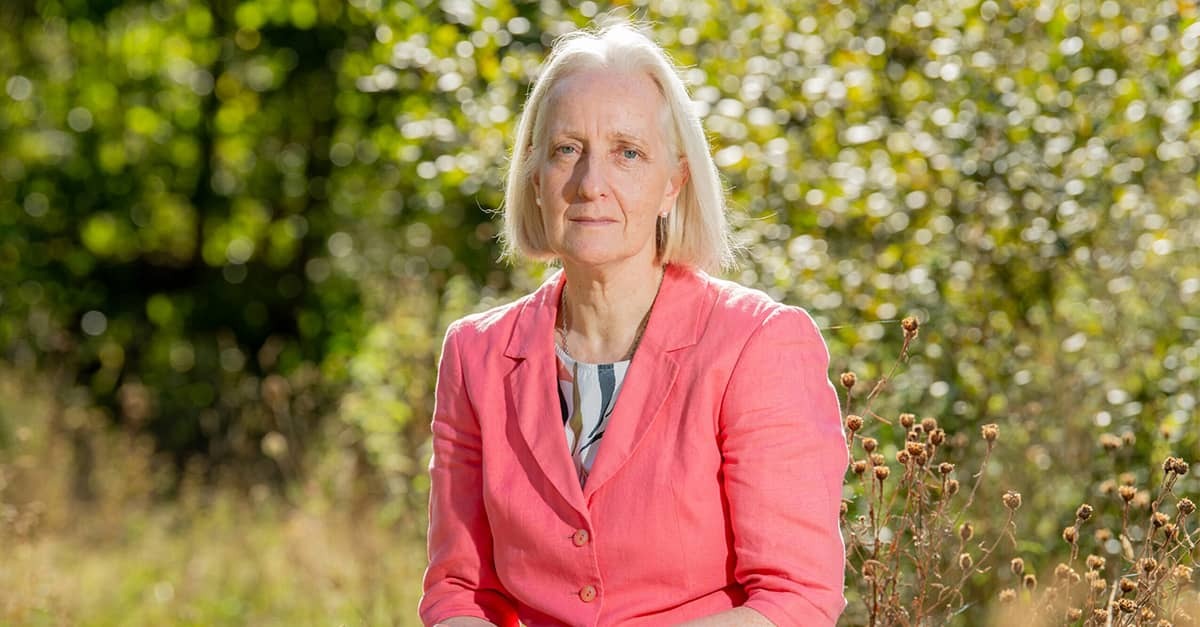
Earlier this month, Anita Meston, who has been teaching without issue for 28 years, filed a lawsuit against Biddick Academy, a state-funded secondary school in Northeast England. Her attorneys with Alliance Defending Freedom International argue that Meston’s firing violated religious protections under British equality law.
Meston began working at Biddick Academy in October 2024, primarily teaching French. She had worked at the school for about six months when the controversy occurred. Biddick officials had renewed her contract just a week before her dismissal.
According to ADF International, Meston, 63, was covering a history lesson on the Allied bombing of Dresden, Germany, during World War II when students began questioning her about her view of abortion.
She responded that she was “pro-life.” When the students asked for an explanation, Meston said her position was rooted in her Christian faith and her own knowledge of women who regretted having abortions.
Another student responded that she knew women who did not regret having abortions. Rather than disputing the student’s experience, Meston replied, “Fair enough.”
Meston maintains that she neither initiated the abortion discussion nor attempted to impose her religious views on the students. She answered their questions and returned to the lesson.
Abortion was not the only current controversy raised in the classroom that day. While looking at the historical debate around the bombing of Dresden, Meston asked the students if the current fighting between Israel and the Palestinians raised similar moral questions about the conduct of warfare and the suffering of civilians.
One student said he was “pro-Israel” and asked whether she shared that view. Meston said she backed Israel but expressed sympathy for the innocent civilians in Gaza who were suffering as a result of the fighting.
Her lawyers maintain that the response was an attempt to get the students to think about history and ethics rather than an attempt at political campaigning.
The next day, Meston was called into a meeting with the headteacher, who informed her that a complaint had been made about the classroom conversation. Meston explained that she had expressed her views in an exchange that had been respectful and student-initiated. The headteacher stated that she was not allowed to share her personal views in the course of a lesson.
By the end of the meeting, Meston was informed that her contract would be terminated. Biddick Academy cited “sharing personal opinions on political issues with pupils” as the reason. Meston contends that she did not impose her beliefs on students, criticize those who disagreed, or abandon her teaching responsibilities to engage in political advocacy.
The legal challenge centers in part on whether briefly answering a student’s question constitutes improper political influence or a protected expression of personal belief. Meston argues that students should be able to ask their teachers questions and receive honest answers without placing these teachers at risk of dismissal for expressing religious or moral convictions.
She admitted that she was “shocked” at the school’s actions, saying, “In a free and just society, teachers should not be fired for honestly expressing their deeply-held beliefs in response to questions in the classroom. What happened to me is nothing short of censorship, and this precedent cannot be allowed to stand.”
Jeremiah Igunnubole, a London-based barrister and legal counsel to ADF International, emphasized that Britain’s Equality Act 2010 prohibits workplace discrimination involving protected characteristics, including religion or belief. “It is unacceptable that expressing pro-life and other views in response to a question can result in a person being terminated,” he said.
Igunnubole warned that dismissing teachers for holding unpopular views sends a dangerous message to students: that opinions they find objectionable should be suppressed rather than debated. “A teacher-student relationship that is characterised by fear and self-censorship is antithetical to learning.”
ADF International maintains that Meston’s pro-life views are legally protected because they stem from her deeply held Christian convictions about the sanctity and value of human life.
The final hearing is scheduled to be heard in February 2028 at the New Castle Civil & Family Courts.

Meston’s case illustrates the growing efforts by Western governments to suppress Christian beliefs in nearly every area of life.
For example, the U.K. has made it a criminal offense to silently pray or hold a sign offering to talk near an abortion clinic. Irish teacher Enoch Burke has been sitting in prison for more than 700 days for refusing to use a student’s “they/them” pronouns. Finland convicted Christian lawmaker Päivi Räsänen and Lutheran Bishop Juhana Pohjola of “crimes against humanity” for publishing a book about biblical marriage and sharing it on social media. And in Maine, the state Supreme Court recently ruled that a mother must obtain permission from her daughter’s atheist father to take her to church or read the Bible.
The question is no longer whether governments will protect religious freedom. It’s clear that they won’t. Most of them are now openly hostile to the Christian faith and its doctrines, and in Europe, Canada, Australia, and certain progressive American states, anti-Christian bigotry and persecution is only going to get worse.
The question is: Are Christians willing to keep speaking and standing up for biblical truth when doing so comes at great personal cost?
Acts 5:29 reminds us, “We must obey God rather than men” (NKJV). Christians are called to respect governing authorities, but our highest allegiance belongs to God. We must never compromise biblical convictions about the sanctity of human life, truth, or righteousness merely to avoid criticism or professional consequences.
Meston’s experience also demonstrates the importance of responding to disagreement with grace and truth. 1 Peter 3:15 calls us to “always be ready to give an answer” to those who inquire of you, “with meekness and fear” (NKJV).
Christians should defend those facing discrimination, uphold religious liberty, and teach the next generation that disagreement is not grounds for silencing another person. And most importantly, in the day of testing, we must all be willing to stand firm for our beliefs — for faithfulness is not measured by cultural acceptance but by obedience to Christ.
If you like this article and other content that helps you apply a biblical worldview to today’s politics and culture, consider making a donation here.