OnlyFans claims to offer women the perfect deal: income without dependence, exposure without exploitation, and autonomy without submission. But like every other promise of the sexual revolution, it’s a lie that will only enslave and destroy.
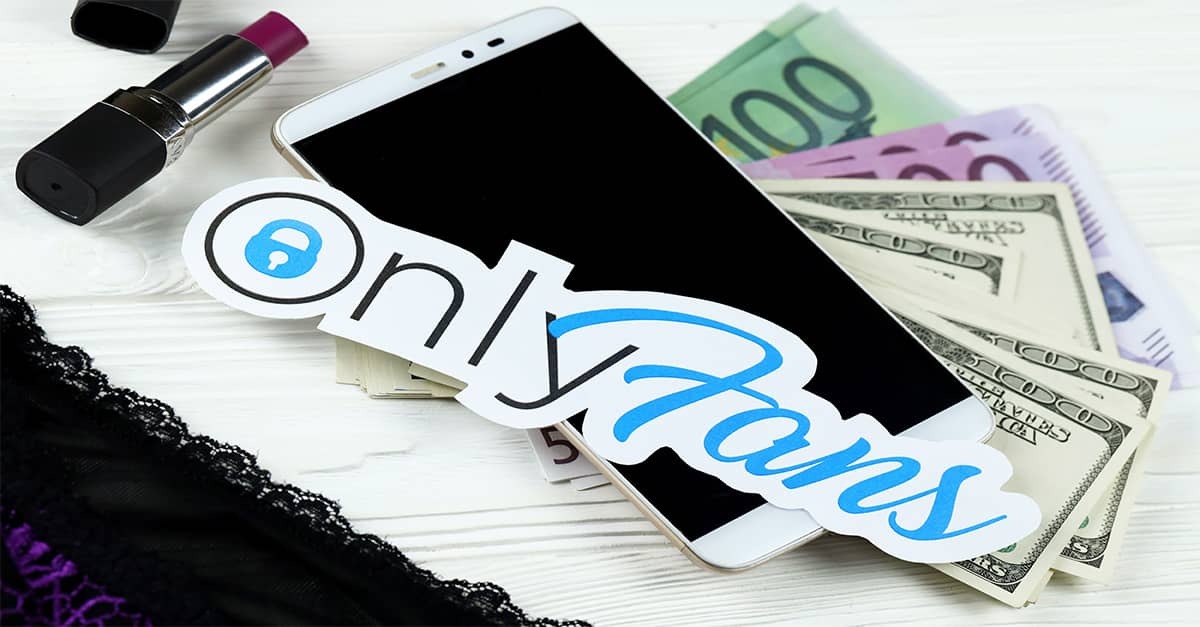
When OnlyFans launched in 2016, it was presented as a subscription platform where creators could self-manage their content without an intermediary. The business model initially targeted coaches, musicians, and influencers. However, due to its loose restrictions, the company became notorious for its high volume of sexual content. For creators of explicit material, the platform offered a seemingly direct path to their own audience.
Thus, OnlyFans was quickly sold as a platform that “empowers” women, providing them with independence in an industry that had historically relied on male-dominated distributors.
Its rapid rise as an entrepreneurial tool is difficult to overstate. In 2024 alone, OnlyFans generated around $1.4 billion in revenue, and by the end of that year, the platform had grown to 4.63 million creator accounts and 377.5 million fan accounts.
The appeal is obvious. In a culture where economic strain and the desire for recognition weigh heavily, the platform offers the appearance of control: ownership of the body, the image, and the brand. Former “Baywatch” actress Brande Roderick described the control she felt OnlyFans gave her over her content: “I’m my own Hugh Hefner,” she said.

For such women, OnlyFans appears to offer what the older sexual economy did not: income without dependence, exposure without exploitation, and most importantly, autonomy without submission.
Or so it seems.
The Paradox of Control
The irony is that this new cultural shift is a recapitulation of humanity’s ongoing desire to control others, a desire that history has repeatedly shown to consume societies from the inside.
In the The City of God, Augustine describes what he calls the libido dominandi — the lust for domination.
“For even those who command are themselves slaves to the lust for domination,” he writes, raising a question that remains relevant nearly 2,000 years later: Is it possible to appear in control while still being controlled?
After all, that was the promise of the sexual revolution. It sought to liberate sexual behavior from traditional constraints and give control to the individual. Coupled with the rise of contraception and abortion, sex was freed from both spiritual significance and consequence, paving the way for its desecration.
In effect, the revolution convinced people that sex had been brought under control. In doing so, the progression — from actions as basic as sex outside of marriage to platforms like OnlyFans — was only logical.
However, as E. Michael Jones argues in his book Libido Dominandi: Sexual Liberation and Political Control, sexual liberation is a tool for social and political control, evolving over centuries to manage populations through their passions rather than overt force. The book traces how the rhetoric of sexual freedom was used to engineer a system of covert control, replacing traditional moral orders with a new form of social management.
For example, Jones writes that Wilhelm Reich, an Austrian psychoanalyst and sex educator, believed that “the best way to attack the social system which rested on the authority of the father, who represented the authority of God the Father on earth, was to persuade the young person to engage in sexual activity before marriage.”
In other words, Reich used the illusion of sexual freedom as a means of undermining societal order. He wrote in The Sexual Revolution,
“A child whose motor activity is completely free, and whose natural sexuality has been liberated in sexual play, will oppose strictly authoritarian, ascetic influences. We thus see the revolutionary structuring of the child must involve the freeing of his biological, sexual motility. This is indisputable.”
Jones comments that it is virtually impossible to tell whether Reich is trying to liberate young people sexually or control them politically. Reich’s theory, after all, was that sexually active children were natural revolutionaries, and by “liberating” them from the gaze of divine shame, parental authority, and moral order, they could be formed into his foot soldiers for revolution. It is not surprising, then, that by the 1960s, sexual radicals would put his logic into practice, disseminating pornography as a tool for “sexual education.”
And while there may not be as nefarious a figure as Reich at work today, the same pattern remains.
A 2021 report from The Avery Center found that 30 percent of surveyed OnlyFans creators had received warnings that their profiles could be taken down if they did not continue posting new content. Six percent admitted that they had very little control over what they created or how it was used because traffickers managed their accounts. Additionally, 34 percent of the creators expressed negative mental health consequences, including anxiety, depression, shame, and fear.
Such statistics expose the irony of so-called sexual freedom: It is not free at all. Those who are ruled by vice are, in turn, ruled by others. When people are given over to their desires, they become vulnerable to coercion and manipulation under the guise of freedom and autonomy.
When “Freedom” Becomes Slavery
One need not be an expert on political history to understand this truth. The Bible already speaks of freedom and control in categories that show absolute autonomy is impossible. Romans 6:17 says,
“But thanks be to God, that you who were once slaves of sin have become obedient from the heart to the standard of teaching to which you were committed.”
The language of slavery here is intentional. Sin is a master that dominates our actions and desires.
The modern idea of “freedom” often insists on absolute autonomy — the ability to self-determine apart from consequence. However, the passage further explains that every person lives under one of two masters: slavery to sin or freedom in Christ. As Romans 6:20-23 explains:
“For when you were slaves of sin, you were free regarding righteousness. But what fruit were you getting at that time from the things of which you are now ashamed? For the end of those things is death. But now that you have been set free from sin and have become slaves of God, the fruit you get leads to sanctification and its end, eternal life. For the wages of sin is death, but the free gift of God is eternal life in Christ Jesus our Lord.”
One master — sin — leads to shame and death. The other — God — leads to sanctification and eternal life.
The irony, again, is clear. It is the fulfillment of Augustine’s insight: The one who believes he is in control is, in reality, under subjection. The individual who believes he masters sex is, in turn, mastered by it.
The question, therefore, is not whether one will be ruled, but by whom. One master, sexual sin, leads to death; the other, Christ, leads to life. This means the Gospel does not call sinners to find autonomous freedom, but to be delivered from themselves and brought under the gracious rule of Christ.
For the woman creating such content, that may mean leaving it all behind and awaking from the illusion that OnlyFans perpetuates. No longer can she live under the belief that her body and image are hers to rule. Rather, she must submit the whole sum of her life to God’s good commands.
For the man consuming such content, it means confession, repentance, and a swift turn toward seeing women as image-bearers of God, not as objects for consumption and pleasure.
And while such a life is not always glamorous or profitable, it is the only truly free life. Christ offers what sexual autonomy never can: peace without shame, and life without bondage.
When a culture teaches women to turn intimacy into inventory and men to treat image-bearers as products, the Church must tell a better story – one of dignity, repentance, and real freedom in Christ. Your tax-deductible gift helps the Standing for Freedom Center expose the lies that reduce people to commodities, equip believers with a biblical worldview, and defend the faith, family, and freedom that allow America to flourish.