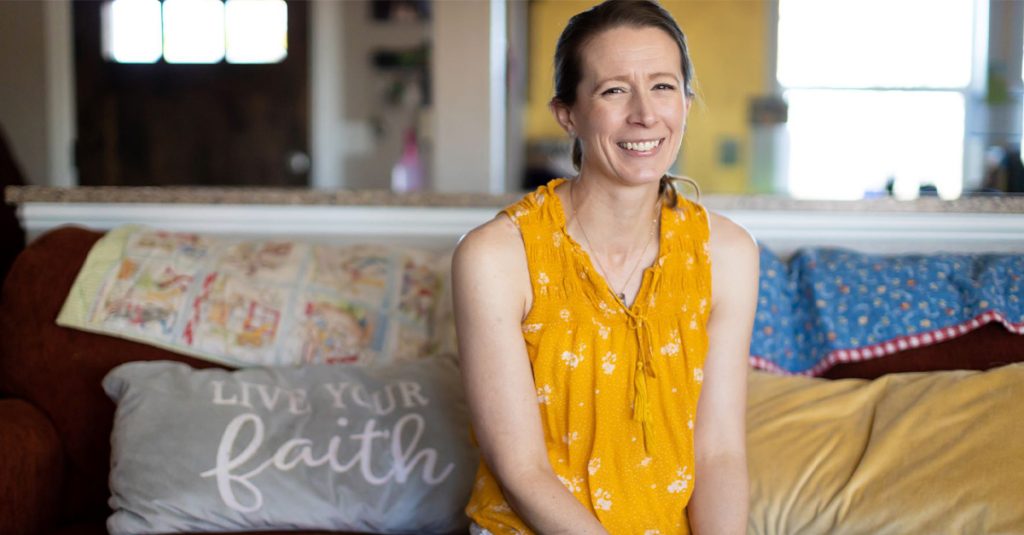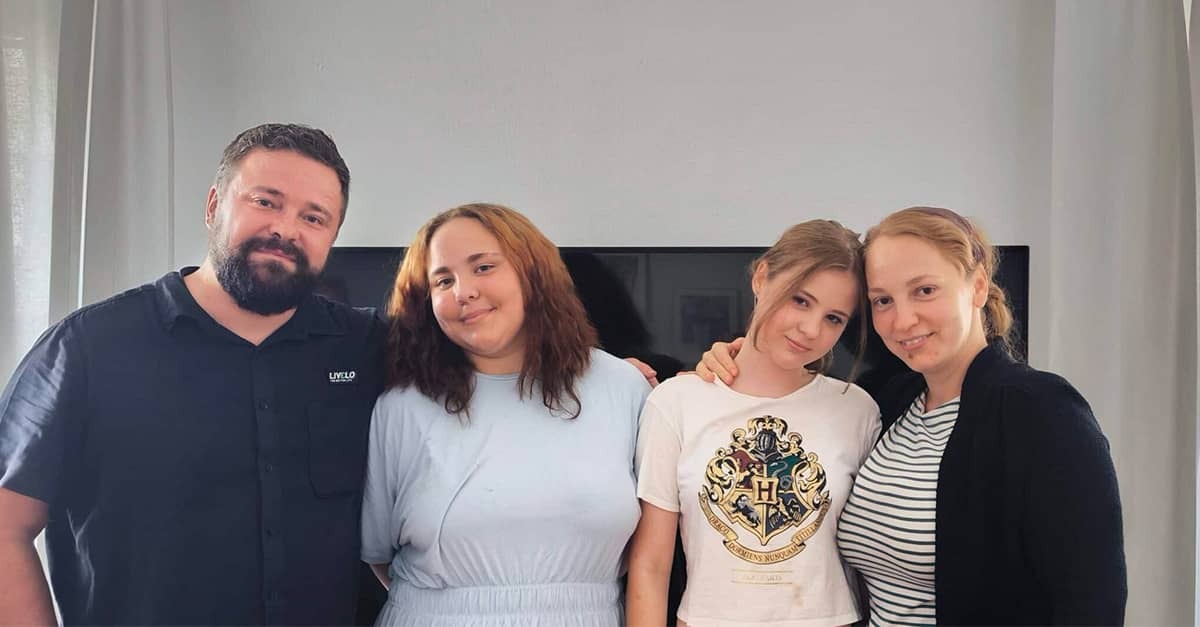
Sweden officials took custody of Daniel and Bianca Samson’s children on a disproven abuse accusation, but has refused to reunite them for more than three years because of the family’s “extreme” church attendance and parenting rules.
The European Court of Human Rights has declined to hear a case brought by a Christian couple seeking the return of their two daughters, who were taken into state custody by Swedish authorities in 2022 following allegations of abuse and concerns about religious extremism.
Daniel and Bianca Samson have spent more than three years attempting to regain custody of their daughters, Sara, then 11, and Tiana, 10. According to the family’s legal representative, Alliance Defending Freedom (ADF) International, the European Court of Human Rights ruled that the case was “inadmissible” because the parents had not exhausted all available legal remedies in Sweden. ADF International disputed that conclusion, saying in a statement that “there were no further options for domestic recourse.”
ADF International also said the court “indicated that it did not consider there to be an apparent violation of the right to respect for private life under the European Convention on Human Rights.”
The court said the Samsons could potentially pursue their claims in national courts under religious freedom arguments. ADF International said it is working with the family to determine what, if any, legal steps might be open to them going forward.
“Parents have the primary responsibility and right to raise their children,” Guillermo A. Morales Sancho, legal counsel for ADF International, said in a statement. “When the state interferes with family life based on values-based parenting choices or discrimination on the basis of faith, fundamental freedoms are at stake.”
The children were removed from the home after Sara told school officials that her parents had abused her. According to ADF International, she later withdrew the allegation, which the organization said stemmed from a dispute over her parents’ refusal to allow her to have a cell phone or to wear makeup.
Authorities opened an investigation into the family but later closed it after finding no evidence of abuse. During the investigation, the Samsons agreed to place their daughters in foster care temporarily. The parents also completed a government-mandated parenting program during the dispute, and the instructors reportedly certified their ability to care for their children.
Despite that evaluation and the closure of the abuse investigation, Swedish officials declined to return the children, labeling the parents as “religious extremists” based on their frequent church attendance and household rules that prohibit their young daughters from wearing makeup or having their own cell phones.
The Samsons turned to the European Court of Human Rights last year after Sweden’s Supreme Court declined to review their case.
The family, originally from Romania, had lived in Sweden for nearly a decade before the dispute with authorities began. The couple maintains that Swedish child protection services ignored the best interests of their daughters after the abuse allegations were dismissed and prosecutors found no evidence of wrongdoing.
According to ADF International, the girls have remained separated from their parents and from each other since December 2022, living in different foster homes. The arrangement has limited the family’s contact to just a single supervised visit each month.
The Samsons say their daughters have repeatedly asked to come home and that their health has declined during the prolonged separation.
The case has drawn attention from advocates who argue that family welfare systems across parts of Europe have suffered criticism in recent years for removing children from families and delaying reunification even after allegations are dismissed. Legal advocates say the case raises even wider concerns about the power of the state to openly discriminate against families because of their religious beliefs.
ADF International said it is reviewing the European court’s decision and considering what the family’s legal options.

Sweden’s ongoing actions to keep these two young girls separated from their Christian parents should terrify anyone who values family, religious liberty, and basic human rights. While governments have a legitimate duty to protect children from abuse, that authority becomes dangerous when it is used to punish parents for their beliefs or values.
In this case, Swedish authorities removed the daughters of Daniel and Bianca Samson after an allegation that was later withdrawn and a thorough investigation that found no evidence of abuse. Yet even after the case was closed, the children were not returned to their parents. Instead, officials decided that the parents are “religious extremists” and unfit, in part because they attend church frequently and set conservative rules in their home.
This is the outworking of the progressive secular ideology that has taken root in many Western countries. This belief system is rooted not in tolerance but in permissiveness, and that puts it in direct conflict with Christianity, which teaches restraint, duty, self-control, obedience, and yes, regular church attendance and fellowship with other Christians.
Most importantly in this case, Christians believe that parents, not the state, bear the primary responsibility for raising their children. Ephesians 6:4 instructs fathers to bring their children “up in the training and admonition of the Lord.” Deuteronomy 6 likewise calls parents to teach God’s commands to their children in daily life. These responsibilities cannot be fulfilled if governments remove children simply because they disagree with a family’s moral convictions.
A free society must respect the fundamental right of parents to raise their children in accordance with their faith and values. Governments cross a dangerous line when they begin to treat traditional Christian parenting as a problem to be corrected rather than a freedom to be protected.
This case also highlights a disturbing trend in parts of the West where strong religious convictions are increasingly portrayed as “extreme.” If attending church regularly or creating boundaries about makeup, technology, or other activities can be used to justify labeling parents as extremists, then countless Christian families could find themselves investigated and their own children taken from them.
And, in fact, this family’s nightmare is not just a European problem; American families are facing similar threats.
A Maryland couple, both U.S. military veterans and devout Christians, lost custody of their autistic son after refusing to “affirm” him as a transgender girl while he was being treated at Children’s Hospital in Washington, D.C. Similarly, a Maryland judge refused to return a runaway girl to her parents because they didn’t immediately affirm the girl’s recent decision to identify as a boy; after being placed in a group home for boys, the girl ran away again, was kidnapped, and taken to Texas, where she was sex trafficked for months before finally being rescued. And in Maine, a family court judge ordered a Christian mother to stop taking her daughter to church, reading the Bible with her, or associating with other Christians because Christianity is “psychologically harmful” and “cultic.”
And many progressive states are pushing legislation that openly interferes with parental rights, including California and Colorado.
Families are the cornerstone of any good, prosperous society. When government authorities undermine the family, society itself is dramatically weakened. Parents have the God-given authority and responsibility to raise their children, and in any society, especially a free one, they should be able to do it without fear that the state will take their children away simply because they are Christians.
If you like this article and other content that helps you apply a biblical worldview to today’s politics and culture, consider making a donation here.