The First Circuit found Bow officials likely crossed a constitutional line when they punished a silent, non-disruptive protest against a transgender-identifying male competing in girls’ soccer.
[UPDATE] The First Circuit Court of Appeals ruled on August 26 that a New Hampshire school district likely violated the First Amendment by removing two fathers and a grandfather from a girls’ soccer game after they refused to take off “XX” wristbands as a protest against a transgender-identifying male’s participation in a girls’ competition.
A three-judge panel overturned an earlier district court ruling in Fellers v. Kelley, concluding that Bow School District likely engaged in unconstitutional viewpoint discrimination when officials restricted the spectators’ silent protest during a soccer game on September 17, 2024.
The district had threatened Anthony Foote, Eldon Rash, and Kyle Fellers with arrest and issued no-trespass orders against the three men, but the panel noted that their silent protest did not disrupt the game nor attract the attention of players, including transgender athlete Parker Tirrell.
School Superintendent Marcy Kelley had argued that displaying the “XX” symbol was “intimidating, threatening, harassing, and discouraging” toward Tirrell.
The appeals court rejected that argument. While the three wore the wristbands “because of Tirrell being a player, the record does not contain evidence of appellants engaging in harassment,” Judge Sandra Lynch wrote: “To the contrary, appellants did not shout, chant, make threats, or aggressively gesture at Tirrell to communicate their views.”
Del Kolde, senior attorney for the Institute for Free Speech, represented the three plaintiffs, responded to the free speech win by saying,
“This ruling reaffirms parents have a right to silently express their views on controversial issues, including on girls’ sex-based rights, even if school administrators strongly disagree with them. If school officials allow expression supporting one side of a political debate, they cannot ban silent, peaceful expression on the other side. Our clients simply stood up for their First Amendment rights.”
The appellate panel distinguished the wristbands from categories of student speech that schools have greater authority to restrict, including bullying, harassment, and lewd or offensive conduct. Lynch wrote that the passive display was not sufficiently severe or pervasive to create an abusive environment.
The judges also noted that the disruption during the game began only after school officials intervened at halftime. The referee suspended play for about 15 minutes while officials imposed restrictions on the spectators.
The court rejected the district’s argument that Title IX, the federal civil rights law governing women’s sports in schools, required officials to restrict the wristbands as harassment. It also cited the Supreme Court’s 2026 landmark ruling in West Virginia v. B.P.J., which allows states to ban males from participating in female athletic competitions.
The panel emphasized that its decision was limited to the circumstances surrounding the September 17 game and did not establish a broad rule governing every display of the “XX” symbol at school events.
The appeals court sent the case back to U.S. District Judge Steven McAuliffe to determine what relief should be granted to the plaintiffs. New Hampshire’s law restricting female sports to female athletes remains in effect following the Supreme Court’s decision earlier this year.
ORIGINAL ARTICLE
When Courts Believe That Feelings Matter More Than Constitutional Rights
{Published on April 23, 2005} A U.S. district court ruled last week against adults who wore a wristband displaying the letters “XX” to a girls’ soccer game, interpreting it as a direct assault on transgender individuals.
This ruling in the case of Fellers v. Kelley raises serious First Amendment concerns about the boundaries of free speech and the role of public schools in controlling freedom of expression.
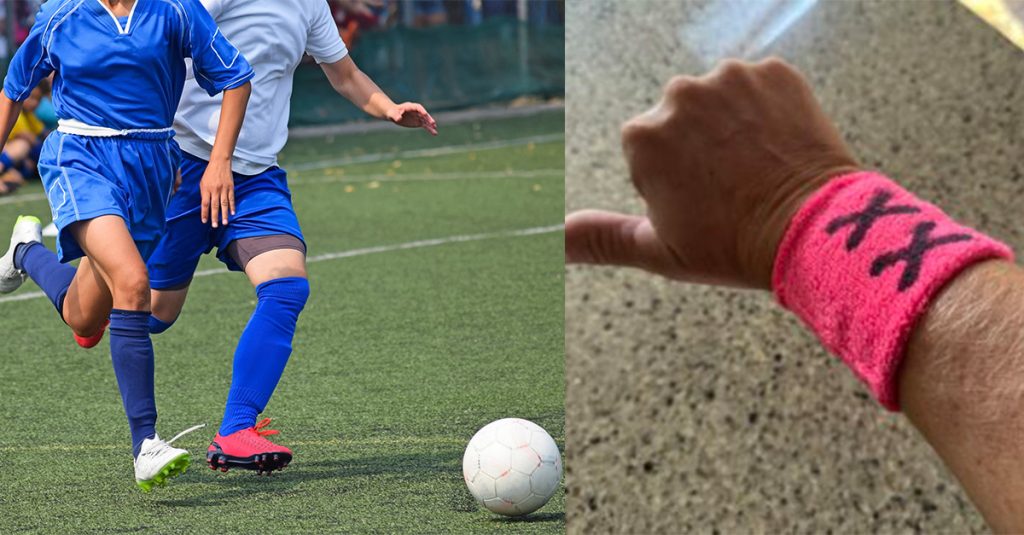
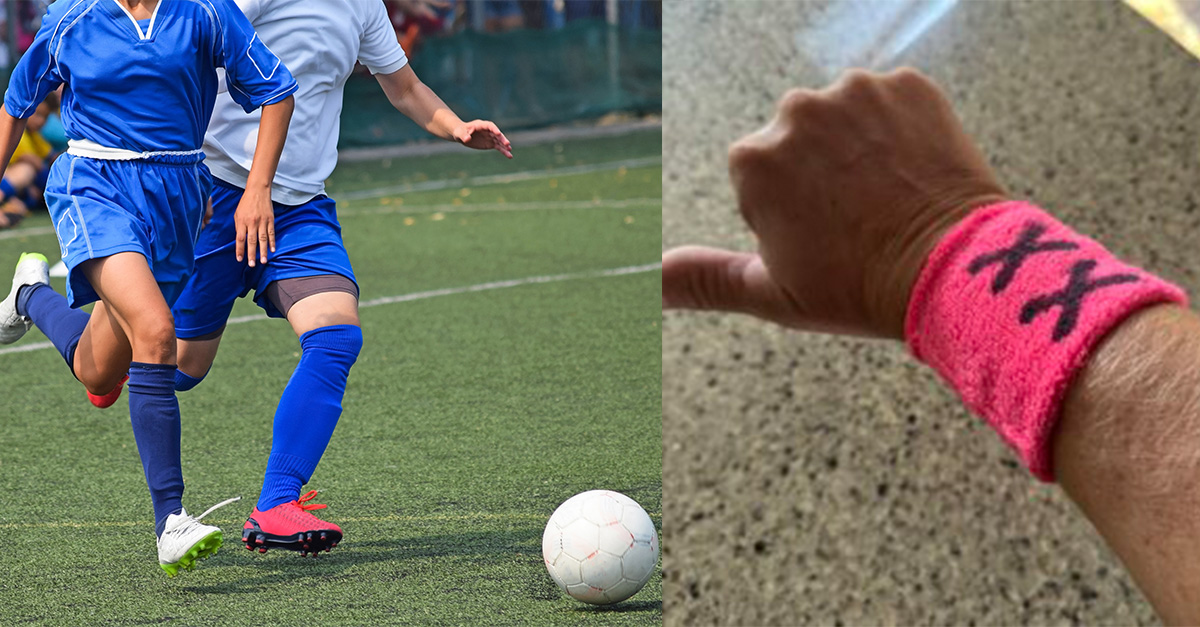
The controversy began when two fathers, Anthony Foote and Kyle Fellers, chose to wear wristbands with “XX,” referencing female chromosomes, to a girls’ soccer game in Bow, New Hampshire. The parents intended the wristbands to affirm biological definitions of sex, as they were upset that their daughters were expected to compete against a biological male.
Before the September 17 match, Bow High School administrators cautioned parents against protesting the participation of a 15-year-old boy on the opposing team. After showing up at the soccer match with the “XX” wristbands, Bow High School staff stopped the game, summoned police in response to the fathers’ actions, and banned both men from school grounds.
Judge Steven McAuliffe upheld the school’s decision, asserting that, “The message generally ascribed to the XX symbol, in a context such as that presented here, can reasonably be understood as directly assaulting those who identify as transgender women.”
He added,
“Because gender identities are characteristics of personal identity that are ‘unalterable or otherwise deeply rooted,’ the demeaning of which ‘strikes a person at the core of his being,’ and because Bow school authorities reasonably interpreted the symbols used by plaintiffs, in context, as conveying a demeaning and harassing message, they properly interceded to protect students from injuries likely to be suffered.”
Former NCAA swimmer and women’s sports advocate Riley Gaines supported the parents in their legal battle.
“A federal judge just ruled that two fathers can’t wear pink wristbands that say ‘XX’ to silently protest male inclusion in women’s sports,” she posted to X. “The judge said the female chromosomes, XX, are a ‘demeaning and harassing assertion.’”
One of the dads, Anthony Foote, refused to back down, telling the NH Journal that he plans to continue the legal battle.
“What was our offense? Supporting girls’ sports and defending biological reality?” Foote said.
“This ruling is a slap in the face to every parent who believes schools should be a place of fairness, not political indoctrination. The judge openly admitted that Pride flags are allowed because they promote ‘inclusion,’ but wristbands defending women’s sports are banned because they might ‘offend’ someone. That’s viewpoint discrimination, plain and simple — and it’s unconstitutional,” Foote argued.
U.S. Attorney General Pam Bondi also addressed the issue last week, adding her support to the wristband-wearing parents.
“I have asked my @CivilRights Division to examine this matter. This DOJ stands with women and their supportive parents,” she posted to X, referring to the judge’s ruling.
And, in fact, Harmeet Dhillon, U.S. assistant attorney general for the Civil Rights Division, weighed in, arguing that the ruling is unconstitutional and will not stand. “Every father has not only a right but also a duty to stand up for his daughters, and the right to free speech is not curtailed by subjective ‘feelings,’” she wrote.
Last year, New Hampshire passed a law banning men from women’s sports. A judge later blocked the law, allowing two male students to compete in girls’ athletics.
President Trump signed an executive order in February to protect women’s sports. He previously signed an executive order on January 20 defining two sexes — male and female — within the federal government and institutions that receive federal funding.
In February, attorneys with Alliance Defending Freedom (ADF), representing Female Athletes United (FAU), a group of female athletes, filed a motion in the U.S. District Court for the District of New Hampshire to intervene in the case of Tirrell v. Edelblut, a legal challenge to the New Hampshire women’s sports law and the Trump administration’s efforts to protect women’s sports. FAU, which has many members who have been forced to compete against males, hopes to help successfully defend both.
“Women and girls deserve privacy, safety, and equal opportunities. That can’t happen when males are competing in women’s sports, taking spots on women’s athletic teams, and winning women’s championships,” said Jonathan Scruggs, ADF Senior Counsel and Vice President of Litigation Strategy and Center for Conscience Initiatives.
“President Trump’s executive orders and New Hampshire’s law merely recognize common sense and track Title IX, the federal law that ensures equal opportunities for women in athletics,” he added
About half of the nation’s states have recently passed laws banning males from girls’ and women’s sports in recent years, with some still pending, including Georgia’s Riley Gaines Act, which was approved by the General Assembly and now awaits the governor’s signature.
This case, however, extends far beyond just protecting women’s sports — this is a serious First Amendment issue. The Constitution guarantees individuals the right to free speech, a protection that extends to public schools. Allowing schools to censor speech based on subjective interpretations that could lead someone to be “triggered” sets a precarious precedent.
If expressions grounded in scientific facts can be considered offensive enough to be censored, it opens the door to censorship and the suppression of all other viewpoints. Clearly, at Bow High School, and also, unfortunately, in too many federal courts, only one perspective is permitted on this issue — undermining the healthy discourse essential to a free society while also trampling all over the free speech and protest rights of its citizens.
Equating the affirmation of biological sex with an “assault” on transgender individuals also wrongly connects disagreement with discrimination. A person should be able to disagree with someone without the action automatically being considered discrimination.
Schools significantly influence society, where students are exposed to diverse ideas and learn to engage in civil discourse. Suppressing speech that aligns with traditional sex definitions hampers this educational mission.
By penalizing the parents for wearing the “XX” wristband, the school bypassed freedom and opted for censorship, creating a challenging legal situation for the parents and the school community. Upholding the First Amendment requires standing for truth, even when the perspective doesn’t fit a leftist narrative.
As America continues to face controversies surrounding gender and identity, educational institutions must protect women and girls in sports and stand for freedom of speech.
Free speech matters most when the message is unpopular. If this story helped you see why defending truth and constitutional freedom still matters, help us keep bringing biblical clarity to the cultural battles shaping the next generation. Make a tax-deductible gift today.