Angel Studios’ hit film embraces George Washington as a hero and reminds us that the stories we tell about our past help shape the character of the next generation.
It is a common thought today that the Western world is rational and evolved. One often hears that our ancestors were backwards simpletons, to be pitied more than venerated. We peer at the pre-modern world through frosted glass, unable to recognize our own fathers.
This kind of talk springs from the idea that we are a scientific, technological people who have solved the mysteries of the world. It is hard to argue against this. Man has walked nearly every ridge, dale, and draw on earth. Save a few curiosities, such as Bigfoot or the Loch Ness Monster, the immaterial world is dead to our eyes.
The modern man reasons: “the experiments have been run, and we are certain that there is nothing more than the material world. The legends of old existed to ease our fears of demons, witches, and monsters. We now know such things do not exist. So what use have we for heroes or gods?”
Is it any wonder that the 20th century is defined by iconoclasm — the destruction of the holy?
First, the images of God were cast down by secular humanists who, above all, opposed Christ. The war against “Christian America” was relentless. A man born in 1915 was a man born into a nation whose identity was in Christ— in that era, over 90 percent of Americans identified as Christian, with more than half of them attending church regularly. Our cultural traditions were rooted in our shared Christian faith. A century later, he died in a pagan nation, one that had fully embraced abortion, child mutilation,“assisted suicide,” and other moral evils.
Next came the sacred American stories, our mythology. George Washington was no longer the incorruptible patriarch of a nation — he was a slave owner, a hypocrite. Thomas Jefferson’s Monticello now has a permanent “Slavery at Monticello” exhibit, designed to “balance the historical record.” In practice, these programs put our Founding Fathers on trial. They have been cut down so they can more easily be replaced.
The New Mythology
Our founding myths are not being destroyed by truth-seekers — they are being replaced by rival mythmakers.
In their place rises a new crop of Leftist heroes whose pasts are equally whitewashed for cultural expediency. Take, for example, the Civil Rights-era heroine Rosa Parks, whose story is told in classrooms nationwide. She is presented as a weary commuter who spontaneously stood against segregation in the South. There is an air of destiny about it, as if she had been plucked from obscurity by Providence for greatness.
History tells a different tale. The Women’s Political Council had long planned to find the right candidate to initiate the Montgomery bus boycott. Months earlier they had passed on Claudette Colvin — an unwed, pregnant teenager who could not effectively anchor the story they were weaving. Parks was far more than a tired seamstress: she was a veteran organizer and secretary of the local NAACP and knew what her arrest could set into motion. When she was taken into custody for refusing to take a seat at the back of the bus, the movement finally had its banner-bearer — someone they could craft a myth around.
It’s curious, is it not, that the new American legends enjoy the same hagiography now denied to the Founding Fathers.
Young George Washington, the Hero
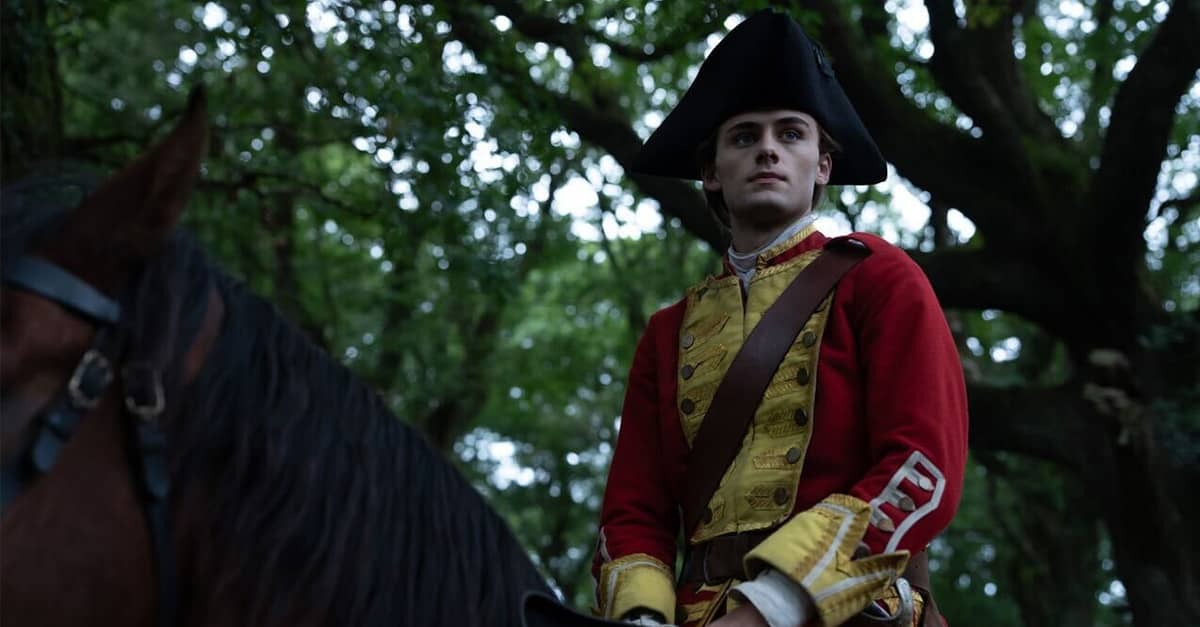
Angel Studios’ film “Young Washington” is a pleasant departure from this form of hero denigration. It takes itself surprisingly seriously — there is no irony, no Marvel-esque quip to undercut the gravity of the moment. It is mythological, a point it doesn’t shy away from. This revolutionary vision earned the film a $48 million box office run — enough to greenlight a sequel.
The movie focuses on George Washington’s early years, ending with his service in the French and Indian War. He is a classic male hero: ambitious, brave, and bound by an unshakable sense of honor. This is a kind of virtue that is often forgotten on screen.
Washington’s virtue springs from his ability to live historically — he knows where he came from and the people he is duty-bound to serve. He has plenty of ambition, but it is not lust for power or fame. As a Virginian, his foremost care is the well-being of his own people, a duty he is willing to bleed for. Thomas Aquinas describes this as piety: the debt a man owes the parents and country that made him. You can feel the burden of that debt in every scene.
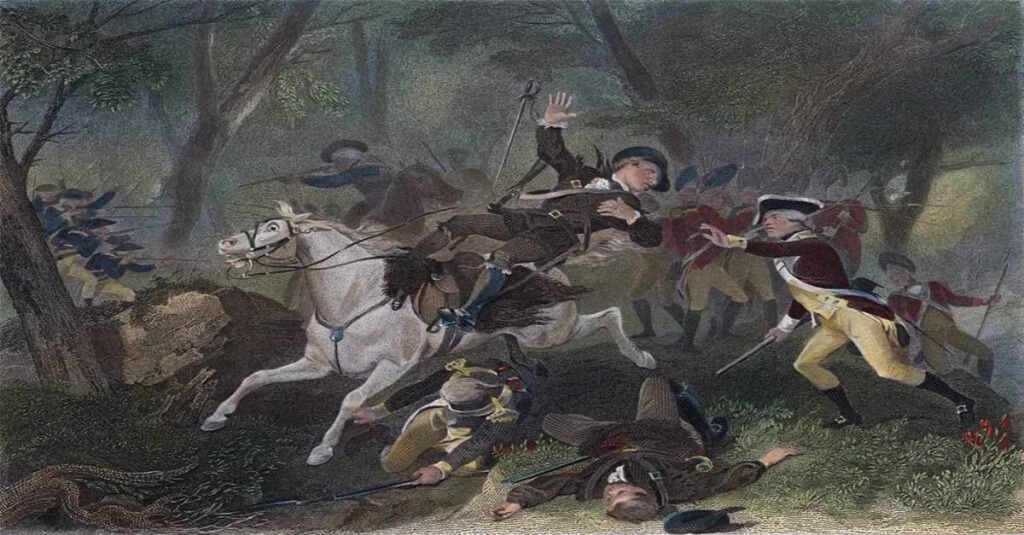
The climax of the film is set during the Battle of the Monongahela, in which the British were ambushed by French and Indian forces. Riding through the smoke, musket balls tearing through his coat, Washington is the picture of courage. In a skirmish where 70 percent of his men were killed or wounded, he emerges unscathed, protected by God Himself. We feel the swell of the moment as he rescues his surrounded Virginians, abandoned by their British commanders to a certain death. These are the tales that would be told about Washington 20 years later on the eve of Revolution — the seeds of his mythology were planted.
In an industry colored by the cynicism of “Game of Thrones,” it is refreshing to see heroics unsullied by irony or performative cruelty.
After the battle, British Lt. Col. Thomas Gage laments the slaughter. “Whose land is this anyway…my land is an ocean away,” he says, weakly.
“It’s our land…[and] that is the difference between us,” Washington retorts.
These are the stories worth telling our sons and daughters today.

The Stories We Tell Ourselves
The Christian tradition has always embraced myth as a means to forming virtuous men. The stories we tell ourselves matter a great deal.
The closing scene of “Young Washington” is hagiography — the Indians prophesying Washington’s great destiny first appears in Parson Weems’s Life of Washington (1800). Most scholars consider his work to be embellishment, but that it wasn’t entirely factual doesn’t undercut its cultural value. Abraham Lincoln read that very book in his boyhood cabin, one of the first stories he ever read. In 1861, he told the New Jersey State Senate that it had marked him for life. The mythology of Washington’s exploits formed one of the most consequential presidents in American history.
This is true of all children. The stories they hear growing up will shape their politics, faith, and calling — and not always for the better. Our rivals know this, and they are relentlessly forging their own myths to dethrone ours. They have mostly succeeded.
And yet, films like “Young Washington” give us a glimmer of hope. My six-year-old son left the theater shooting his imaginary gun, reenacting the heroics he had just witnessed on the screen. “Let’s go save our guys!” he shouted. This is a seed of virtue that has been planted, and my work as a father is easier for it.
We need to give a positive vision of the world to our children. It is not enough to oppose evil; we must show the good. When we tell them stories of brave men and faithful women, we have already begun fighting the battle for their souls.
The stories we pass down help shape the people who come after us. If Standing for Freedom helps you recover the truths, heroes, and biblical convictions worth handing to the next generation, your gift helps us keep telling stories that form courage, strengthen faith, and preserve freedom. Help us pass on what is worth remembering.