The classics revival isn’t born from simple nostalgia. Young Americans are desperately searching for truth in a shallow, Christless society.
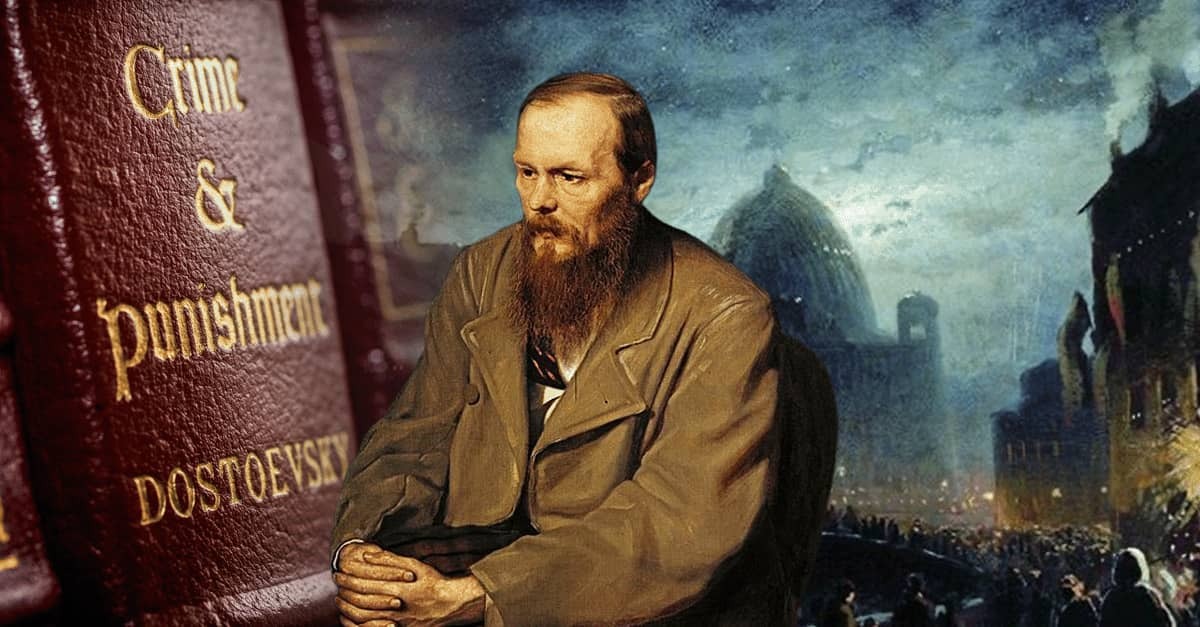
Penguin Classics has a real mystery on its hands. Since 2016, sales of Fyodor Dostoevsky’s Crime and Punishment have risen 450 percent, and his other great novels have climbed along with it. Ten years ago, Dostoevsky ranked 40th among the publisher’s bestselling authors; today, he ranks 4th.
Jess Harrison, editorial director of Penguin Classics, admits the trend “feels quite mysterious,” guessing that it’s the old Russian author’s “gloom and nihilism” that is drawing in younger generations. And why not? Gen Z’s detractors have long called them a shallow, nihilistic generation. The shoe seems to fit.
But the shoe doesn’t fit. Gen Z is less colored by cynicism than a hunger for truth — a generation reaching, only half-knowingly, for the old Christian teachings of man’s fallenness and God’s grace. To call Dostoevsky a nihilist is to miss the core message of his books — redemption.

The Hollowing of the Bestseller
The landscape of modern literature is bleak. Bestsellers have been thinning out for 60 years, and the decline is measurable. Ben Blatt, statistician and author of Nabokov’s Favorite Word Is Mauve, recorded this trend, running decades of commercial bestsellers through the Flesch-Kincaid readability test. The results speak for themselves. The average bestseller in 1960 was written at an 8th-grade reading level; by the year 2000, it had sunk to just a 6th-grade level. In fact, in the last 26 years, only two No. 1 bestsellers have scored above the 9th-grade level.
So, the complexity of bestselling fiction is steadily falling, but does that necessarily mean the quality is falling too? After all, it’s Ernest Hemingway’s simple, Anglo-Saxon prose that draws readers to him. His The Sun Also Rises scores a lowly 4.2 on the Flesch-Kincaid test — a slightly advanced 4th grader could read the book. In spite of that, Hemingway lives comfortably among the great classic novelists.
So, no, simplicity alone is not the main charge. Blatt’s evidence shows one piece of the wider sickness, but it cannot show the absent soul of mainstream literature. Modern bestsellers are hollow intellectual fast food. And the rot is culture wide. A 2024 study in Scientific Reports analyzed 12,000 songs over 40 years and found that not only are lyrics getting simpler but they are becoming more self-obsessed. Words like “me” and “mine” climbed across each decade. Steadily, the focus of modern media has turned inward.
The market has optimized for exactly this. The young-adult novel corner of “BookTok” (TikTok’s subculture of reading enthusiasts) is purpose-built for the attention economy — fast, exciting, and easy to get through. The formula works: Young-adult fiction is the fastest-growing print category of the decade. More than half of young adult books are purchased by grown adults — most often for themselves. Whereas a boy once read Treasure Island at 10 so he could read Moby-Dick at 20, the modern reader is stuck on Twilight.
Dostoevsky is not a casual afternoon read. His novels introduce dozens of flesh-and-blood characters over hundreds of pages. The prose is harder to work through, the ideas are knotty, and the payoff comes much later. The friction is the point. And now young readers are swimming against the current of the attention economy, deliberately choosing harder novels. Why?
Writers Without Lives, Readers Without Experiences
In his “Monologue to the Maestro” Hemingway argues that “good writing is true writing,” adding that a fictional story is only true in proportion to the author’s life experience. To write well, you must have lived well. Every experience, great or terrible, lends itself to this creation.
Hemingway himself says that “Dostoevsky was made by being sent to Siberia. Writers are forged in injustice as a sword is forged.”
Dostoevsky’s work is powerful because his life is peppered with real hardship: his mock execution, Siberian labor camp experience, epilepsy, gambling ruin, and the death of his son. His fiction bleeds because he bled.
Modernity is so stable that the natural paths to glory and adventure are gone. The mountains have all been climbed, the oceans all sailed. There is no Manifest Destiny, no wilderness to settle. Deprived of these experiences, Millennials and Gen Z have shrunk into themselves; even face-to-face socializing is down nearly half among teenagers today.
The shallow nature of modern society is reflected in mainstream writing — there just isn’t a deep well of lived experience to draw inspiration from. A generation short on lived experiences can neither write a Crime and Punishment nor find one among its contemporaries. They must look back to the men who lived enough to write truly.
This modern frustration is well represented in Dostoevsky’s novel Notes from Underground. In this, we see a portrait of what a life without experiences produces. The Underground Man lives in the shadows of his own mind, self-segregated from humanity in a state of hyperconsciousness. He spends his days thinking obsessively about every interaction and decision in his life, oscillating between self-flagellation and petulant arrogance. In many ways he is the stereotypical “brainrotted Zoomer” (to borrow an uncharitable pejorative) who is so paralyzed by indecision that he never becomes anything at all. “I could not become anything; neither spiteful nor kind, neither a rascal nor an honest man, neither a hero nor an insect,” he laments.
Notes from Underground speaks right to the reader, and its message rings true with Gen Z. “I have only in my life carried to an extreme what you have not dared to carry even halfway,” he says. It is a warning, a plea to face our inner wretchedness before it consumes us.
Why Crime and Punishment?
If the Underground Man resonates with Gen Z’s miserable state of self-isolation, Crime and Punishment answers its darker question: What happens to the man who lives as if there were no such thing as truth at all?
The protagonist, Raskolnikov, is a smart, isolated young man who reasons himself past common morality. The Above-Ground Man, if you like. He is possessed by the idea that there are “extraordinary men” who can step over traditional morality in service of the greater good — essentially Nietzsche a generation before Nietzsche. The reader follows every sordid thought that leads him closer to the act of murder. Every rationalization (“What do you think, would not one tiny crime be wiped out by thousands of good deeds?”) along the way.
When the axe falls, one almost feels pity for knowing the psychic suffering Raskolnikov is about to endure. And suffer he did.
The cure, when it arrives, does not come from human effort. Raskolnikov could not reason his guilt away, nor could his ill-gotten riches comfort his mind. Instead, in a rented room in St. Petersburg, the murderer asks a prostitute to read to him. Sonya, trembling, reads a passage from John 11 — the raising of Lazarus. This is the hinge of the entire novel: redemption, the justification of a sinner.
Dostoevsky was a man of deep Christian faith, and it shows in his writing. One could see the resurgence of his work as a reflection of Gen Z’s own return to the Christian faith — a prodigal generation of sorts. It’s no wonder that secular booksellers are confused by the sudden shift.
Seeking and Finding Truth
And so, the Penguin Classics mystery isn’t all that mysterious. Young Americans want the truth, no matter how ugly or terrible that truth is. The Underground Man, wretch though he is, reflects something authentic back to the reader. He never became anything, and it is useful to know that life can turn out that way. No one is promised happiness. And as young Raskolnikov learned, mankind cannot be its own god, nor can the wealth of the earth make one happy. His redemption echoes an ancient truth that is firmly Christian.
Dostoevsky endures because he wrote what was true, and it was true because he was well acquainted with living. A generation that has lived too little has found itself in the Russian who lived too much. In the end, the truth has pointed them back to Christ.
Every generation is searching for a story that is true. Your gift helps the Standing for Freedom Center cut through the noise and point young people toward the timeless truth of God’s Word. Help us create content that calls a generation home.