Billions of taxpayer dollars have been stolen through coordinated fraud schemes while officials looked the other way. Scripture calls this sin — theft achieved through lies — and the Church must call it out.
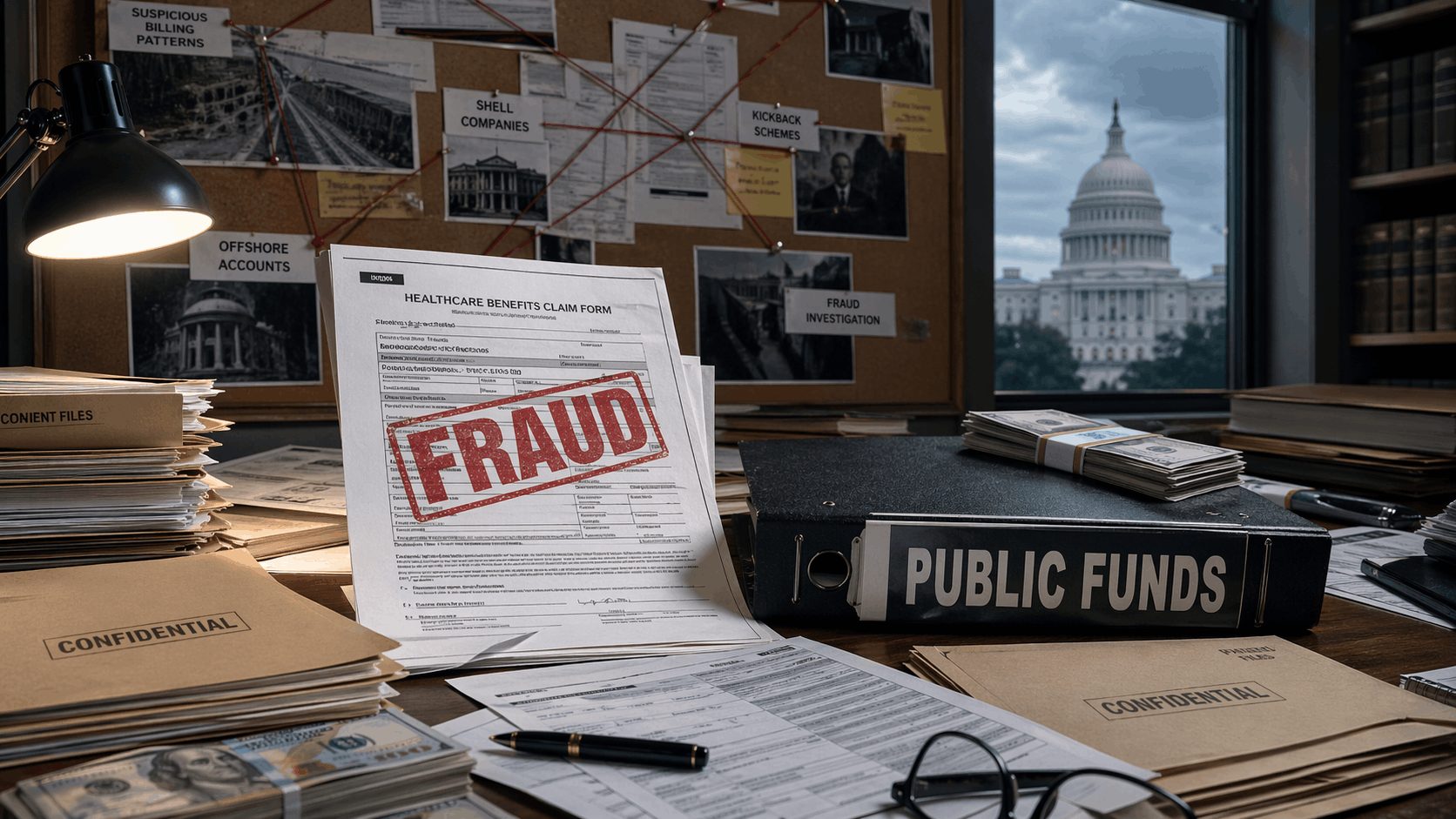
On April 9, California Attorney General Rob Bonta announced criminal charges against 21 suspects accused of stealing $267 million from the state’s Medi-Cal program through 14 sham hospice companies. According to the state, the scheme relied on stolen identities, phantom patients, and billing for care that was never delivered. It was brazen, organized, and deeply calculated. And as shocking as that takedown was, it now looks less like an isolated scandal and more like a window into a much larger national crisis.
Over the last several months, a hard truth has become impossible to ignore: the public treasury is being looted on a staggering scale, and the problem is not confined to one state, one party, or one program. What many Americans first saw in Minnesota during the COVID era has now been echoed in California, New York, Maine, and across the federal government itself. The Government Accountability Office estimates that the federal government loses between $233 billion and $521 billion to fraud every single year. That is not mere bureaucratic sloppiness. That is a national emergency.
A National Crisis of Public Theft
The pattern is now too widespread to dismiss. In California, the House Oversight Committee launched a formal investigation in March after reports that the Newsom administration had been aware of serious hospice-fraud warnings for years while weak oversight allowed abuse to continue. The committee pointed to years of red flags, including the explosive growth of hospice providers in Los Angeles County and longstanding concerns about overbilling and fraudulent enrollment.
In New York, federal prosecutors recently charged eight defendants in a $68 million Medicaid kickback scheme involving social adult day care and home-health services that were never actually provided. Since then, multiple defendants have pleaded guilty. Prosecutors said the scheme involved bribing patients and billing Medicaid for services that were fictitious.
In Minnesota, federal prosecutors have described the fraud problem in staggering terms. In December, First Assistant U.S. Attorney Joseph Thompson said that about half or more of the roughly $18 billion in federal funds flowing through 14 Minnesota-run programs since 2018 may have been stolen. The better-known Feeding Our Future case was only the beginning. Investigators now believe the abuse spread across multiple state-administered programs intended to help children, the disabled, and other vulnerable citizens.
In Maine, state officials suspended MaineCare payments to Gateway Community Services after a series of audits and a December 2025 notice of violation tied to more than $1 million in improper payments. Even there, the pattern was familiar: weak controls, delayed accountability, and taxpayer money flowing out the door long before the system effectively responded.
This is not a technical-policy sideshow — it is theft on a civic scale.
To its credit, the Trump administration has moved aggressively to confront the problem. In January, the Department of Justice announced that False Claims Act settlements and judgments exceeded $6.8 billion in fiscal year 2025, the highest annual total in the law’s history. On April 7, Acting Attorney General Todd Blanche announced the creation of the DOJ’s new National Fraud Enforcement Division. And on March 16, President Trump signed an executive order establishing the Task Force to Eliminate Fraud, bringing federal agencies together to attack fraud, waste, and abuse more directly.
That response is welcome. It is also overdue. But even strong prosecutions and new task forces will not be enough unless the nation is willing to speak truthfully about what this really is.
Fraud Is Not a Glitch. It Is Sin.
Official Washington prefers softer words. It speaks of “improper payments.” It bundles everything together as “waste, fraud, and abuse.” The language is antiseptic, almost therapeutic, as though the nation were dealing with an accounting hiccup rather than a moral collapse.
Scripture will not let us talk that way.
Fraud is sin. It is theft accomplished through lying. It violates the Eighth Commandment and the Ninth at the same time. A fabricated patient roster billed to Medicaid is not a clerical mistake. Hours logged for care that was never delivered are not harmless paperwork errors. False invoices submitted to programs designed for the sick, the elderly, the disabled, or the poor are acts of deliberate deception for personal gain.
And that matters, because language shapes conscience. The more a nation learns to speak softly about theft, the easier it becomes to tolerate theft.
When Accountability Becomes Politically Inconvenient
The first victim of public fraud is the taxpayer. The second is the truly vulnerable person whose care, housing, food, or protection is undermined by the fraudster’s greed. But the damage does not end there.
When billions vanish without meaningful consequence, honest citizens begin to question whether honesty is for fools. The law-abiding worker who pays his taxes and carries his civic burden starts to wonder why the system seems to reward manipulation more than integrity. Others are tempted to join the racket themselves, reasoning that if the connected and the shameless can steal with impunity, then perhaps the only stupid thing left is obedience.
That is how corruption spreads. Not merely through the schemes themselves, but through the cynicism they breed. A nation cannot flourish when public trust is devoured from within.
What makes this crisis especially corrosive is the cover story used to delay accountability. It is a playbook that has become painfully familiar: when the facts grow politically inconvenient, attention shifts from the fraud itself to the people exposing it. In California, after federal officials highlighted hospice fraud concentrated in parts of Los Angeles, Newsom’s office filed a civil rights complaint instead of simply confronting the substance of the allegations. In Minnesota, when authorities charged many of the Feeding Our Future defendants, accusations of discrimination followed almost immediately. The pattern is clear: moral outrage is redirected away from theft and toward anyone willing to name it.
Scripture cuts through that evasion. Theft committed under the banner of a favored community is still theft, and the investigator who names it is no more hateful than the physician who names a disease. Leviticus 19 forbids partiality in both directions, commanding God’s people to be neither partial to the poor nor deferential to the great. The official who refuses to confront fraud because doing so is politically inconvenient is not showing compassion. He is enabling predators who will ultimately prey on the very people he claims to protect.
What God Requires of Those Who Govern
Scripture leaves no ambiguity about the purpose of civil authority. Romans 13 teaches that rulers are God’s servants, appointed to punish wrongdoing and uphold what is good. Public office, then, is not merely managerial. It is moral. It is a stewardship exercised under God.
That means the governor who ignores credible warnings, the agency head who refuses to tighten controls, the legislator who shrugs off systemic looting, and the bureaucrat who buries fraud under euphemism are not merely failing administratively. They are failing morally.
Proverbs warns against justifying the wicked. Leviticus 19 forbids partiality. Scripture does not permit one standard for the politically useful and another for everyone else. It does not allow theft to become more acceptable because it is committed beneath the banner of compassion, equity, or the supposed protection of favored communities.
The official who declines to confront corruption because doing so is politically inconvenient is not merciful. He is faithless.
The Church Must Speak — and the Nation Must Repent
This is where the Church must recover its voice. Not with partisan hysteria. Not with cheap outrage. And not with the selective indignation that cares only when the guilty wear the other side’s jersey.
The Church must speak with prophetic clarity. We must say plainly that theft is theft, even when it is committed through government programs rather than a crowbar and a mask. We must say plainly that lying for money is wicked, even when it is dressed in nonprofit language, bureaucratic jargon, or activist sentiment. And we must say plainly that the people most harmed by this corruption are often the very people these programs were supposedly built to serve.
This is not a call for political vengeance — it is a call for moral honesty.
Christians should pray for genuine repentance, for just prosecutions, for courageous whistleblowers, and for leaders who fear God more than they fear embarrassment. We should also search our own hearts. Large scandals grow in a culture already trained to excuse small dishonesties.
America does need better oversight, harder enforcement, tighter controls, and real accountability. It needs investigators who will follow the facts, prosecutors who will do their duty, and public officials who remember that taxpayer dollars are not political capital to be distributed, protected, or ignored according to ideological convenience.
But in the end, the nation needs something deeper still.
A governing class that treats public money casually has forgotten to whom it answers. A people that learns to tolerate mass public theft has begun to lose its moral bearings. Only the Gospel can produce the repentance this moment requires. Only the fear of God can restore true stewardship. And only a Church willing to tell the truth can help call the nation back from euphemism, corruption, and decay.
The billions will keep vanishing until men and women with real authority decide to confront the problem without fear or favoritism.
The deeper question is whether the Church will be heard calling for that reckoning before still more of the vulnerable are sacrificed, still more of the treasury is looted, and still more of the nation’s moral fabric is torn apart.
If you believe truth, justice, and faithful stewardship still matter in American public life, make a tax-deductible gift today. Your support helps Standing for Freedom Center expose corruption, defend ordered liberty, and equip Christians to confront deception with biblical clarity and moral courage.