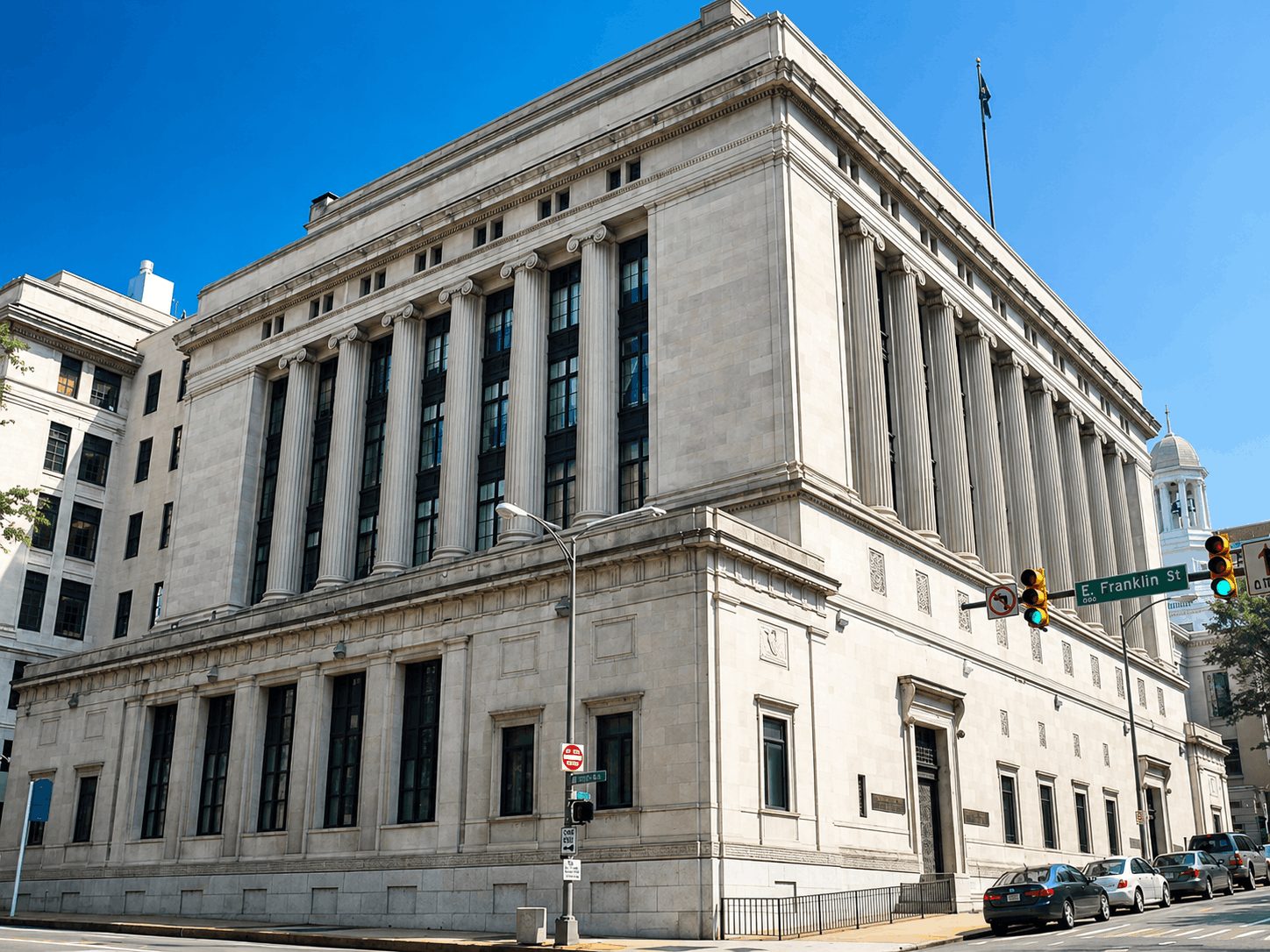
Virginia voters narrowly approved a redistricting amendment, but the Virginia Supreme Court struck it down and the U.S. Supreme Court declined to intervene. The current congressional map remains in place for now, making the case a major test of constitutional process, representation, and political power before the 2026 midterms.
This article is a lightly edited transcript of the “Here’s the Point” podcast by Ryan Helfenbein, executive director of the Standing for Freedom Center.
Update (May 15, 2026): The U.S. Supreme Court declined to revive Virginia’s voter-approved redistricting map, leaving in place the Virginia Supreme Court’s May 8 ruling that invalidated the amendment. Virginia voters had approved the April 21 referendum by a 51.7% to 48.3% margin, but the state court ruled that lawmakers failed to follow required constitutional procedures when placing the amendment before voters. The blocked map would have shifted Virginia’s congressional delegation from its current 6-5 Democratic edge toward a map designed to favor Democrats in 10 of the state’s 11 districts. For now, Virginia’s current congressional map remains in place, and the case stands as a warning that even voter-approved changes can fail if the constitutional process used to advance them is defective.
ORIGINAL ARTICLE
On April 21, Virginians will vote on one of the most consequential redistricting questions in the Commonwealth’s recent history: who should control the drawing of Virginia’s congressional districts before the next census.
On its face, Democratic lawmakers in Virginia want to say this is about temporarily adopting new districts, and it is about restoring fairness in upcoming elections. On its face, it sounds reasonable, but the details are not temporary. They are permanent. They are not fair. They are disenfranchising more than half of the Commonwealth.
At its core, the question is whether or not conservative voters deserve conservative representation. And at its core, it’s about whether liberal politicians currently in power get to choose their voters or whether conservative voters still have say in what politicians represent them in Washington D.C.
In short, everyone should vote NO on this amendment, and here’s why.
Back in 2020, 65 percent of Virginians — Democrats and Republicans alike — looked at the way congressional maps had been drawn for generations, and they said, “That is enough.” They voted to amend the state constitution and create the Virginia Redistricting Commission, a bipartisan body made up of eight legislators and eight citizens, with equal numbers of Republicans and Democrats. It was one of the most clarifying bipartisan votes in recent Virginia history.
The people spoke clearly — both Democrats and Republicans — on this one issue, and we set the rules together.
After redistricting battles escalated nationally, Virginia Democrats advanced a constitutional amendment that would allow the General Assembly to redraw congressional districts before 2031 if another state redraws its own districts without a court order. Opponents argue that change would reopen the door to partisan line-drawing in Virginia.
This is about sacrificing fairness for political power. But the ballot is very confusing. Here’s what it says:
“Should the Constitution of Virginia be amended to allow the General Assembly to temporarily adopt new congressional districts to restore fairness in the upcoming elections, while ensuring Virginia’s standard redistricting process resumes for all future redistricting after the 2030 census?”
The word “fair” is misleading. What it actually would do is give the Democratic-controlled General Assembly the authority to draw Virginia’s congressional map, bypassing the commission the people of Virginia, on both the right and the left, already created just a few short years ago.
The proposed map could give Democrats an advantage in as many as 10 of Virginia’s 11 congressional districts, in a state where the electorate is split nearly 50-50 Democrat and Republican.
Right now, Virginia is pretty balanced. There are 5 red congressional districts and 6 blue congressional districts. And each election cycle those numbers can shift back and forth, depending on how Virginia voters turn out in elections. In some elections, those 11 districts will have more Republicans, and in other elections they will have more Democrats.
Virginia’s current congressional map was imposed by the Virginia Supreme Court in 2021 after the bipartisan commission failed to agree on a plan.
But if this Amendment were to pass, the Northern Virginia counties that are considered a part of the Washington D.C. metropolitan area would overwhelmingly influence the rest of the state. Fairfax County alone would anchor 5 congressional districts, and those votes would cancel out the rural parts of Virginia — in a way cancelling their votes and their voice in Washington D.C.
This is not fair nor is it representative of Virginia voters and what Virginia’s voters have already decided. It is the annexation of political power by a concentrated urban corridor at the expense of every rural Virginian who does not live in the suburbs of Washington, D.C.
Now, the architects of this scheme have a defense. They say this is simply a response to Republican-led states doing the same thing elsewhere. In other words, they would rather take away the voice of conservatives living in our own state to balance Texas, Florida, and other red states where conservatives are overwhelmingly represented.
This again is marginalizing the voice of rural Virginians on the altar of left-wing political power in Washington D.C.
And here is the grand irony that should concern every citizen: In June 2019, Abigail Spanberger who served as congresswoman for Virginia’s 7th district, said this:
“Gerrymandering is detrimental to our democracy and it weakens the individual voices that form our electorates. Opposing gerrymandering should be a bipartisan priority.”
Those were then-Rep. Abigail Spanberger’s words in 2019. So what has changed? Was she right then, or is she right now?
Proverbs 20:23 says, “The Lord detests differing weights, and dishonest scales do not please him.”
In fact, Jesus demonstrates this in all four Gospels (Matthew 21:12-13; Mark 11:15-17; Luke 19:45-46; John 2:13-16) when he flipped the tables of the moneychangers who were disenfranchising the poor from a just and fair exchange of Roman money for temple money — at the very moment when they were going to make their sacrifice.
How would Jesus treat the disenfranchising of rural voters in Virginia? We all know deserve better than that.
We must vote NO on redistricting.
It is exactly how Virginians voted in 2020 when setting up a nonpartisan congressional map. And our fair and equal representation in Washington D.C. ought to reflect all Virginians and not just “the rich men north of Richmond.”
This is not about what benefits one party over another. It’s not about Republican vs. Democrat, even though some Democrats in power want to make it exactly that. This is about what is right and fair for all Virginians — and not making Virginia into another California by refusing to acknowledge anyone outside the sprawling D.C. metropolis.
Fair maps require more than political momentum – they require constitutional integrity. Make your tax-deductible gift today to help the Standing for Freedom Center bring biblical clarity, truth, and courage to the fights shaping America’s future.