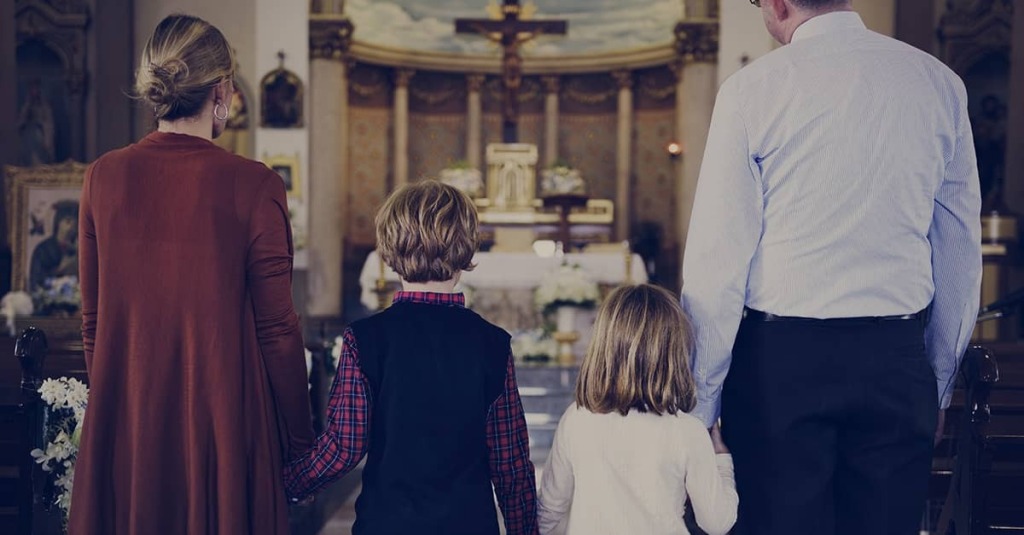
Indiana’s new law protects Christian parents and faith-based child welfare groups from being blocked out of adoption and foster care because of their biblical beliefs, strengthening both religious freedom and the search for loving homes for children.
Indiana Gov. Mike Braun, R, has signed legislation aimed at protecting adoptive and foster parents, along with faith-based child welfare organizations, from discrimination based on their religious beliefs.
The measure, House Bill 1389, prohibits state and local government agencies from discriminating against individuals who seek to adopt or foster children if they intend to raise those children according to their “sincerely held religious beliefs.”
The new law comes as at least three states have tried but ultimately failed to implement policies requiring foster and adoptive parents to embrace LGBTQ ideology against the precepts of their faith.
Supporters say the law preemptively protects religious families who want to provide homes for children in need by ensuring that they are not excluded from the foster care and adoption system because of their beliefs.
The legislation received strong bipartisan support in the Indiana General Assembly earlier this year. The state Senate approved the bill by a 44–5 vote on February 17, followed by an 84–12 vote in the House on February 19.
Advocates hailed the new law as a victory for both children and religious liberty.
“Every child deserves a loving home that can provide them stability and opportunities to grow,” Alliance Defending Freedom Senior Counsel Greg Chafuen said in a statement after the governor signed the bill. “The sad reality is that the government in some states has discriminated against people of faith, allowing vulnerable children to suffer.”
Supporters of the bill argue that faith-based organizations and religious families have historically played a significant role in the foster care and adoption system. Maintaining their participation remains important for meeting the needs of children who require permanent or temporary homes.
Indiana officials say the new law ensures that all families and agencies can continue serving children without facing penalties tied to their religious convictions.
In several blue states, child welfare agencies have implemented rules requiring foster and adoptive parents to affirm a hypothetical child’s “sexual orientation,” “gender identity” or “gender expression” as part of the licensing or placement process. This includes promising to use preferred pronouns and take a children drag queen story hour and pride parades.
Critics of those policies say these policies are being used to exclude families who hold religious convictions about gender and sexuality from participating in foster care or adoption programs.
This isn’t conjecture. Vermont, Massachusetts, and Oregon all took steps to ban experienced and active foster parents, as well as potential adoptive parents, who refused to agree with the terms.
All three states have since been forced to drop their policies by legal challenges.
In Vermont, officials agreed to change their foster care licensing rules after settling a lawsuit brought by two Christian couples who had been removed from the foster care system for declining to affirm a child’s gender identity. The couples said they were willing to care for any child but could not affirm gender ideology doctrine that conflicted with their religious beliefs.
As part of the settlement, the state’s Department of Children and Families clarified that applicants’ “sincerely held personal, cultural, religious, moral, or philosophical beliefs” cannot be used against them in the licensing process.
Massachusetts also agreed to drop its policy requiring foster parents to affirm a child’s gender identity. The state faced legal challenges from families who said it violated their religious freedom after some parents reported their licenses were threatened because they declined to use preferred pronouns or endorse gender transition practices.
In Oregon, the U.S. Court of Appeals for the Ninth Circuit ruled that a Christian mother could continue pursuing adoption after state officials rejected her application because of her religious beliefs about gender identity. Jessica Bates had challenged an Oregon Department of Human Services policy requiring adoptive applicants to affirm gender transitions for children. The appellate court said she was likely to succeed in showing the policy violated her First Amendment rights and ordered the state to reconsider her application while the case proceeds.
By contrast, Indiana’s new law follows the lead of other conservative states who sought to preempt any future effort to incorporate anti-Christian bigotry into the approval process for foster or adoptive parents.
In Kansas, the legislature passed a measure ensuring that families cannot be disqualified from fostering or adopting due to their views on gender identity, while still requiring placements to be made based on the best interests of the child. Democratic Gov. Laura Kelly vetoed the bill, but the Republican supermajority quickly overrode it. Arkansas later enacted a similar law that protects both religious parents and faith-based adoption agencies.

That progressive states and child welfare agencies would ban loving, experienced, and qualified parents from helping children shows how intolerant and ideologically driven the left has become.
In a system where the supply of needy children typically outnumbers the supply of willing and capable parents, it’s a case of “cutting off your nose to spite your face.”
This is especially true if you are banning Christian parents. As reported by the Christian Alliance for Orphans (CAFO), Christians are far more likely to foster or adopt than the general population.
Barna Research has found that Christians are more than twice as likely to foster and adopt children than the general population and even more so when it comes to taking on sibling groups, older children, and children with special needs, and Lifeway Research reported that 44 percent of Protestants says that their church encourages congregants to adopt or foster children. Barna also found that this tendency is a direct result of their faith: A “striking” 77 percent of practicing Christians believe that they have “a personal responsibility to adopt.”
That’s hardly a surprise since Scripture is very clear that believers are to care for orphans.
James 1:27 teaches that “pure and undefiled religion before God and the Father is this: to visit orphans and widows in their trouble, and to keep oneself unspotted from the world.” Throughout the Bible, God reveals His heart for children in need, calling His people to respond with compassion and truth.
The New Testament describes salvation as God adopting believers into His family through Christ. Because Christians have been welcomed into God’s family by grace, many view caring for children through adoption and foster care as a visible reflection of that same love.
Yet the current cultural climate is using anti-Christian bigotry to create real roadblocks for Christian families who want to serve — and have already been serving — as foster and adoptive parents. That creates a difficult choice between the desire to help children and remaining faithful to their Christian faith.
Christians should not see this moment as a reason for surrender or retreat, however. We are blessed to live in a nation where religious freedom is recognized as a God-given right and the law of the land. This is why Christians must understand civics and be willing to engage in the public square. For the only reason why Christians are allowed to care for needy children in Vermont, Massachusetts, Oregon, and Washington State is because faithful Christians decided to be “wise as serpents” and not just “gentle as doves.” They challenged the state, knowing full well that such policies are unconstitutional.
What’s more, Christians in Kansas, Indiana, and Arkansas have made it a point to get out and vote in legislators who understand the Constitution and work hard to protect the constitutional rights of its residents.
Too many Christians today buy into the notion that we are somehow second class citizens who must hide their faith under a basket. That is a lie that progressives have pushed for decades. Don’t believe it.
Faithful believers can — and must — continue fight for the right to open their homes to adopted and fostered children without being forced to abandon to the truths of Scripture.
The Church has long been one of the world’s strongest forces for adoption and foster care. By pushing back against anti-Christian bigotry, standing for truth, and stepping forward to help children, Christians can continue to carry on this tradition for future generations.
If you like this article and other content that helps you apply a biblical worldview to today’s politics and culture, consider making a donation here.