American college graduates invested years and debt for degrees they were told to acquire — only to run up against a government program that gave their promised jobs to foreign labor for cut-rate wages.
This is a lightly edited transcript of the “Here’s the Point” podcast by Ryan Helfenbein, executive director of the Standing for Freedom Center, which is included on this page.
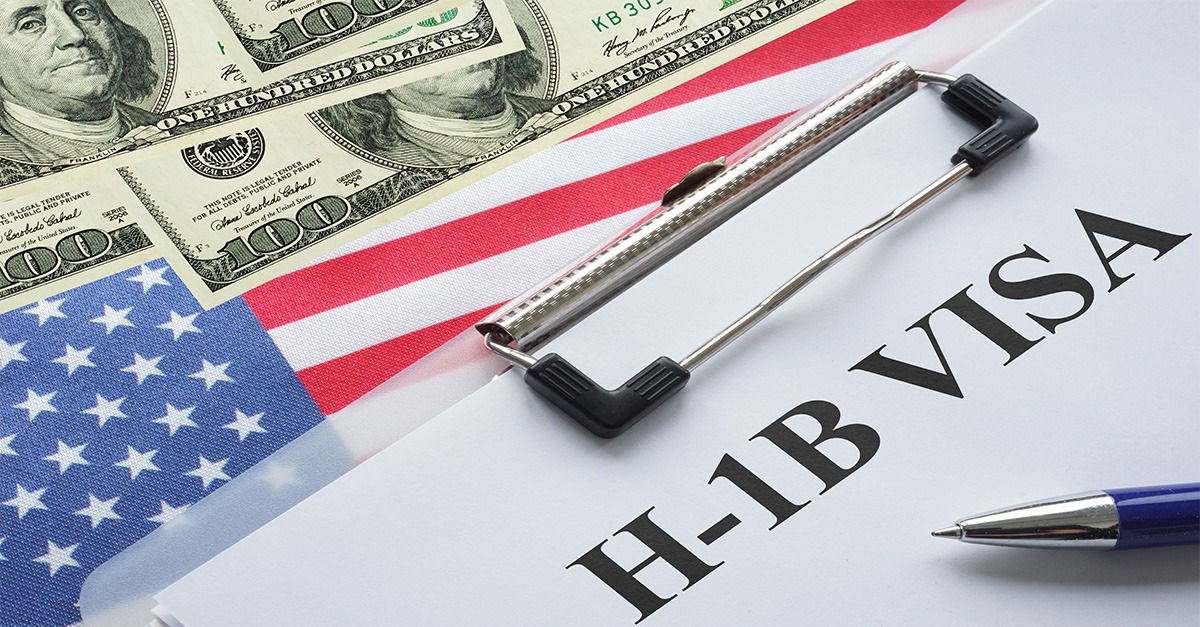
Is the H-1B visa program truly in America’s best interest? Does it help American companies, or does it punish American workers? How should we think about this?
The H-1B visa program has ignited debate within the MAGA movement. Both Elon Musk and Vivek Ramaswamy defended its use by major tech companies to hire foreigners to fill specialized jobs, with Vivek criticizing American mediocrity over excellence. Many America First proponents were frustrated then and remain so now.
Currently, 750,000 H-1B visa holders live and work in the United States, along with 550,000 dependents. That’s 1.3 million people total. In 2024, nearly 400,000 H-1B applications were approved, though the program caps new visas at just 85,000 annually.
But unlimited renewals explain the sudden rise in application numbers.
President Trump’s moves sent mixed signals. On September 19, 2025, he imposed a $100,000 fee on new H-1B petitions. But on November 19, Trump called the H-1B program a “MAGA” policy, saying chip manufacturers “will need thousands of skilled foreign workers because we don’t have enough.”
Conservatives are split. Gov. Ron DeSantis, R-Fla., said the H-1B program has pulled workers primarily from India and created a cottage industry on how foreigners profit off the system. India-based IT staffing firm HCL has raked in billions of dollars annually, or example. Sen. Chuck Grassley, R-Iowa, said the H-1B program was designed for limited use and only when businesses cannot acquire top talent at home.
JD Vance said legal immigration must be “way, way down,” emphasizing “empowering blue-collar workers rather than replacing them with foreign labor.” Tech-friendly conservatives argue that the $100,000 fee ensures H-1B goes only to high-value positions.
So how should we think about this?
First, companies profit massively from H-1B workers versus hiring Americans.
Economic Policy Institute research shows top H-1B employers are major outsourcing firms like Cognizant and the aforementioned HCL, which is based in India. These firms flood the visa lottery, secure slots, then contract H-1B workers to other American companies at markup rates while paying below-market wages. Disney, FedEx, Google, and Amazon have all employed H-1B subcontractors at 20 to 30 percent below standard wages.
Here’s the mechanism: H-1B workers are indentured to their visa sponsor: They have 60 days to find another sponsor or they have to leave the country if they lose their job. American workers can quit or negotiate better wages. H-1B workers can’t. Additionally, H-1B workers are often exempt from payroll taxes initially. Combined with lower wages and zero bargaining power, companies save 30 to 40 percent versus hiring Americans.
There are no requirements to prove qualified American workers don’t exist. We must take Google and Amazon’s word for it. The “prevailing wage” requirement is easily manipulated through hyper-specific job descriptions that disqualify American workers on paper.
Data from the National Bureau of Economic Research shows that firms with H-1B workers are more attractive to venture capital. Why? Cheap labor boosts profit margins. The beneficiaries aren’t workers; they’re shareholders and executives.
Second, the program has strayed from its original intent.
H-1B was designed for specialized talent like cutting-edge engineers and breakthrough clinical researchers. But Department of Labor data shows the median H-1B salary is around $105,000 — solid, but hardly “rare or specialty.” American dock workers, truck drivers, and heavy equipment operators exceed that.
So here’s what is actually happening: Entry-level software positions at Amazon, Google, and Microsoft go to H-1B workers fresh out of college. Entry-level, not Nobel Prize laureates. In an era where American student loan debt sits at $1.8 trillion for 42 million Americans, and credit card debt averages $6,500 per household, Americans need more job opportunity and wage growth at home.
When Disney and Southern California Edison laid off American workers and forced them to train their H-1B replacements in 2015, it exposed the truth. It’s not about talent shortage — it’s corporate welfare enabling wage suppression. If it’s too expensive to hire American workers, America should deregulate, not create loopholes.
Third, this is about national sovereignty and government duty.
America is a sovereign nation, not an economic zone. Government exists to promote the general welfare of American citizens, not maximize corporate profits. When American college graduates can’t find entry-level jobs because H-1B staffing firms took those jobs, government has failed its duty.
The American nation is more than an idea. It is a people, a culture, a nation of laws with a rich history and tradition. It has borders that should not be easily crossed.
Vice President JD Vance understands this. He called unvetted immigration one of “the greatest threats” to the West. That includes obsolete 1990s policies like H-1B. America has over 50 million foreign-born people within our borders, many of whom have not assimilated or naturalized.
H-1B has robbed American workers while colonizing and balkanizing major portions of our country. This undermines economic prosperity, cultural cohesion, and national sovereignty. You cannot build a nation by treating workers as interchangeable global production units.
Most Americans know that. As Upton Sinclair said, “It is difficult to get a man to understand something when his salary depends on his not understanding it.”
Finally, real reform is both reasonable and necessary.
If H-1B workers are truly irreplaceable, pay them the true market rate — $200,000 or higher. This eliminates labor arbitrage.
Ban outsourcing firms from the program. H-1B should only go to direct hiring, not labor contractors gaming the lottery.
Require proof of genuine American job recruitment at competitive wages before allowing foreign hires.
Require companies claiming talent shortages to fund American workforce development first. The biggest beneficiaries have market caps north of a trillion dollars. They can invest in America first.
Christians should apply care and common sense here. It’s both critical thinking and neighborly love — and it’s not xenophobic — to criticize this program. American college graduates invested years and debt for degrees they were told to acquire, only to find a government program allowing foreign labor to take jobs for well under market rates.
President Trump’s $100,000 fee is a small step, but more must be done. We need consistency in policies that prioritize American people and interests. The 2026 election will hinge upon concerns like these.
Right now, companies profit and foreigners profit, but the American people and families lose. It’s high time we had the courage to say so and demand real change.
If you like this article and other content that helps you apply a biblical worldview to today’s politics and culture, consider making a donation here.