The U.S. territory passed its new law and imposed harsh penalties on medical violators just one month after the Supreme Court said Tennessee and other states have the right and responsibility to protect children from irreversible drugs and surgeries.
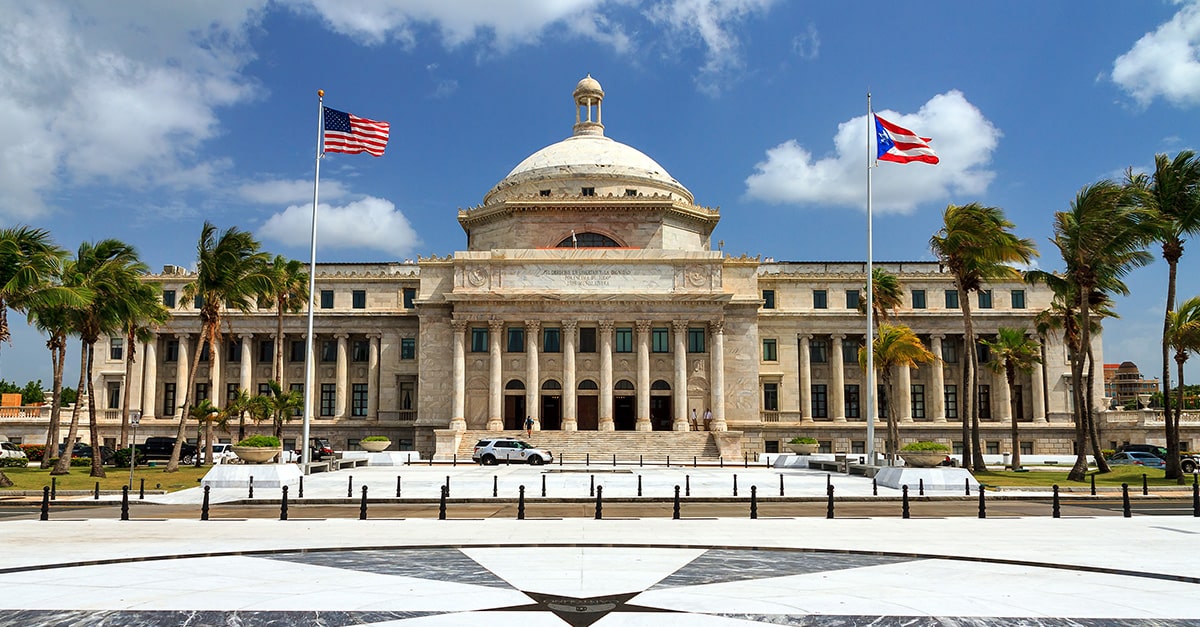
Puerto Rico has enacted a law banning gender transition procedures for minors, making it the latest U.S. jurisdiction to prohibit hormone therapies and surgeries for trans-identified youth. The new law aligns the U.S. territory with more than two dozen states that have taken similar legislative action in recent years.
Gov. Jenniffer González-Colón, R, signed Senate Bill 350 into law in July. The legislation, officially titled the “Law for the Protection of the Health and Well-being of Minors in Puerto Rico,” passed with overwhelming support: 24-2 in the Senate and 47-4 in the House of Representatives.
Now designated as Public Law 63-2025, the measure took effect immediately upon the governor’s signature.
The law prohibits “medical or surgical procedures that alter the sexual biology of minors under the pretext of gender transition, including irreversible hormone interventions.” It further imposes criminal penalties for violations, including up to 15 years in prison and fines of $50,000 for legal entities found guilty.
“Minors, having not yet reached the necessary emotional, cognitive, and physical maturity, are particularly vulnerable to making decisions that could have irreversible consequences,” the law states. “Therefore, it is the State’s duty to ensure their comprehensive well-being, protecting them from decisions that could affect their long-term health, especially when these decisions involve irreversible changes in their anatomy and biology.”
The law specifically bans the administration of puberty blockers, androgen blockers, estrogen, progesterone, and testosterone to minors for the purpose of treating gender dysphoria or changing a child’s biological sex. It also bars surgeries that alter or remove sexual organs or attempt to align a person’s physical appearance with a gender identity different from their biological sex — for anyone under age 21.
An exception is provided for individuals with documented intersex conditions, who may still receive medical interventions otherwise prohibited under the law.
Healthcare professionals who violate the law face severe consequences: a $50,000 fine, a mandatory 15-year prison sentence, permanent revocation of medical licenses and permits, and a permanent ban on practicing medicine in Puerto Rico.
This action reflects a growing legislative movement in the United States aimed at safeguarding children from experimental and destructive gender-related medical procedures.
In January, President Donald Trump signed an executive order declaring, “It is the policy of the United States that it will not fund, sponsor, assist, or support the so-called ‘transition’ of a child from one sex to another, and it will rigorously enforce all laws that prohibit these destructive and life-altering procedures.”
According to the American College of Pediatricians, medical interventions often promoted for children with gender dysphoria carry serious health risks. The organization states that puberty blockers can result in “osteoporosis, mood disorders, seizures, cognitive impairment and, when combined with cross-sex hormones, sterility.”
Cross-sex hormones, they note, further increase the risk of “heart attacks, stroke, diabetes, blood clots and cancers across their lifespan.”
Gender transition surgeries, also called gender-reconstruction procedures, typically involve the removal of healthy organs such as breasts or genitals, or the construction of artificial organs to mimic those of the opposite sex. These procedures are irreversible and have become the center of nationwide debate among lawmakers, medical professionals, and parents.
With this law, Puerto Rico joins a list of more than two dozen U.S. states that have passed similar laws restricting or banning medical gender transition procedures for minors. Those states include Alabama, Arizona, Arkansas, Florida, Georgia, Idaho, Indiana, Iowa, Kansas, Kentucky, Louisiana, Mississippi, Missouri, Montana, Nebraska, New Hampshire, North Carolina, North Dakota, Ohio, Oklahoma, South Carolina, South Dakota, Tennessee, Texas, Utah, West Virginia, and Wyoming.
In June, the U.S. Supreme Court ruled in United States v. Skrmetti that Tennessee’s law banning gender-transition procedures for minors does not violate the Equal Protection Clause of the U.S. Constitution. That landmark decision has given legal precedent and momentum to states and territories seeking to protect children.
Supporters of the new law in Puerto Rico have emphasized its importance in protecting children from what they view as irreversible and medically unnecessary interventions.
“The protection of our children and the well-being of all minors is fundamental and non-negotiable!” Puerto Rican Senate President Thomas Rivera Schatz, the bill’s author, said on X in a statement thanking González and the lawmakers for approving the measure.

Puerto Rico’s new law banning gender transition procedures for minors is long overdue. In a culture consumed by confusion, deception, and rebellion against God’s design, this legislation offers a moment of moral clarity and courage. As Christians, we must applaud Gov. González-Colón and Puerto Rico’s lawmakers who refused to bow to the tyranny of radical gender ideology and instead chose to protect the most innocent among us.
Subjecting a child to puberty blockers, cross-sex hormones, or surgical mutilation is not healthcare. It is child abuse, plain and simple. No amount of politicizing can change the fact that these procedures destroy healthy bodies, sterilize young people for life, and leave behind scars — physical, emotional, and spiritual — that may never heal.
Children are not lab experiments. They are not blank slates for activists to rewrite. They are precious souls, created male and female by a loving and sovereign God (Genesis 1:27). That truth is not optional — it is eternal.
Public Law 63-2025 recognizes what every honest person already knows. Minors lack the maturity and capacity to consent to permanent, life-altering procedures. While opponents call for “rights” and “affirmation,” Puerto Rico has chosen to affirm the God-given value of every child.
This law is a direct rebuke to the growing movement that seeks to erase distinctions between male and female, elevate feelings over facts, and exalt self-expression above the created order. But God is not mocked. Every attempt to defy His design leads to chaos, destruction, and despair.
Puerto Rico has taken a stand against that darkness, and it deserves the full support of every believer who takes God’s Word seriously.
Romans 13 says that government exists to punish evil and protect the good. That’s exactly what this law does. It punishes those who would profit from exploiting confused and vulnerable children and safeguards the innocent from irreversible harm. Christian parents, pastors, and citizens should rally behind this effort, praying that God would raise up more leaders with the courage to resist cultural madness and restore moral order.
Puerto Rico has drawn the line. It has said, “Not our children. Not on our watch.” May the rest of the United States, especially followers of Christ, have the conviction to do the same.
If you like this article and other content that helps you apply a biblical worldview to today’s politics and culture, consider making a donation here.