In finally getting its chance to host tonight’s MLB All-Star Game, Georgia is reminding the world of a modern-day truism: When you stand up to the woke mob, you win.
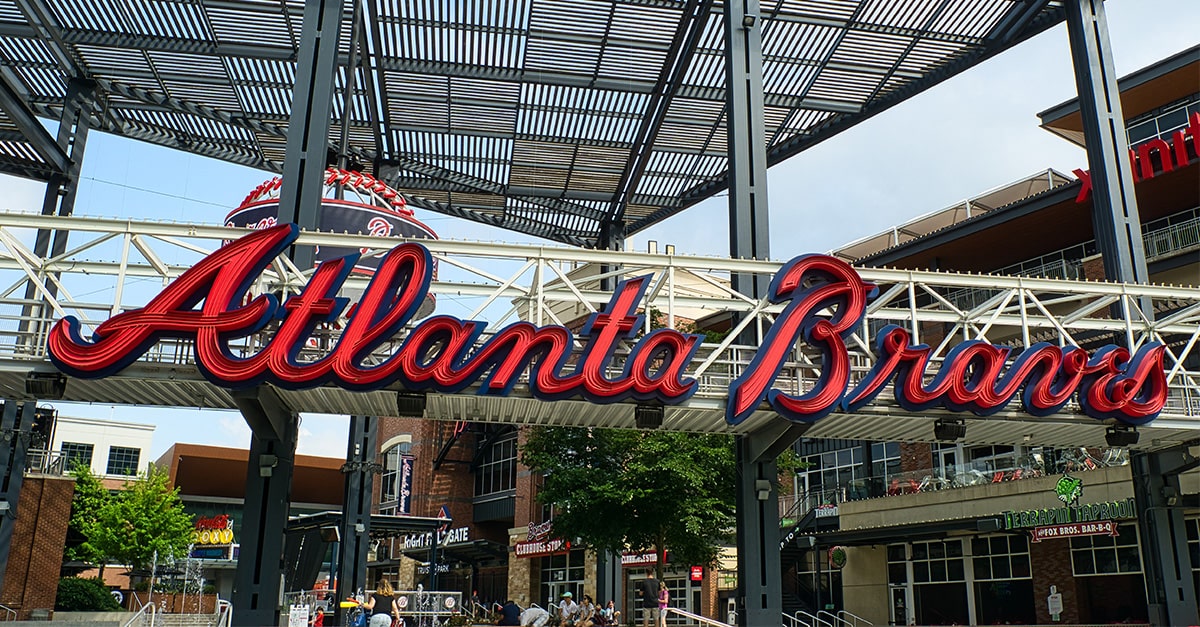
The Major League Baseball (MLB) All-Star Game festivities are now underway in Atlanta — four years after the organization ripped the honor and economic benefit away from the city due to lies furthered by state and national political figures about Georgia’s election integrity law.
This turnaround is a perfect case study in how to deal with lying politicians and virtue signaling corporations when they try to pressure a state out of doing the right thing for its own people.
So what happened? Let’s recap.
In 2021, Georgia’s legislature passed SB 202, which was then signed into law by Gov. Brian Kemp, R. The law implemented election integrity measures such as requiring a photo I.D. for absentee voting. Meanwhile, the law also expanded voting access by requiring a longer early voting period.
Yet left-wing politicians and activist groups were eager to pass the “For the People Act” then pending in Congress, which would have federalized elections and eliminated voter I.D. nationwide, but the Georgia law undermined that effort. In response, they engaged in a media blitz, slandering the new state law as an effort to disenfranchise minority voters.
Former President Joe Biden infamously called Georgia’s voting law, “Jim Crow on steroids,” a catchphrase that was used by many other left-wing politicians and activist groups.
“This is the most pernicious thing, this makes Jim Crow look like Jim Eagle, I mean this is gigantic what they’re trying to do and it cannot be sustained,” Biden said nonsensically.
Politicians like Sen. Elizabeth Warren, D-Mass., and Georgia’s own Stacey Abrams, along with activists like Rev. Al Sharpton, pressured companies to lean on and even boycott Georgia in order to get the state to repent of its supposed sin.
Many companies dutifully fell in line even Atlanta-based Coca-Cola and Delta Airlines, who each strongly condemned the law.
But no corporation went as far as MLB.
After discussions with activist groups and organizations such as the MLB Player’s Association, MLB Commissioner Rob Manfred made the audacious decision to move the All-Star Game from Atlanta to Denver, Colorado.
He said at the time, “I have decided that the best way to demonstrate our values as a sport is by relocating this year’s All-Star Game and MLB Draft….Major League Baseball fundamentally supports voting rights for all Americans and opposes restrictions to the ballot box.”
The All-Star Game had been awarded to Atlanta years prior, and everyone — from the players to the fans to local businesses — was looking forward to it.
But then Manfred’s decision came in April, after the 2021 MLB season had already begun, which forced the Braves to remove the “All Star Game” patches from their hats and jerseys and scrap all preparations for the Midsummer Classic.
The move brought far more than just disappointment and the intended humiliation, however. Economists estimated that removing the All-Star Game from Atlanta cost the city’s business owners around $100 million, which would have been a much-needed boost in the aftermath of 2020’s COVID restrictions and riots.
The decision also took away the opportunity for a grieving city and Braves fan base to celebrate the legacy of Hall of Famers Hank Aaron and Phil Neikro, as well as former player and radio voice Don Sutton and former owner Bill Bartholmay, all of whom had passed away before the season.
In MLB’s defense, the decision may have been more an effort to avoid a political circus caused by the left than anything else.
Following discussions with Abrams and groups associated with Sharpton and NBA star Lebron James, an MLB executive claimed the activists wanted to hijack the All-Star game and push the MLB to support leftist political causes. According to the executive, Manfred feared a boycott by players and activists, so he caved and moved the All-Star Game from Atlanta, a city whose population is predominantly black, to Denver, a predominantly white city.
Manfred said that Atlanta could be an option for the All-Star Game in the future, but “I would need to see” changes to the voting law.
Biden’s Department of Justice even filed a lawsuit against Georgia, claiming its law was unconstitutional.
A Tale of Two Governors
The left-wing politicians and activists, and corporations had good reason to believe their tactics would lead to capitulation. It had done so before in Georgia just five years earlier.
In 2016, the Georgia legislature passed the Pastor Protection Act, which would have codified the Religious Freedom Restoration Act of 1993 into state law. The law was intended to protect the rights of pastors and other religious leaders to refuse to solemnize a marriage against their religious beliefs and also to protect the rights of certain religious organizations and non-profits to refuse to hire LGBT individuals for their ministries without triggering a charge of discrimination.
Left wing activists said the bill discriminated against LGBT people and soon corporations began pouring on the pressure.
Most notable were film studios, actors, and the media giant Disney, which said they would boycott Georgia. At that time, the Peach State had emerged as one of the world’s top locations for film and production due partially to its film tax credits.
The National Football League (NFL) also threatened that if Gov. Nathan Deal, R, signed the law, it would adversely affect Atlanta’s ability to host the Super Bowl.
In the end, the Southern Baptist governor vetoed the bill, claiming it allowed state-sponsored discrimination.
But when corporations tried a similar tactic in 2021, it ran into a different governor: Brian Kemp.
Kemp staunchly defended the new state voting law and hit back against left-wing politicians spreading misinformation about the law.
He touted the law’s expansion of early voting and the need for voter I.D.
Batting a Thousand
Fast forward to 2022 and contrary to what left-wing activists claimed, Georgia saw skyrocketing voter turnout, especially in early voting, which the law had expanded.
Despite the obvious positive benefits of the law — and the fact that it was nothing like Jim Crow — no one ever apologized to Georgia, its leaders, the Braves, or the city of Atlanta.
And then in 2023, Manfred announced that he was awarding Atlanta the 2025 All-Star Game.
So, what changes did Georgia make that Manfred said he needed to see before Atlanta could be considered to hold the game?
None.
Georgia didn’t change a thing about its law and defended it every step of the way.
Its leaders like Kemp and Secretary of State Brad Raffensperger scoffed at the absurd objections being levied against the law and clearly laid out how its detractors were slandering the legislation.
And they won. They ended up getting the All-Star Game and election integrity.
When Manfred made the announcement, Kemp stated, “Georgia’s voting laws haven’t changed, but it’s good to see the MLB’s misguided understanding of them has. We look forward to welcoming the All-Star Game to Georgia.”
Now the time has finally arrived: Atlanta will hold the All-Star Game tonight and MLB seems to want nothing to do with a political discussion rehashing 2021.
As for Kemp, he’s still Georgia’s governor, and he recently issued some wise advice for the MLB and anyone who finds themselves in a pressure campaign from the left.
Kemp said that the boycott had “in some ways it helped galvanize our state, it helped galvanize our local community for people to say, ‘You know what: We’re tough Georgians. We’re gonna fight through this. We’re not gonna bow down to corporate greed or corporate boardrooms that are worried about getting targeted by groups like Stacey Abrams.’”
Kemp said he tried to advise corporations who were under pressure by saying, “Look, you’re never gonna make that crowd happy and now you’ve made everyone who was on the other side of this mad at you. You’re in the middle of a circular firing squad and you’re making a big mistake.”
Kemp’s tough attitude has secured more wins for Georgia, not less.
That religious liberty bill Deal refused to sign? Kemp signed Georgia’s Religious Freedom Restoration Act into law earlier this year.
Have film companies stopped filming in Georgia? No, because the state has great filming locations and because Hollywood producers love that big tax break they get.
Have sports organizations stopped holding their athletic events in Georgia? No. Besides the All-Star Game, Atlanta hosted the NCAA College Football National Championship Game in January and is set to host the World Cup, one of the world’s largest sporting events in 2026.
And the companies that spoke out against Georgia’s law?
Coca-Cola and Delta Airlines are both still based in Atlanta and they both still have partnerships with the Atlanta Braves.
A Game Plan for the Future
What lessons can be learned from Georgia’s experience and example? 1) Call the bluff of anyone threatening you; and 2) always stand up for what’s right, even if there’s a price to be paid.
For corporations: Quit caring about the backlash from leftist groups. They will never be happy. In fact, they’re still mad about Georgia’s law, but that isn’t stopping anyone from watching or attending the All-Star Game.
For politicians and individuals: Never cave to the woke mob, whether they’re activists or corporations trying to virtue signal — because that’s all it is, hollow virtue signaling.
Stand on your principles. There may be short-term cost, but in the end you’ll win.
So as I cheer on the hometown kid Matt Olson and hope to see Braves star Ronald Acuña take over tonight’s All-Star Game, I’ll be smiling knowing that in the end my beloved Braves and the state of Georgia won.
But hey MLB, we’re still waiting on that apology.
If you like this article and other content that helps you apply a biblical worldview to today’s politics and culture, consider making a donation here.