A record number of Muslims won office this month, but too many Americans cast their ballot to feel virtuous and never asked whether candidates would look to the U.S. Constitution or Sharia as their ultimate governing authority.
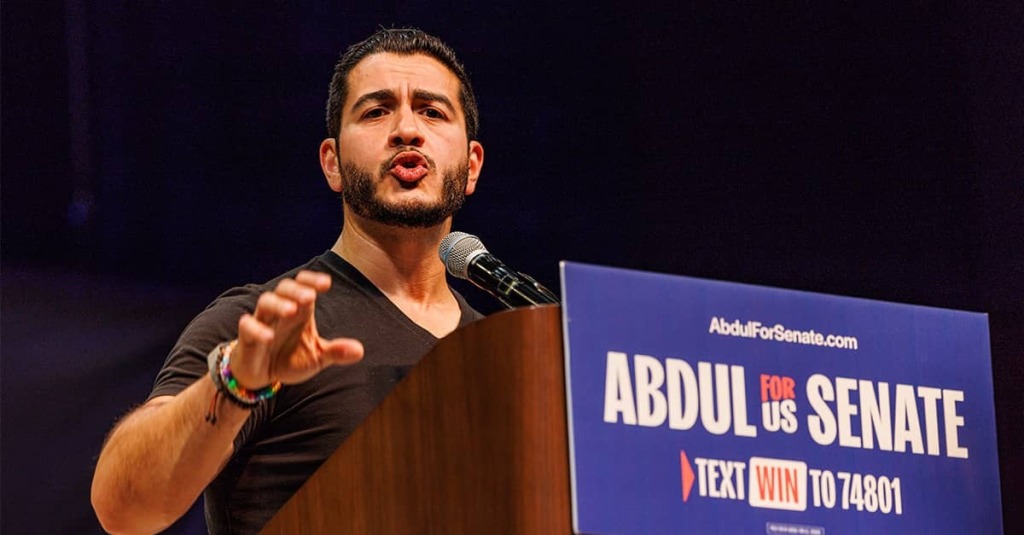
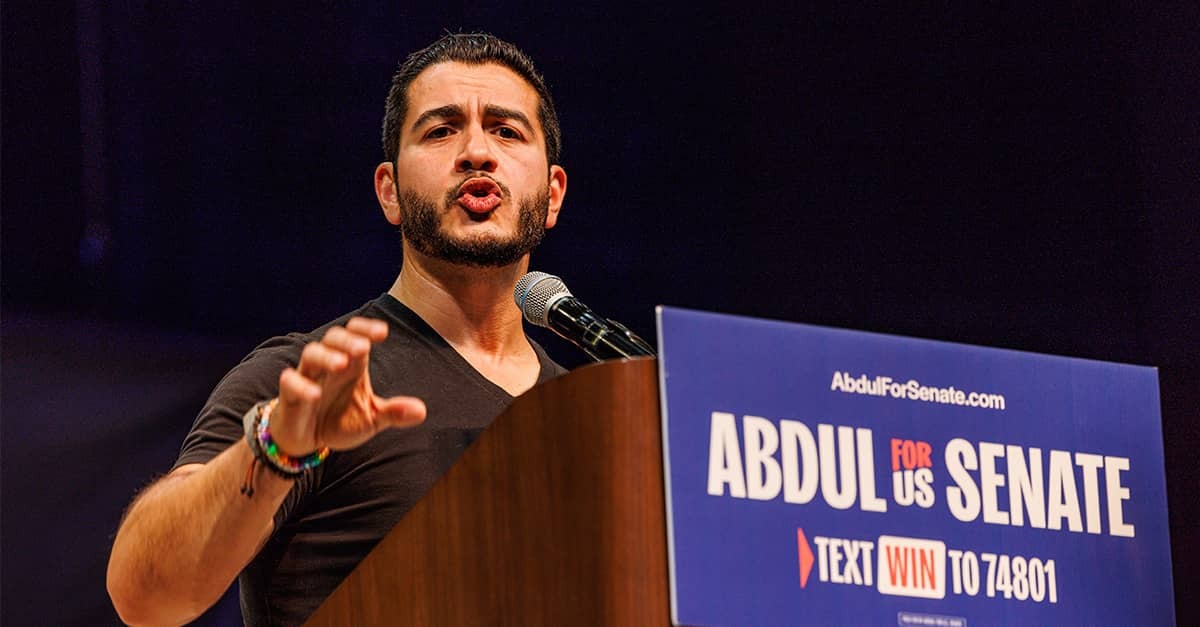
On Nov. 3, Michigan voters chose Democrat Abdul El-Sayed over Republican Mike Rogers for an open Senate seat, making him the first Muslim elected to the U.S. Senate. Across the country, the Council on American-Islamic Relations (CAIR) reports that 97 American Muslims won their races, a record for a midterm election.
Those results came two months after the nation marked the 25th anniversary of the Sept. 11 attacks, and one year after New York City elected Zohran Mamdani as its first Muslim mayor.
As Muslim candidates mount electoral victories, much of the country remains wary: A Pew Research Center survey conducted in May found that 43 percent of U.S. adults say Muslims are less patriotic than other Americans. However, the voters who did send these candidates into office were handed a case built on feeling, and many of them accepted it.
Sentimentalism is what happens when emotion is allowed to declare a moral judgment that only truth can actually render. Voters were told that a vote for a Muslim candidate was a vote against hate, which turned the election into a referendum on their own virtue instead of an examination of the person they were electing.
The one question that matters for any candidate is what law he believes ultimately binds him and the nation: The U.S. Constitution or Sharia? That was the question left sitting on the table.
Christians, of all people, should know better than to let a feeling answer that question.
What the Constitution Settles
The Constitution settles part of this matter, and it settles it plainly. Article VI forbids any religious test as a “Qualification to any Office or public Trust under the United States.” No Muslim, Christian, or Jew can be barred from office by law because of his faith.
The Founders fought over this very point at North Carolina’s ratifying convention in 1788, where Henry Abbot relayed the fear that without a religious test, “pagans, deists, and Mahometans might obtain offices among us.” (“Mahometans” was the 18th-century term for Muslims.) James Iredell answered that excluding any group would mean “taking away that principle of religious freedom which we ourselves so warmly contend for.”
What the Founders settled was what the government may not do, but they left to the voter a responsibility that belongs to him alone. A Christian is free to weigh any candidate’s worldview, including his religion, and to decide how they will vote accordingly. That question is no religious test; it is the ordinary work of a free people deciding who will govern them.
The question, however, carries real weight when the faith in view is Islam. Ryan Helfenbein, executive director of the Standing for Freedom Center, has argued that Islam is “a totalizing political ideology, not merely a religious category,” and a faith that makes claims about law gives every voter reason to ask how a particular candidate holds it.
Article VI protects a Muslim’s right to run for office, but it does not require a Christian to pretend that a candidate’s faith has nothing to say about how he will govern and by what standard. The voter who sets those questions aside in order to feel inclusive or virtuous has surrendered the very judgment the Constitution entrusted to him.
A Vote to Answer a Feeling
In the Detroit suburb of Dearborn, Mayor Abdullah Hammoud told Al Jazeera that sending El-Sayed to the Senate was “the best response that we can give fascism.” Abdullah Hammoud offered voters a way to answer a perceived enemy, but that line says nothing about what El-Sayed believes.
After the election, the CEO of the Muslim advocacy group Emgage Action said, “I saw Americans saying hate will not be used as a campaign issue.” El-Sayed said Michigan had rejected “a hateful, spiteful campaign that had nothing to say about the issues and only wanted to point to my name and my face.”
Yet the AP Voter Poll, a survey of more than 4,500 Michigan voters, found them roughly split on whether El-Sayed’s views were too extreme, with about half saying they were. Even with roughly half the electorate doubting his views, El-Sayed won, and the victory was celebrated as a verdict on his opponents instead of an endorsement of what he actually believes.
New York showed the same pattern a year earlier, when CAIR called Mamdani’s victory “a Historic Rebuke of Islamophobia and Anti-Palestinian Politics.” Mamdani himself told the city exactly what he stands for in his victory speech, declaring, “I am Muslim. I am a democratic socialist. And most damning of all, I refuse to apologize for any of this.” Yet the Center noted that only one in four of his voters called themselves socialists. By that measure, most of the people who elected him were answering something other than his or her convictions.
This is sentimentalism at work, letting one sympathetic face settle a moral question while everything else stays out of view. A vote cast as a rebuke weighs the opponent’s supposed sins instead of the candidate’s character and convictions, and it leaves the person on the ballot largely unexamined. That is no way to treat a candidate of any faith, and it is certainly no way to steward a nation.
What Europe Shows
Europe has been living with this question far longer than we have. In May 2025, a French government report warned that Islamist influence in city governments could affect local politics. In the northern Italian city of Vigevano, the League party’s national leadership said it was distancing itself from its own Muslim candidates while Prime Minister Giorgia Meloni’s Brothers of Italy party continued to support those same Muslim candidates. In the U.K., Muslims are a growing force in electoral politics. They already hold some of the nation’s most prominent positions, including mayor of London, and U.K. home secretary, and in the May 2026 local elections, more than 460 Muslim candidates were swept into local offices, according to the Muslim News.
In these countries, the debate has collapsed into voting blocs and stigma, and conviction and character have dropped out of view. That is what happens when a nation lets emotion cast its vote. A people eager to prove its own tolerance stops asking whether the leaders it elects will defend the liberties that make tolerance possible. Will an official protect a citizen’s right to criticize Islam and its prophet? Will he guard the freedom of Christians and Jews to worship without fear?
Europe is already living with those questions. In Britain, a man who burned a Quran outside of the Turkish consulate in London was convicted of a religiously aggravated public order offense before a higher court overturned the verdict, and on Yom Kippur 2025, two Jewish men were killed in a terror attack outside a Manchester synagogue. Americans can learn from Europe without repeating its mistakes, and the time to ask those questions is before the answers arrive here.
Judging in Righteousness
God’s Word does not leave us guessing, and it names the remedy when it commands, “You shall do no injustice in court. You shall not be partial to the poor or defer to the great, but in righteousness shall you judge your neighbor” (Leviticus 19:15). The Standing for Freedom Center’s voting guide applies that verse to the ballot, calling equal treatment one of the most fundamental principles of biblical justice. Partiality toward the sympathetic and partiality against the feared are the same sin.
Scripture also puts a ceiling on what any candidate can deliver when it warns, “Put not your trust in princes, in a son of man, in whom there is no salvation” (Psalm 146:3). A vote cast to heal a wound asks a politician to do what only God can do, and a vote cast in fear makes the mirror-image demand.
Voting with open eyes means reading what a candidate has actually said and done, and it also means putting the same question to a Baptist candidate that one puts to a Muslim one. Above all, it means loving our Muslim neighbors, who bear the image of God as surely as anyone, enough to tell them the truth about Christ. He alone is the One in whom there is salvation (Acts 4:12).
So, Christians can and should pray for Sen.-elect El-Sayed and Mayor Mamdani, that they would govern justly and come to know Jesus Christ as Savior. We can pray, too, for a nation that marked 25 years since 9/11 by asking ourselves, “How does it feel?” when the better question has always been and should always be: What is true?
If you like this article and other content that helps you apply a biblical worldview to today’s politics and culture, consider making a donation here.