A new lawsuit alleges that a USDA-funded regional food bank shut down a local Christian ministry feeding 2,000 needy people because an online rage mob was offended by a sermon declaring the Gospel of Jesus Christ.
When a local church opens its doors to distribute emergency groceries, the only question that should matter is whether the shelves remain stocked for those in need. But in Fremont County, Wyoming, a food pantry serving more than 2,000 residents each month has suddenly been forced to stop operations because of what was preached from its pulpit.
On August 5, Liberty Counsel submitted a federal civil rights complaint to the U.S. Department of Agriculture (USDA) against both the Food Bank of the Rockies and the Food Bank of Wyoming (known collectively as FBR/W). The complaint states that the USDA-funded distributor illegally ended its association with the Foundations For Nations Church (FNC) over a sermon declaring the Gospel.
The Gospel and the Online Rage Mob
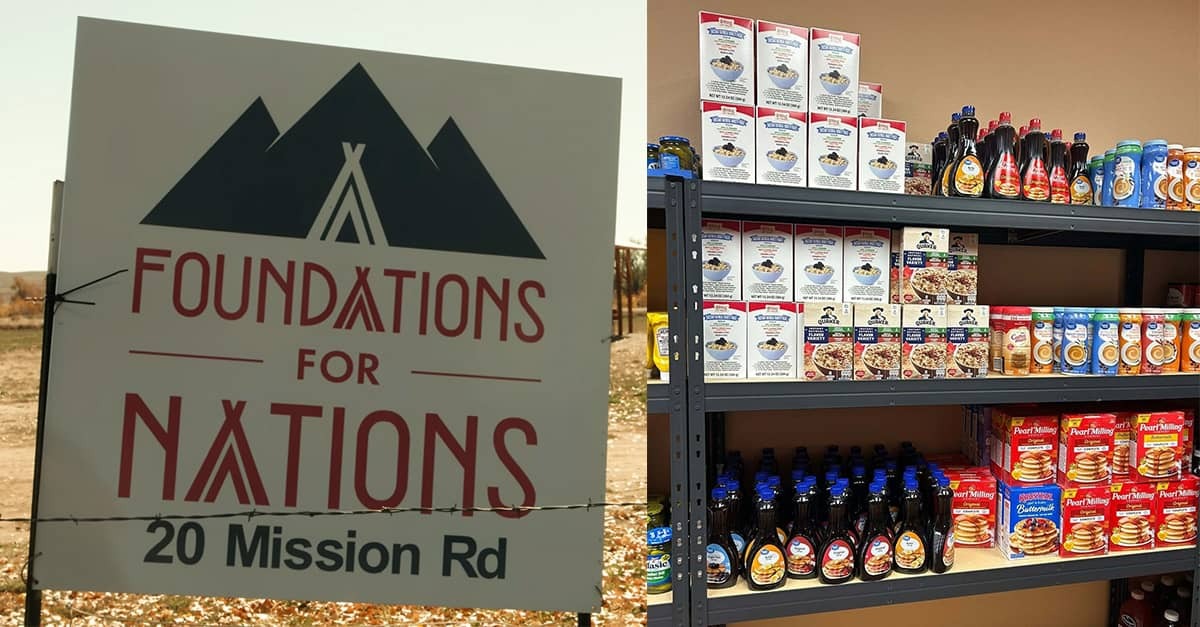
The Foundations For Nations Church is a multicultural, evangelical church located on the Wind River Indian Reservation in Riverton, Wyoming. It is pastored by Jason Lucas and his wife, Sarah, and provides the local community with various resources, including the food bank, a clothing closet, pregnancy resource center, domestic violence shelter, and recreation center.
The controversy surrounding it began on July 5 when a sermon was preached teaching that redemption and salvation are possible only through Jesus Christ, while also comparing the Gospel of grace with various Native American religious practices, such as the Sun Dance ceremony of the Northern Arapaho Tribe.
In today’s culture, the idea that salvation can be found in no one but Jesus (Acts 4:12) is increasingly seen as offensive, and the sermon quickly triggered outrage both locally and on social media, with the Northern Arapaho Business Council (NABC) being among the most vocal.
In the face of political activism and a media pile-on, the Food Bank of the Rockies and its Wyoming branch chose to abandon their mission to serve the needy. It immediately ended its long-standing partnership with FNC, shutting off the supply of food to a Christian ministry that feeds thousands of local residents each month.

When Federal Dollars Fund Discrimination
The Food Bank of the Rockies receives taxpayer money through the USDA, which means it must adhere to federal civil rights protections that expressly ban discrimination against faith-based organizations.
Because of the Free Exercise Clause of the First Amendment, the Religious Freedom Restoration Act (RFRA), the Indian Civil Rights Act (ICRA), and the specific regulations of the USDA, religious groups cannot be prevented from taking part in federal programs.
As Liberty Counsel Founder and Chairman Mat Staver explained,
“By taking sides in a religious dispute, Food Bank of the Rockies and Food Bank of Wyoming are withholding food supplies from the people that they purport to serve over the demand of third parties who disagree with a church’s religious beliefs and teachings. The church’s partnership with the Food Bank should be reinstated immediately to avoid further constitutional and statutory violations and to resume food deliveries to those who depend on Foundations For Nations’ food pantry ministry for food.”
Using Hunger as a Hostage
The Bible urges believers to feed the hungry and look after the vulnerable, a duty which the Foundations For Nations Church has carried out faithfully for years. They distribute food based on need, not belief. The church has served its neighbors out of Christian love, giving food to members of both the Northern Arapaho and Eastern Shoshone Tribes, as well as to the broader community.
What’s more, the sermon was spoken in a church to listeners who chose to hear it, and no one is required to believe in Jesus (or to renounce different beliefs) in order to receive food.
The attempt to end this partnership is a severe and unjust kind of collective punishment for 2,000 rural, disadvantaged people — solely because of a sermon declaring the foundational truth of Christianity, a foundational truth that has been preached for nearly two millennia.
To use hunger as a means of pressuring a church into altering its religious statements is not only morally unacceptable, it is unconstitutional.
Faith-based charities form the crux of America’s social safety net and provide services in poor urban areas, in isolated rural towns, and on Native American reservations where government programs cannot effectively meet the needs. If these organizations are driven out of public partnerships because they are determined to uphold biblical truth, then the safety net will break down exactly where it is most required.
Keep Calm and Keep Serving
Despite the controversy, the leadership and congregation of Foundations For Nations Church have displayed great courage. They did not alter the Gospel message when under threat, and they have not abandoned their God-given duty of serving the needy in their community.
This shows that true Christian charity is not based on social approval, and the obligation to preach the Gospel goes hand in hand with the obligation to love our neighbor.
While Christians in America are watching the situation in Wyoming, the Church should respond with prayer and practical support for those involved in this struggle.
Christians must also recognize that secular institutions are no longer content with letting Christians carry out good works; instead, they now require us either to change or give up our fundamental biblical beliefs in order to serve the public. We must refuse to accept this demand.
Our determination to stand firm right now is what will enable the Church to continue to proclaim the complete Gospel of Jesus Christ, while also providing our neighbors in need with food, resources, and support.
When the pressure rises, someone still has to stand, and someone still has to tell the story. Help us keep shining a light on people who hold fast to biblical truth while loving and serving their neighbors. Consider making a gift today.