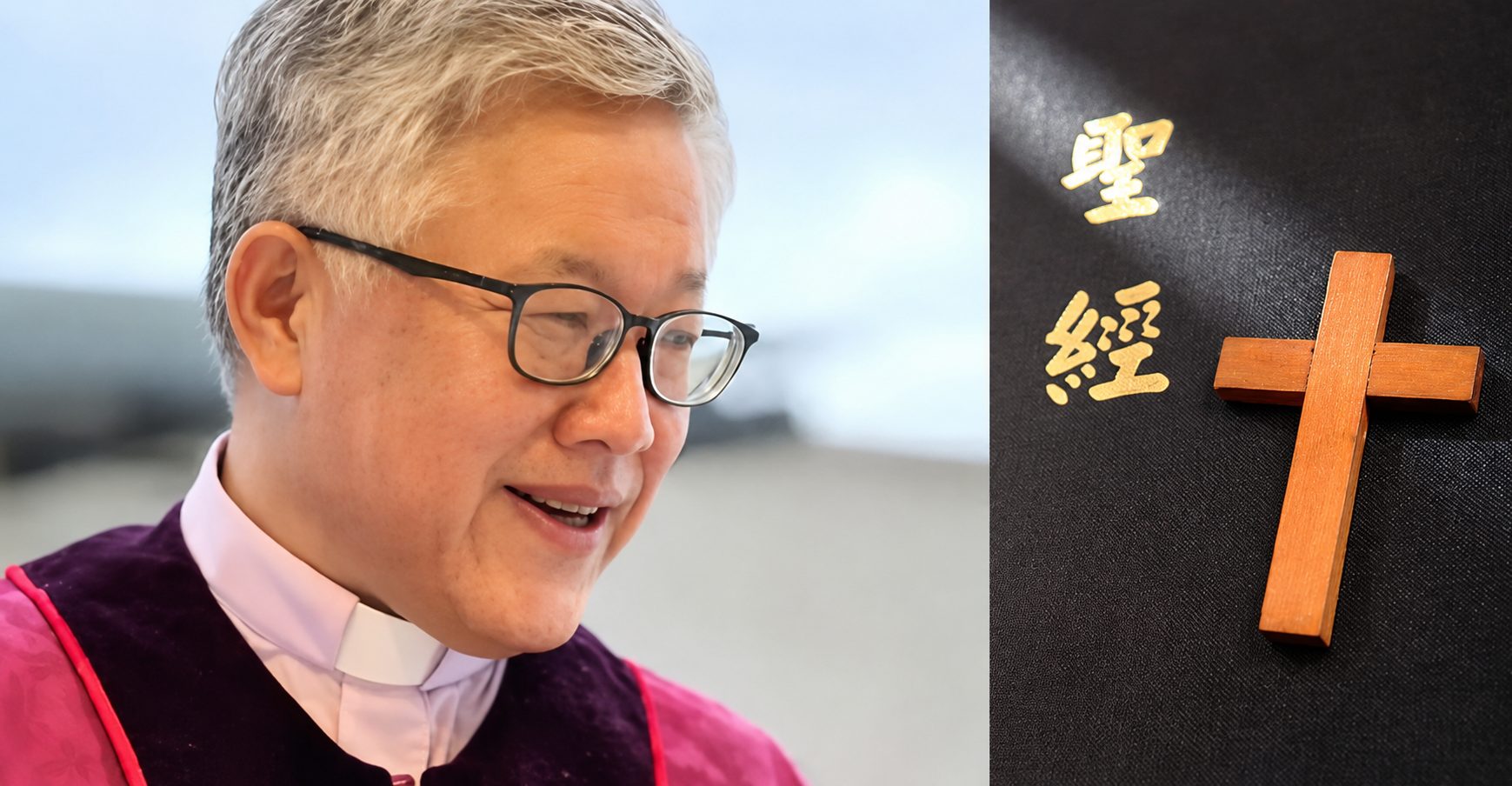
The decision by Chinese authorities to release Beijing’s most high-profile Christian prisoner reveals the undeniable power of faithful advocacy — and why it’s time to intensify our appeals for China’s persecuted Christians.
On July 4, 2026, a quiet miracle took place at Los Angeles International Airport. Stepping off a flight from Beijing was Pastor Ezra Jin Mingri, the 57-year-old founder of Beijing’s Zion Church. After nine long months in a Chinese detention center and eight years of forced separation from his loved ones, this faithful servant of God was finally reunited with his wife, daughter, and two sons.
For the American Church, the timing of his arrival was a reminder of the priceless nature of the liberties we so often take for granted. While we prepared to watch fireworks and gather with our families to celebrate our freedoms on America’s 250th birthday, a brother in Christ experienced true liberty for the first time in nearly a decade.
His release followed a high-level humanitarian arrangement brokered at a May summit between President Donald Trump and Chinese Communist Party General Secretary Xi Jinping, during which the U.S. President directly raised the pastor’s case. While we praise God for this tremendous diplomatic breakthrough and the political leaders who intervened, we must not mistake this single victory for the end of the battle.
Pastor Jin’s freedom is a powerful testimony to the impact of international pressure and persistent prayer. It is also a wakeup call of the ongoing, brutal reality faced by an untold number of our brothers and sisters in China — and a reminder that our intercession and advocacy cannot waver.

A Shepherd Who Refused to Bow
To understand the importance of Pastor Jin’s release, we must consider the background of this historic event. A scholar who graduated from Peking University, Pastor Jin first became a Christian after the horrifying events of the Tienanmen Square Massacre. He later traveled to California, where he earned a Doctor of Ministry degree from Fuller Theological Seminary.
He returned to his homeland with a burning passion for the Gospel that led him to start Beijing’s Zion Church in 2007. The Lord blessed his faithfulness, and the congregation grew to more than 1,500 members, becoming the largest Protestant house church in China’s capital city. The church remains one of the most dynamic evangelical churches in China, with affiliated sites located in 40 cities, according to the Wall Street Journal, and an online presence that now reaches 10,000 people per week.
In China, “house churches” operate independently from the state-run, Communist-controlled church system, known as the Three-Self Church, which deceptively wears the veneer of a Christian church but exists only to water down, twist, and undermine the faith.
Jing and other unregistered churches answer to King Jesus, not the Party. Because of this allegiance, Zion Church soon became a primary target for government hostility.
In 2018, authorities demanded that Pastor Jin install state surveillance cameras inside the sanctuary and submit the church’s ministry to rigid government oversight. Pastor Jin and his leadership team refused to allow the state’s eyes into the house of God. In retaliation, the government shut down the church. The congregation then moved underground and online, continuing to worship and make disciples.
“We moved from one sanctuary to hundreds,” Pastor Sean Long, a pastor on Jin’s staff, explained. “Online gatherings, small fellowships, new church plants. God grew us wider, not smaller.”
In the face of the ongoing harassment and persecution, Pastor Jin sent his wife and children to live in Los Angeles while he remained behind to continue his work; in retaliation, the Chinese government placed a travel ban on Pastor Jin so he couldn’t visit his family.
Eight years later, in October 2025, the government launched a sweeping crackdown on the Zion Church congregation with the “10.9 Church Case” across several provinces. During early morning raids, the police stormed the homes where believers were gathered, knocking down doors, cutting power, and handcuffing even the elderly.
Those arrested included Pastor Jin and 30 other pastors and staff members in what became one of the most high-profile prosecutions of a house church in modern history. Through nine months of isolation and intense pressure, Pastor Jin never backed down or denounced his faith. He refused to compromise the truth or plead guilty to fabricated charges.
As his wife, Anna Liu, beautifully captured in a public letter:
“Throughout the trial, he openly acknowledged everything he had done—preaching the gospel online, establishing churches, and making disciples. He consistently maintained that these are not crimes, but his faith and his calling.”
The Human Cost of Following Christ
When Pastor Jin embraced his family in Los Angeles, the physical toll of his faithfulness was written on his body. His family reported that he appeared noticeably thinner, having lost roughly 33 pounds during his detention, and his hair had turned entirely gray. As is routine in communist countries, China’s prison cells are designed to crush a man both physically and psychologically. Yet, by the grace of God, Pastor Jin’s family say that he remained in remarkably good spirits, still carrying the same warm smile that has long defined his ministry.
The story of Pastor Jin’s release reads like a page from the Book of Acts. On July 3, Chinese officials abruptly pulled the pastor from his cell. He initially believed he was merely being transferred to another detention facility. It was only when the vehicle pulled up to the airport that officials handed him a new passport and informed him he was being exiled to the United States.
Reflecting on the shock of that moment, his wife, Anna, wrote: “Only when I learned that Pastor Jin was already on the plane to Los Angeles did my heart finally settle. Before that, I hardly dared believe such a miracle could actually become reality.”
The Unfinished Story of Zion Church
As we rejoice in answered prayer, we must face the reality that many Christian leaders remain locked away in the Beihai Detention Center in Guangxi. The “10.9 Church Case” is far from resolved.
Pastors Yin Huibin, Gao Yingjia, Wang Lin, Liu Zhenbin, Lin Shucheng, and Wang Cong, alongside Preacher Wu Qiuyu and Elder Wang Zhong, are still facing heavy prison sentences. In an attempt to mask blatant religious persecution as common criminality, the Chinese government has leveled absurd charges of “fraud,” “illegal use of information networks,” and “illegal business operations” against these men.
Their supposed “crimes”? Collecting tithes and offerings from their congregation and gathering tuition to train future ministers of the Gospel. Just last month, the state added additional fraud charges against Pastor Wang Lin to ensure he stays behind bars even longer.
American Christians must realize that when fellow believers are persecuted, it is an attack on the entire global body of Christ. As the Apostle Paul wrote in 1 Corinthians 12:26, “If one member suffers, all the members suffer with it.” We cannot fully celebrate Pastor Jin’s freedom while his co-laborers are still wearing chains for the exact same offense.
In addition, Zion Church is not an isolated incident. Across the provinces of China, a systematic, calculated campaign is underway to “Sinicize” Christianity, which simply means twisting and rewriting Christian doctrine and Jesus’s own words to tout the authority of the Communist Party.
For this reason, we must also raise our voices for other faithful Chinese Christian leaders, like Pastor Wang Yi and Elder Li Yingqiang of the renowned Early Rain Covenant Church in Chengdu, who have endured relentless state harassment and imprisonment for years, and Pastor Gao Quanfu and his faithful wife, Pang Yu, who continue to bear the heavy cross of persecution away from the international spotlight.
Our Biblical Mandate
What, then, is the American evangelical church called to do? First, we must increase our prayers. Pastor Jin’s family has earnestly called upon Christians worldwide to join them every single month on the ninth day for the “Day of Prayer and Fasting for the Persecuted Church in China.” It’s the least we can do, and a powerful reminder of the need to intercede for our Christian family worldwide.
In addition, we must use our freedom to advocate for those who have been silenced. Pastor Ezra Jin Mingri is safe on American soil today because a global community of believers refused to stop praying, testifying, and fighting for his freedom. God answered those prayers on our nation’s birthday.
Let us honor that miracle by stepping onto the spiritual battlefield for the believers who remain imprisoned across China and beyond. They are bound for the sake of the Gospel, but the Word of God they preach can never be chained.
Pastor Jin’s story reminds us that freedom is a gift to steward, not a comfort to waste. If this kind of biblical, truth-telling coverage helps you stand with courage in today’s politics and culture, please consider supporting the Standing for Freedom Center.