The Trump administration is working to return city streets to what they were intended for: transportation, not political sloganeering.
U.S. Transportation Secretary Sean Duffy sent a letter last week urging state governors and their transportation departments to support the DOT’s new Safe Arterials for Everyone through Reliable Operations and Distraction-Reducing Strategies (SAFE ROADS) program.
In it, Duffy included a clear warning: “Roads are for safety, not political messaging or artwork.”
The letter explains the necessity of keeping crosswalks and intersections “free from distraction.”
Duffy pointed out that more than half of all roadway fatalities occur in these locations and cautioned on the importance of ensuring a right-of-way is “easier to interpret and navigate for all users.”
States are instructed to provide a list of arterial segments with the highest safety and compliance concerns within 60 days.
Duffy said in a press release,
“Far too many Americans die each year to traffic fatalities to take our eye off the ball. USDOT stands ready to help communities across the country make their roads safer and easier to navigate.”
Over the past several years, streets and crosswalks with left-wing political messaging have become a source of debate, and even criminal charges.
Just last month, four teenagers, ages 16 to 18, were arrested for stealing pride flags from a gay bar in Atlanta, Georgia and taking them to the crosswalk at the corner of Piedmont Avenue and 10th Street where a gay pride flag mural is painted on the crosswalk. The teens filmed themselves cutting up the pride flags standing on the crosswalk.
The teens have already been charged with obstruction, criminal damages to property, conspiracy, and prowling, but they also may face hate crime charges under Georgia’s state law that increases penalties when the offense is based on bias or prejudice.
It is but one in a string of incidents over the last several years as cities and states paint the controversial messages on public streets.
Last year, there were numerous arrests in Washington State and Florida after tire tracks were left on city pride murals — murals that were painted on public streets that are open to all manner of traffic.
The incidents have given rise to anger from many who note that anti-American protesters are permitted to burn the American flag, but teenagers are arrested for defacing pride flags and symbols.
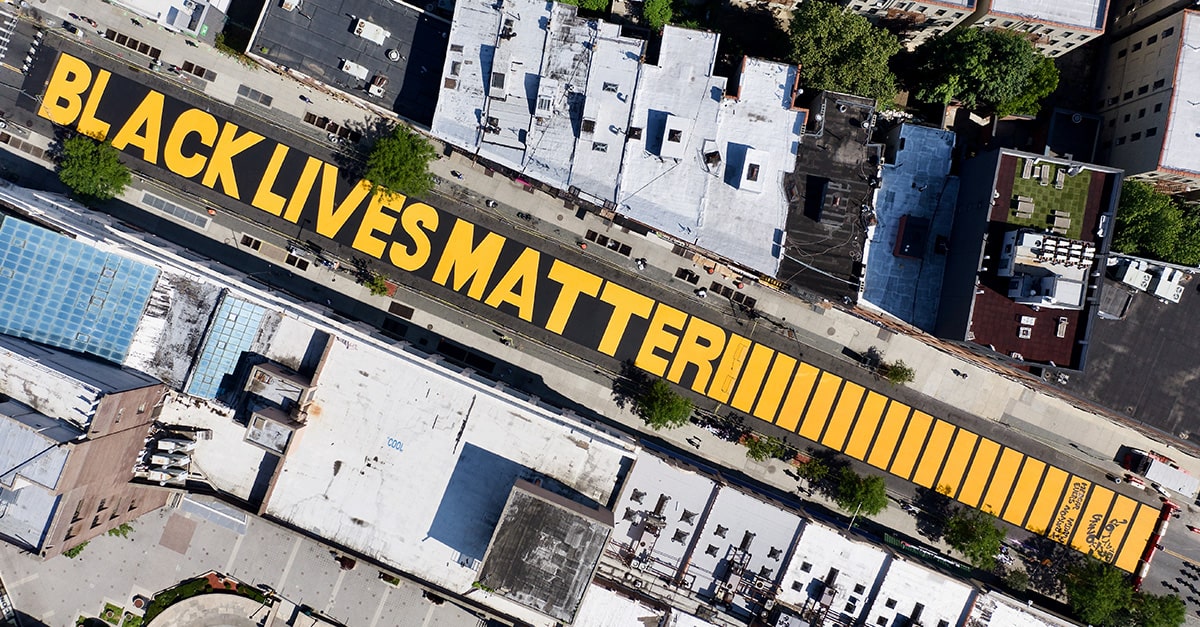
Meanwhile, towns and cities around the country painted “Black Lives Matter” on public streets. Among these were, Washington, D.C.’s 35-foot-long street mural located just a block from the White House. As public sentiment has turned against the BLM movement and the paintings are starting to age, many, including the one in D.C., are being removed or painted over after opposition from some in the federal government.
Others still remain and reflect the overtly ideological nature in which activists and politicians co-opted massive stretches of the road, including in Kansas City, Missouri, where six murals painted on one city block total 2,000 feet of road, and in East Orange, New Jersey, where one enormous mural takes up 9,000 square feet.
Another Black Lives Matter mural was painted in front of Trump Tower in New York City.
The warning from DOT comes as the Trump administration has tried to remove divisive political messaging from public property.
In January, the U.S. State Department banned all ideological flags from being displayed at U.S. facilities.
The Freedom Center requested comment from DOT but did not receive a response by publishing time.

Here’s a good rule of thumb, if you value something, don’t leave it in the street. Cities painted ideological flags and slogans on public streets using taxpayer funds, then arrested people when they protested such abuse.
Government has no authority to proscribe what is orthodox for its citizens. Left-wing city and state officials often speak about “our values,” but they don’t get to declare what the public actually believes — or should believe. The Department of Transportation is trying to return these states and cities to reality. Streets and crosswalks aren’t political, they’re streets that allow people to get home or to work or to a restaurant or to the hospital.
They are utilitarian, not ideological.
Lines painted on streets serve an obvious and critical purpose and obscuring such lines with political messages endangers pedestrians and drivers.
The murals hijack public streets for propaganda with no concern that they interfere with the public’s ability to use the streets for what they are intended for: transportation.
If someone wants to declare their identification with LGBT ideology or the Black Lives Matter movement, they can raise a flag or paint a mural on their own property — not the public’s.
If you like this article and other content that helps you apply a biblical worldview to today’s politics and culture, consider making a donation here.