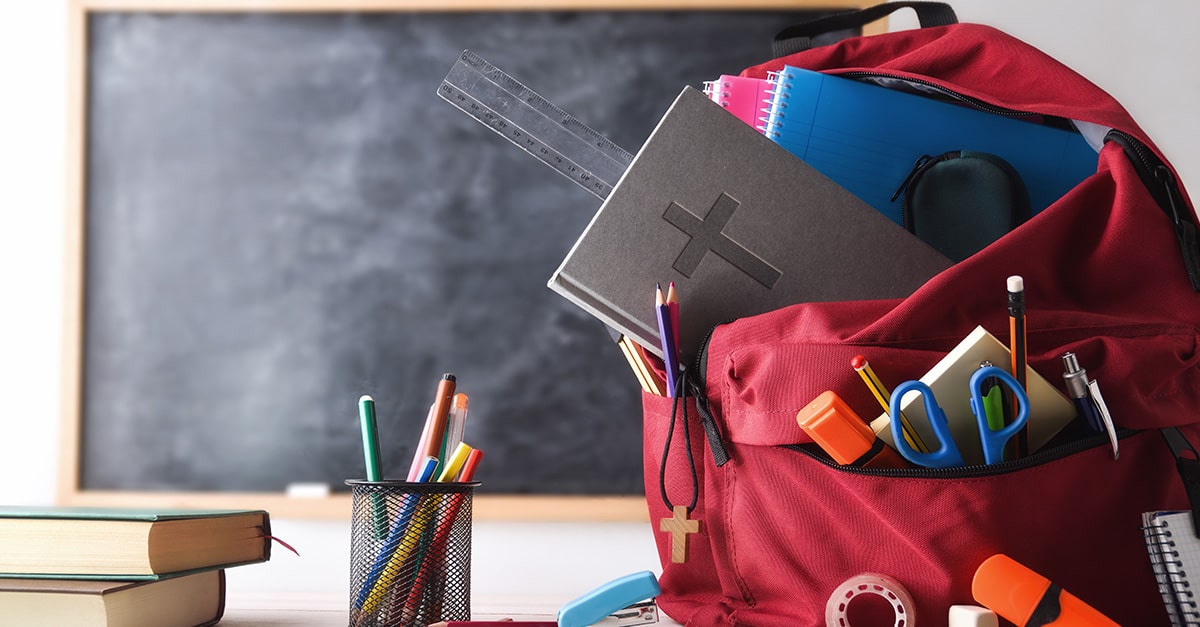
Most Americans recognize that chaplains can provide the wisdom and love students need to help deal with their increasing spiritual and mental health challenges — as long as students ask for the support and it’s not coerced in any way.
A new poll shows that a majority of American adults support allowing religious chaplains to serve in public schools, though many draw the line at teacher-led prayer or government-funded religious charter schools.
According to a study by the Associated Press–NORC Center for Public Affairs Research, approximately 60 percent of adults support placing chaplains in public schools to provide support services to students. This shift comes amid a growing number of legislative proposals nationwide aimed at authorizing such roles.
Texas became the first state to approve school chaplains in 2023, and Florida and Louisiana soon followed with similar legislation. More than a dozen states are considering following their lead, including Alabama, Georgia, Indiana, Iowa, Kansas, Maryland, Mississippi, Missouri, Nebraska, Ohio, Oklahoma, and Utah.
Support for chaplains crosses some political and religious lines. While Republicans and evangelical Protestants are more likely to express strong approval, the idea also finds backing among some Democrats and religious minorities who view chaplains as a way to offer students emotional and spiritual resources without compelling religious participation.
At the same time, Americans remain more divided on the issue of prayer in public schools. Most adults oppose teacher-led prayer during class and mandatory periods for private prayer. These practices are viewed by many as violations of the Establishment Clause, which prohibits the government from endorsing religion in public institutions.
Some respondents highlighted the difference between voluntary expressions of faith and government-facilitated religious practices. Cameron Thompson, a high school teacher and Republican from Ohio, said he opposed teacher-led prayer in class but supported student prayer groups outside of instructional time. “Kids should be allowed to pray with each other if they want, but it’s different when it comes from a teacher,” he said.
The poll also revealed concerns about government funding for religious education. A majority of Americans oppose taxpayer-funded religious charter schools, with 40 percent against, only 25 percent in favor, and another third remain unsure. Support was somewhat higher for voucher programs that help families pay for private religious schooling, though opinions remained evenly split.
White evangelical Protestants were more likely than other groups to support religious charter schools and vouchers, but even among them, support fell short of a majority. Among religiously unaffiliated adults, opposition to religious public schooling was significantly stronger.
These findings come as public schools remain a battleground for cultural and religious debates. In Texas, Gov. Greg Abbott, R, recently signed a bill into law requiring public schools to post the Ten Commandments in all classrooms. In Oklahoma, legal disputes over whether the state can fund a Catholic charter school reached the Supreme Court, where the initiative was blocked.
Beyond school policies, the poll found that 81 percent of Americans believe religious freedom is a vital part of the national identity. At the same time, 64 percent say separation of church and state is also essential. About 30 percent said schools currently have too much religious influence, while others believe the opposite is true. Among white evangelical Protestants, two-thirds believe schools do not include enough religious instruction or influence.
Overall, the poll highlights a public that is largely open to religious support systems in schools as long as they don’t cross the line into religious coercion. The growing support for chaplains reflects a desire to provide students with additional resources during a time of increasing mental health concerns.
In Florida, the 2024 law authorizing school chaplains was widely supported.
“At a time when much of the country is facing a mental health crisis, having volunteer chaplains for K-12 schools is a common-sense solution. We are selling our kids short if we only focus on meeting their intellectual needs but fail to make provision for their spiritual and emotional needs,” said state Rep. Stan McClain, R, who sponsored the legislation.
The American Civil Liberties Union of Florida opposed the measure, arguing that it violates the Establishment Clause. saying in a statement, “Allowing public schools to establish paid or voluntary positions for chaplains will inevitably lead to evangelizing and religious coercion of students.”
First Liberty argues that school chaplain programs are both constitutional and beneficial because they are optional and voluntary.
“Freedom and choice are at the core of voluntary public school chaplaincy programs. If parents and school district administrators want this support service available in their schools, then they can vote to put them in place,” First Liberty writer Jorge Gomez wrote. “This is all about giving students options. It’s about providing them additional resources.”
First Liberty also offers a model policy that can be used by those seeking to implement school chaplain programs in their own local public schools.

In a culture where young people face increasing anxiety, depression, and isolation, the presence of chaplains in public schools offers a Christ-centered answer to a deep cultural need. Offering school chaplains is not about mandating religion or forcing anyone to pray but about making space for spiritual care in the places where students spend most of their time.
The Bible teaches us in Proverbs 11:14, “Where there is no guidance, a people falls, but in an abundance of counselors there is safety.”
Chaplains serve in that biblical role as a presence of wisdom and love in moments of crisis, confusion, or sorrow. For students who may never step foot in a church, a chaplain may be the only voice of faith they hear.
In Galatians 6:2, believers are called to “carry each other’s burdens.” School chaplains are uniquely positioned to do just that, especially for children navigating family concerns, peer pressure, and other personal needs.
Critics argue that providing school chaplains blurs the line between church and state. But as long as these programs remain voluntary, the presence of chaplains protects religious liberty. It reflects the First Amendment’s true design to provide spiritual support while keeping such services optional.
Christian parents, pastors, teachers, school administrators, and community leaders should support school chaplain programs as a legitimate and loving way to reach the next generation.
These roles provide counseling and encouragement for young people. If we care about shaping both minds and hearts, then advocating for chaplains in public schools serves as a faithful response to Christ’s call to love our neighbors and to care for the next generation.
If you like this article and other content that helps you apply a biblical worldview to today’s politics and culture, consider making a donation here.