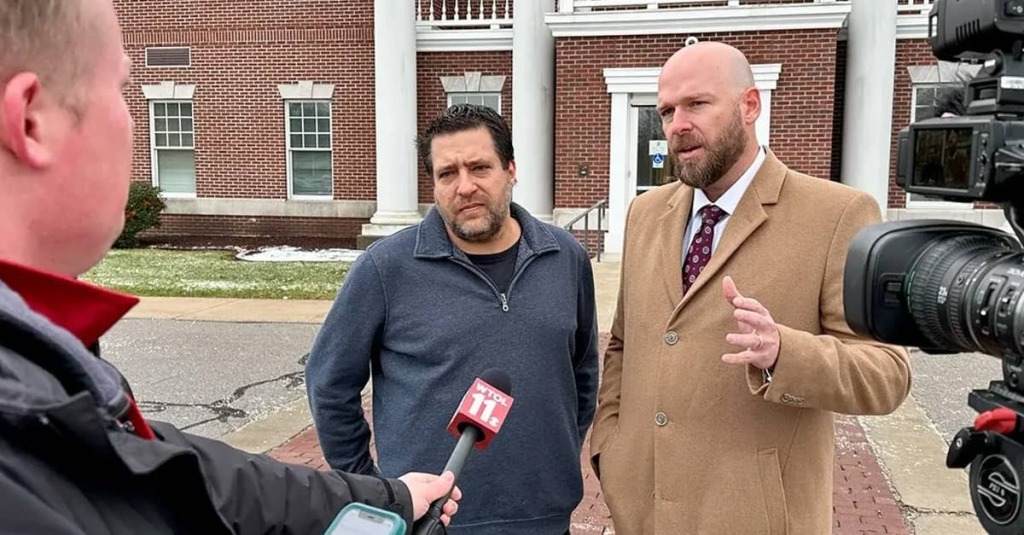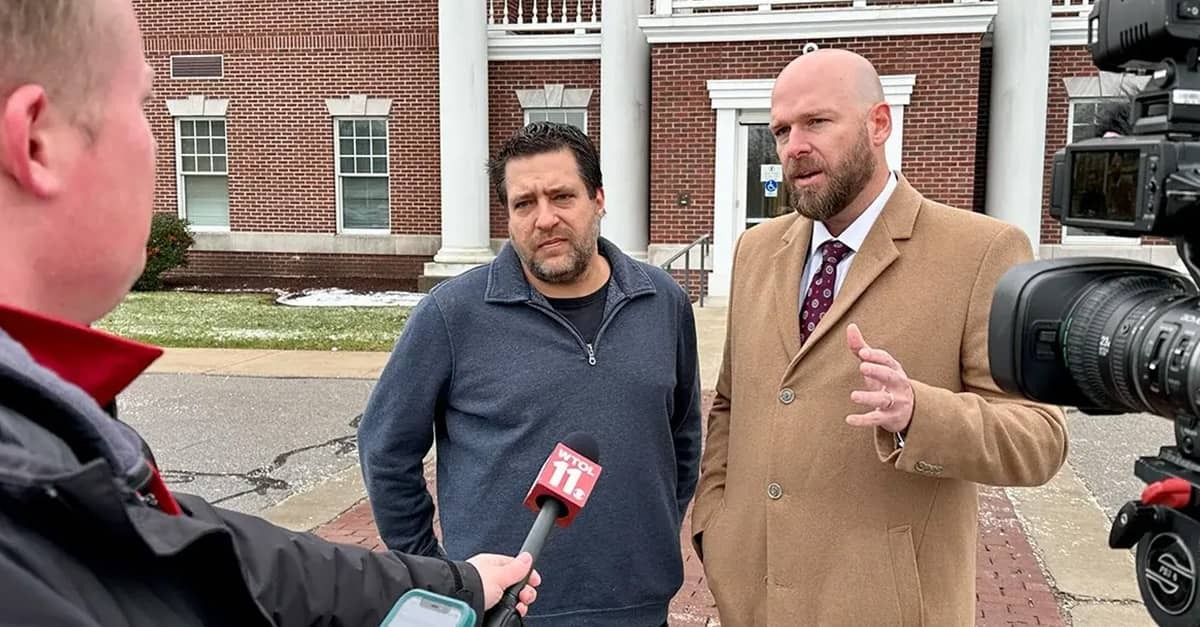
Judge James D. Bates ruled that the City of Bryan’s effort to block Dad’s Place Church from feeding and sheltering the homeless during Ohio’s harsh winters was both discriminatory and blatantly unconstitutional.
[UPDATE] An Ohio court has dismissed a lawsuit brought by City of Bryan officials seeking to permanently enjoin a local church’s around-the-clock ministry, which means the congregation can continue offering overnight shelter services.
Dad’s Place Church had opened its doors 24 hours a day to provide food and refuge for homeless and vulnerable people, including those who needed temporary shelter from Northeast Ohio’s frequent snowstorms and near-zero temperatures. The city, however, said the church’s hospitality violated its fire code and had Pastor Chris Avell arrested, hitting him with more than two dozen criminal charges. That started what attorneys have described as a years-long antagonistic effort to shut down Avell and his church’s efforts to help vulnerable populations.
On April 1, 2026, Judge James D. Bates of the Williams County Court of Common Pleas issued a final order in favor of Dad’s Place, dismissing the case with prejudice. Because the case impacts foundational religious liberty rights, he noted that it required the application of strict scrutiny, the absolute highest standard for judicial review. That meant the city government had to use the least restrictive means possible to achieve its interests.
Bates found that not only did Bryan officials not try to find workable solutions outside of arresting the pastor and attempting to shutter the church’s shelter ministry but the city’s fire chief had openly discriminated against Dad’s Place. A critical component of the judge’s findings was that Fire Chief Douglas Pool had happily granted various fire code waivers to other organizations, including hotels and non-church-run shelters, but had refused to do so for Dad’s Place, a choice that the judge described as “fatal under strict scrutiny.”
Bates noted too that the city’s request for a permanent injunction would “inflict irreparable harm on the Church by shutting down its ministry.”
As a result of Bates’ order, the church is now free to continue “to live out its faith by serving the vulnerable population of Bryan” without interference from the government.
“We praise God for this decision and the work it allows this church to continue in Bryan, Ohio,” said Avell. “I consider it no coincidence that this decision comes during Holy Week as our church joins Christians worldwide to celebrate Christ’s victory over death.”
Attorneys representing the church also celebrated Judge Bates’ order. Jeremy Dys, senior counsel at First Liberty Institute, said in a statement released after the ruling,
“This decision should put an end once and for all to the city’s relentless attacks on Dad’s Place and Pastor Chris. All Pastor Chris ever wanted to do was keep the doors of his church open to those in desperate need of temporary shelter. It’s past time for the city to end its mean-spirited, three-year campaign of harassment of this church.”
Brad Hubbard, an appellate partner at Gibson Dunn who argued the appeal, added,
“Religious exercise—including serving the most vulnerable in our communities at their time of greatest need—deserves the highest protection afforded by the First Amendment. Today’s decision sends a clear message to city officials: Pastor Chris and Dad’s Place are free to continue living out their faith by keeping the church open to serve the people of Bryan.”
ORIGINAL ARTICLE
Ohio Court Delays Punishment of Pastor Who Sheltered Homeless
{Published on February 25, 2025} An Ohio appellate court has placed a stay on the criminal sentence imposed on Pastor Chris Avell, the pastor of Dad’s Place church in Bryan, Ohio, who was charged with fire code violations after allowing homeless individuals to come in at night for protection from winter weather.
Avell was tried and convicted in municipal court earlier this year for keeping the church’s doors open 24 hours a day to serve people in need. A local judge handed down a $200 fine and 60-day suspended jail sentence to the pastor.
First Liberty Institute, Avell’s legal representative, immediately appealed, and the appellate court agreed to put a hold on the case until it is heard on its merits, according to Senior Counsel Jeremy Dys.
“This is the second time that an Ohio appellate court has recognized that Dad’s Place’s case presents a strong likelihood to succeed on appeal,” he said. “We are grateful to the court for granting this stay and will continue to fight until city officials in Bryan abandon their harassment of Dad’s Place and Pastor Chris.”
The case was helped by Ohio Attorney General Dave Yost, who submitted three briefs in support of Dad’s Place, a First Liberty statement noted.
“This is a battle over the First Amendment and freedom of religion,” AG Yost explained. “Pastor Chris keeps his church open to anybody, all the time, because he believes the words of Jesus as recorded in the 25th Chapter of Matthew’s Gospel: ‘What you do for the least of these, you do it for me.’”
Bryan Mayor Carrie Schlade, however, disputes that the case is about religious freedom, saying in a statement in January that the City of Bryan has consistently emphasized that public safety regulations must be followed.
“The city remains committed to addressing homelessness within the community and continues to collaborate with appropriate agencies,” the statement read. “At the same time, the city is dedicated to upholding laws related to public safety, particularly fire code enforcement, which is critical to ensuring the well-being of all residents.”
The case centers on a fundamental debate about the proper role of government in regulating religious institutions. Many Christians see Pastor Avell’s actions as a direct application of Jesus’ teaching. For many believers, the decision to keep the church open symbolizes a commitment to living out the Gospel through practical ministry.
The Attorney General’s intervention has helped shift the narrative from civic regulation to constitutional rights, emphasizing that the case is much more than a local dispute — it is about the freedom to practice one’s religion without state interference.
While the stay on Pastor Avell’s sentence brings immediate relief, the battle is far from over.
Despite the halt in enforcement, he remains convicted and legally considered a criminal — a status that could ultimately lead to jail time, depending on the outcome of his appeal. City officials in Bryan have made it clear that their determination to enforce the municipal ruling will continue unabated until Avell is behind bars and the church’s outreach activities are permanently halted.
First Liberty attorneys say they are working to make sure this doesn’t happen, emphasizing that the ministry’s commitment to serving those in need is a non-negotiable aspect of its Christian mission.

“No pastor in America, including Pastor Chris Avell, should be pronounced guilty for providing temporary shelter to those in desperate need,” said First Liberty Senior Counsel Ryan Gardner. “Only government officials could say with a straight face that people are safer in the sub-zero temperatures on the street than inside the warmth of a church.”
These words strike at the heart of the matter: The act of opening one’s doors to the destitute is a profound expression of faith and obedience to Christ’s call to serve the marginalized, not some act of rebellion against the government.
Despite facing so much hostility and the possibility of jail, Pastor Avell is being obedient and faithful. His example in opening Dad’s Place to those who are cold and hungry challenges us all to examine our Christian calling in a time when our compassion is both tested and needed. In Matthew 25:40, Jesus teaches, “What you do for the least of these, you do it for me,” a command that underscores the vital importance of caring for those on the margins.
For defenders of religious freedom and Pastor Avell, the appellate court’s decision is a moment of celebration and cautious optimism. While it halts the immediate threat of jail and preserves the church’s ability to shelter the homeless from winter’s brutal elements, the ongoing legal battle highlights the persistent challenges Christians face in a rapidly changing cultural and political landscape.
It also is a reminder that following and obeying Christ comes with risks. Jesus warns of this reality in John 15:18, ESV: “If the world hates you, know that it has hated me before it hated you.”
Pastor Avell shows us that our faith is not confined to Sunday services or quiet devotion but is meant to be lived out in active love and service. His ministry is a living demonstration of the Gospel. In our communities, we are called to be the hands and feet of Jesus by reaching out to those in need, offering comfort, shelter, and hope.
James 2:15-16, NIV, instructs: “Suppose a brother or a sister is without clothes and daily food. If one of you says to them, ‘Go in peace; keep warm and well fed,’ but does nothing about their physical needs, what good is it? In the same way, faith by itself, if it is not accompanied by action, is dead.” Our actions serve as an expression of our love for God and others.
This case reminds us to stand firm in our beliefs even when the world challenges our convictions. It encourages us to advocate for religious freedom and the rights of faith-based initiatives to serve without fear of retribution.
Christians should continue to pray for Pastor Avell and others like him who labor in service to the vulnerable, even as we too commit ourselves to acts of kindness, volunteer our time, and financially support those working to make our society a place that sees the love of Jesus demonstrated in tangible ways.
When government tries to punish a church for serving the vulnerable, religious liberty stops being an abstract idea and becomes a frontline fight for the soul of the country. Give to the Standing for Freedom Center today and help fuel fearless reporting, biblical clarity, and a bold defense of the First Amendment so churches can keep standing, serving, and speaking without intimidation.