Why do Christians call the darkest day in history good? Because at the cross, Jesus bore the judgment we deserved and turned humanity’s greatest evil into the only hope of salvation for all who believe.
This article is a lightly edited transcript of the “Here’s the Point” podcast by Ryan Helfenbein, executive director of the Standing for Freedom Center.
“Surely He has borne our griefs and carried our sorrows… He was pierced for our transgressions; He was crushed for our iniquities; upon Him was the chastisement that brought us peace, and with His wounds we are healed” (Isaiah 53:4–5).
Those words were written by the prophet some 700 years before the coming of Christ, yet they depict perfectly what Jesus suffered and the purpose for which he died at Golgotha.
John’s Gospel said that Isaiah saw Jesus Christ’s coming glory and spoke of Him and that many in authority believed in Him but for fear did not confess it. Why? Because they loved the glory that comes from man more than the glory that comes from God.
What glory might be found on Good Friday? It is the day in which Christ suffered, was beaten, crucified, and ultimately died. What is good about that?
The question is often asked, “Why does God allow bad things to happen to good people?” In reality that question is built upon a false premise and makes an underlying assertion that is completely untrue: There are no good people.
Throughout all human history we know that man is fallen, sinful, alienated from God, does not worship God, does not seek God, does not obey God, or even love God. Man’s thoughts are wicked all day long. Man is a sinner from the moment of conception through natural death. There is no such thing as a good people, but there is such a thing as a good God.
The cross of Christ is foolishness to this world, because no one would ever give up their life for a wicked man. Yet while we were sinners, Christ died for us (Romans 5:8). Why does God allow bad things to happen to good people? As R.C. Sproul once said, “That only happened once — and He volunteered.”
It is not Good Friday because of Christ’s suffering. It is Good Friday because of what Christ’s suffering accomplished when He said, “It is finished.”
So, here are some key takeaways from Good Friday.
1. The cross was the most brutal execution ever devised.
Jesus was betrayed by one of His own disciples for 30 pieces of silver. He was handed over to Pontius Pilate and He was stripped naked. He was scourged with the Roman cat o’ nine tails until His body was torn open with bone, muscle, and nerve endings exposed on His back.
A crown of thorns was placed on His head and pressed into His skull. He was made to carry His cross through the streets of Jerusalem to a place called Golgotha, where He was nailed to a beam and left to die (Matthew 27:26–66; Mark 15:15–47; John 19:16–42).
Make no mistake: There is no form of death more barbaric than Roman crucifixion. It was the worst form of capital punishment, reserved for the worst criminals of the Roman Empire. Crucifixion was first developed by the Persians and Carthaginians, but the Romans perfected the art of killing. Cicero, the great Roman statesman and orator, called it “the most cruel and disgusting punishment.”
The condemned were nailed through skin and bone, staked into the ground, and left to bleed, suffocate, and die in slow agony over hours and sometimes days. It is estimated that some 150,000 people were crucified under the Caesars. A Roman beheading was merciful by comparison. And yet, crucifixion is what Christ endured.
But it was not just the cross itself that Christ had to endure.
2. The worst part wasn’t the nails — it was the wrath of God.
As awful as the physical crucifixion was, nothing compares to the weight of what happened at a spiritual level on that cross. Jesus did not simply die to forgive our sins; He died to pay the penalty for our sins. It was the punishment we deserved. This is what is called penal substitutionary atonement. It is the heartbeat of the Gospel.
The prophet Isaiah records it plainly: “He was pierced for our transgressions; He was crushed for our iniquities; with His wounds we are healed” (Isaiah 53:4–5).
The night before His crucifixion, Jesus prayed in Gethsemane, “My Father, if it is possible, let this cup pass from me” (Matthew 26:39). That cup was the full, unmitigated wrath of a holy God poured out upon our sin — and Jesus drank from the cup of God’s wrath to the last drop, in our place.
Scripture is unambiguous: The life is in the blood, and “It is the blood that makes atonement” (Leviticus 17:11). “…without the shedding of blood, there is no forgiveness of sins” (Hebrews 9:22). Jesus stood condemned in our place. He shed His blood for us, so that we could be justified before a holy God by faith (Romans 3:21–26). He freely exchanged our sin for His righteousness (2 Corinthians 5:21).
The late, great John Stott said it this way: “The essence of sin is man substituting himself for God, while the essence of salvation is God substituting Himself for man.”
That is the good news of the Gospel. Jesus Christ gave up His life for us. He shed His blood for us. He is offering us this great exchange: our sin for His righteousness, if we will receive Him by faith, if we will put our faith and trust in Him.
That is why we call it Good Friday, but it also demands a response.
3. We call it Good Friday because we rejoice in the greatest act of love in all of human history.
Jesus said to Nicodemus, “For God so loved the world, that He gave His only begotten Son, that whoever believes in Him shall not perish but have everlasting life” (John 3:16).
The cross was not an unforeseen tragedy. God was not surprised by human sin. God was not surprised that humanity would need a Savior. Jesus Christ was not God’s “Plan B.” He was God’s plan all along — before the foundation of the world.
The cross of Christ is the greatest transaction ever to occur on behalf of all humanity: Christ’s righteousness exchanged for man’s sin.
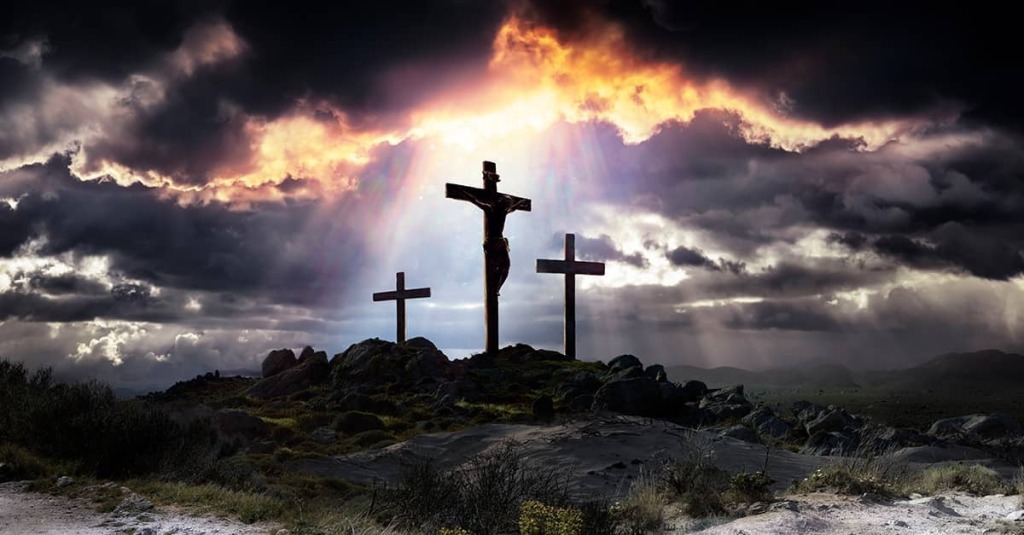
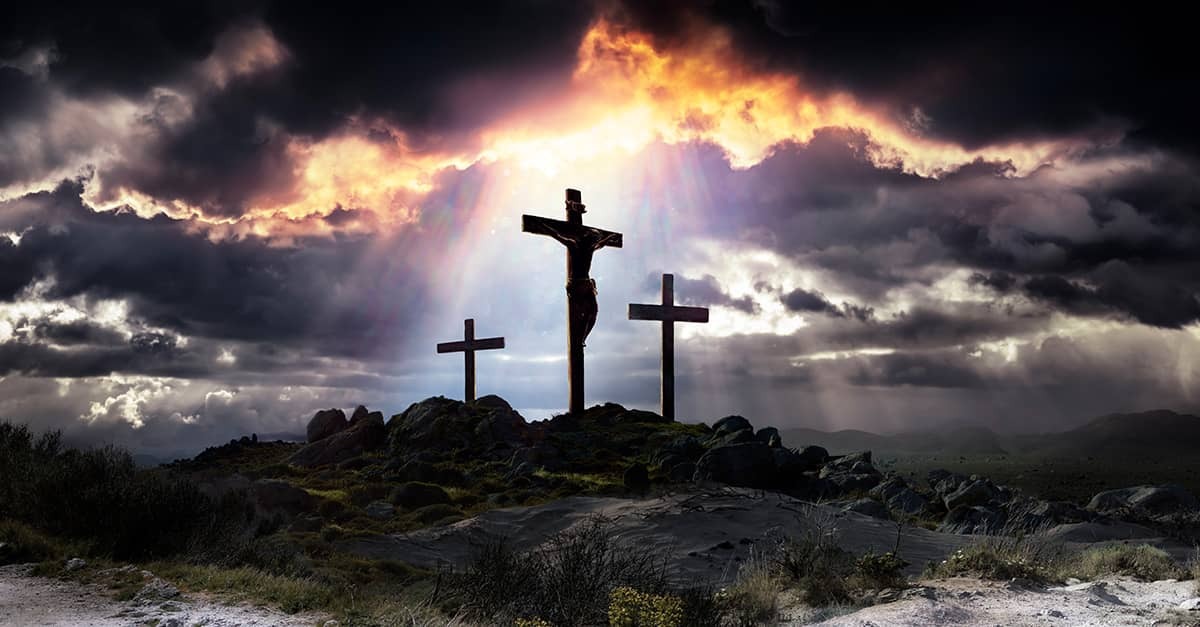
When we take inventory of the horrors of that Friday — the betrayal, the scourging, the crown of thorns, the nails, the wrath — it is an absolute wonder that the bloodied and cursed tree has become the universal symbol of Christianity. Every nation, creed, and ideology carries its symbol: the Star of David, the crescent moon, the hammer and the sickle. But the cross stands entirely apart from every other religious symbol.
The Bible says, “cursed is anyone who hangs on a tree” (Galatians 3:13). Yet it is that God-forsaken tree that has become the symbol of our resurrected faith: an empty cross — and an empty tomb.
Because of Christ, it has become the ultimate depiction of righteousness triumphing over evil.
Because of Christ it is love defeating death.
Because of Christ, God’s justice and grace meet at Golgotha.
Because of Christ, it is called Good Friday.
Because of Christ, the worst thing that could ever happen, the murder of God’s only Son, became the best thing that ever happened: the salvation of all who believe.
As Christians we do not mourn Good Friday, we celebrate it. It is a festival, not a funeral. Jesus Christ is risen, and our sorrow has turned into joy.
And Jesus declared, “It is finished.”
If this Good Friday message strengthened your faith, support the Standing for Freedom Center. Your gift helps us proclaim biblical truth with courage, defend faith and freedom, and equip Americans to stand firm in a culture desperate for both grace and conviction.