The Strait of Hormuz remains a dangerous flashpoint as President Trump moves to help stranded commercial ships while maintaining pressure on Iran. The fight now is bigger than oil prices – it is a test of American leadership, allied resolve, and whether Tehran can hold global trade hostage.
This article is a lightly edited transcript of the “Here’s the Point” podcast by Ryan Helfenbein, executive director of the Standing for Freedom Center.
Update (May 4, 2026): The Strait of Hormuz crisis has escalated again. President Trump announced that the United States would begin helping stranded commercial vessels move through the Strait, while U.S. Central Command said American forces are beginning freedom-of-navigation operations and maintaining the naval blockade on Iranian ports. Iran has continued to demand military coordination for passage, and maritime traffic remains largely stalled despite earlier claims that the waterway had reopened. The question is no longer simply whether the Strait is “open,” but whether Iran will be allowed to dictate the terms of global commerce through one of the world’s most important chokepoints.
Original: Iran’s threat to the Strait of Hormuz exposed just how vulnerable the global economy remains to a single strategic chokepoint. Even after Tehran claimed the waterway had reopened, commercial shipping remained disrupted, vessels were stranded, and the United States was forced to step in to defend freedom of navigation. The episode made clear that Iran is willing to weaponize energy markets, maritime insecurity, and allied hesitation to pressure the West.
The markets have reacted since the start of Operation Epic Fury with oil prices surging higher, but this week oil exceeded $100 a barrel for the first time since June 2022, when Russia invaded Ukraine.
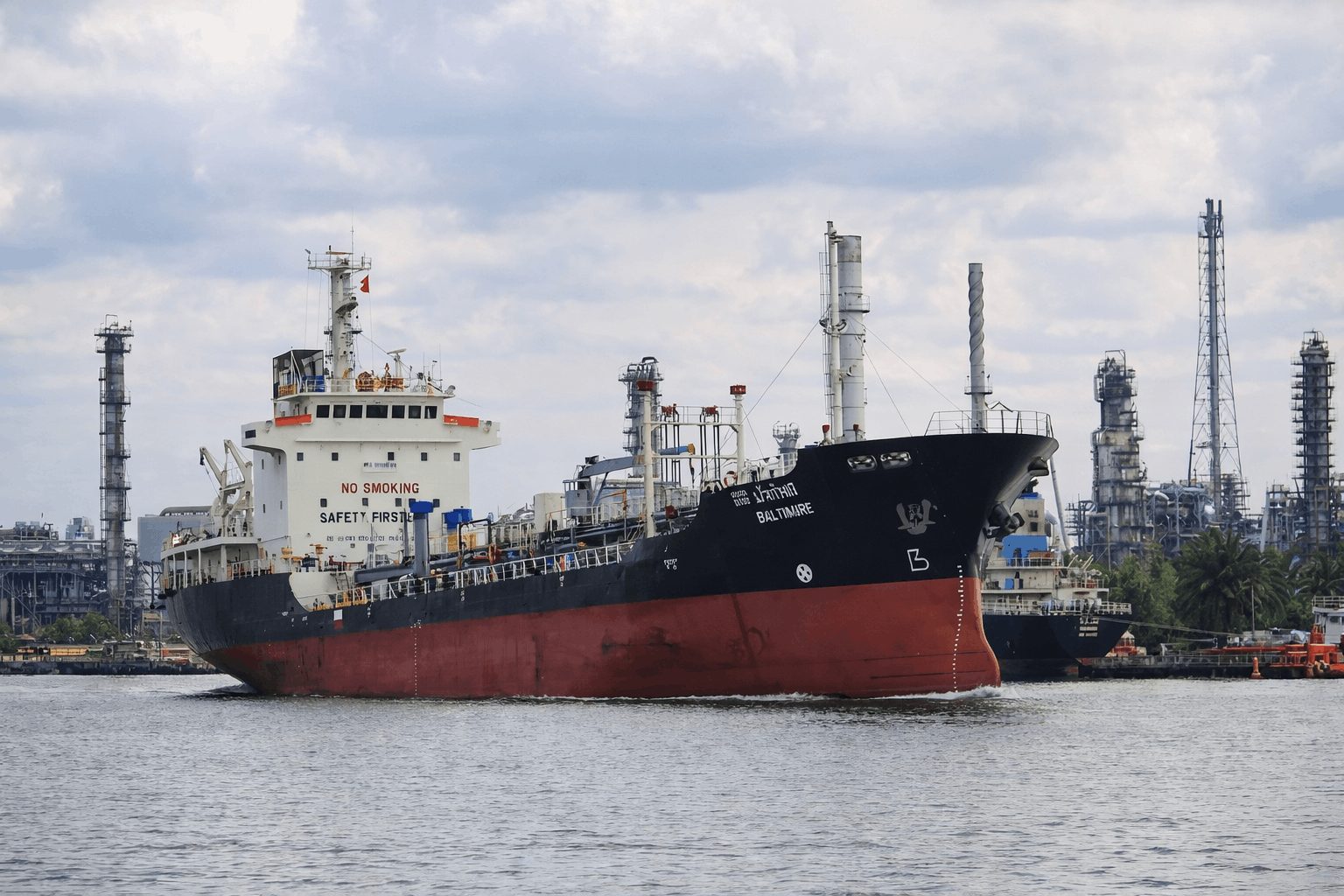
At least 10 oil tankers have been hit or targeted since the conflict began. Over 20 maritime incidents have been reported across the Gulf. There have already been civilian maritime casualties in the Strait of Hormuz. Six sailors and a port worker have been killed. Iran previously declared that vessels would need to follow its conditions for passage, underscoring how quickly the Strait could become a tool of coercion and instability.
President Trump has already called on NATO allies England, France, and Germany, as well as Japan, South Korea, and even China, to send warships to escort oil tankers through the Strait. Why? Because they benefit from a lower price of energy.
Many have pushed back from getting involved as it remains an active military zone. Iran has already signaled it will fight to the bitter end. This conflict is not over. And this chokepoint between the Persian Gulf and the Gulf of Oman will affect global markets until it is resolved militarily or diplomatically.
So what are the options, what impact could it have, and how should we think about this?
First, the short-term consequences is an immediate economic shock every market, every retirement account, and every kitchen table around the world will feel.
Iran has caused destruction through rockets, missiles, and drones, but there is no widespread pain that it can inflict on the globe right now that is more influential than the economic pressure it can create by shutting down the Strait.
Even as the United States is one of the largest energy exporters in the world, oil prices will climb everywhere due to the supply of this one commodity. It impacts shipping, trucking, and the price of food everywhere. The Iranian government knows this, and that is likely their only strategy at this point, other than random missile barrages.
Economic forecasters have mapped scenarios of what this does to global markets depending on its duration: A short conflict produces minimal damage; one dragging into the spring or even summer drives inflation upward and could cut GDP significantly; and a prolonged closure of the Strait risks global recession.
But this won’t just impact energy prices; it will impact food and agriculture. Gulf states supply 34 percent of the fertilizers that feed the world. A sustained closure will show up in grain yields 6 to 12 months from now. This demonstrates just how complicated global supply chains are.
Second, the middle-term consequence is a coalition test that could significantly impact American diplomacy in the future.
President Trump is right to demand that all nations benefiting most from an open passage actually share the burden of securing it. China imports 90 percent of its oil through the Middle East. Japan, South Korea, and Europe are equally dependent. President Trump has used his upcoming summit with President Xi as political leverage, signaling that he may delay the March 31 visit if China does not respond. That is the right pressure to apply.
Scripture reminds us that governing authorities are tasked with restraining evil and preserving order (Romans 13:1–4). In moments like this, leadership is not optional – it is a moral responsibility. Nations that benefit from stability are also called to help defend it.
Many nations who are pushing back, like Germany, Poland, Spain, Greece, and Australia, are not doing so on a principled basis. They are free riding off of American security, and they will benefit the most if and when regime change happens in Iran.
Third, the long-term consequence is a world order restructured around whoever controls the Strait.
Iran does not operate alone. It is the keystone of an adversarial network: Russia, China, and North Korea. Venezuela was once counted in that group, but Trump has already taken them out of the equation.
Iran is next to fall. But each of these adversarial nations are watching American resolve in the Gulf as a signal for how bold and assertive they can be elsewhere. If Iran can effectively close 20 percent of global oil supply without any significant challenge from the West and partnering nations, President Xi may draw further conclusions about his risks with Taiwan, just as Putin has drawn his conclusions about Ukraine.
The long game is not about just about GDP, inflation, or the market price of energy but about how much respect and leverage the United States and its allies have worldwide versus China and its coalition of nations actively working against the West. That is why President Trump is working expeditiously for a solution both militarily and diplomatically.
The Trump administration has already demonstrated military might and resolve. It has decimated Iran’s navy and its defense capabilities. Each day Iran is less and less capable of launching any significant retaliatory response.
What remains is Iran’s oil infrastructure and critical energy production. This is because much of the world depends on it for their fuel and to fuel their economies. They have mutual self-interest in seeing the Strait reopen and oil tankers finding safe passage to the open sea. Coalitions and partner nations do matter, but they have to recognize their responsibility in this conflict.
Iran cannot hold the global economy hostage. Ironic as that statement might be, Iran has functioned as a state sponsor of terror for nearly 50 years and has been a menacing threat around the world. It’s reign of terror is coming to an end, but the question now remains as to whether America and Israel will remain alone in responding to Iran — or if other nations will finally summon the courage to challenge Iran directly.
The Strait must remain open – not just for markets, but for order. The question now is not whether America will act, but whether the world will stand with her. History does not reward hesitation – it rewards resolve.
If you believe America needs courage, clarity, and biblical truth in moments of global crisis, make your tax-deductible gift today. Your support helps the Standing for Freedom Center equip citizens to understand world events through faith, freedom, and moral responsibility.