Iran was once home to one of history’s great civilizations, but revolution, Islamic rule, and anti-Western ideology turned it into a hostile regime. To understand the threat Iran poses today and why many Persians still long for freedom, you have to understand how the nation got here.
This article is a lightly edited transcript of the “Here’s the Point” podcast by Ryan Helfenbein, executive director of the Standing for Freedom Center.
To understand modern Iran, you have to go back. That’s because what is happening right now did not begin with President Trump or President Obama or even the Ayatollah Khomeini. It began in the cradle of civilization itself.
Persia was one of the greatest civilizations in human history — and its identity runs further back than Islam.
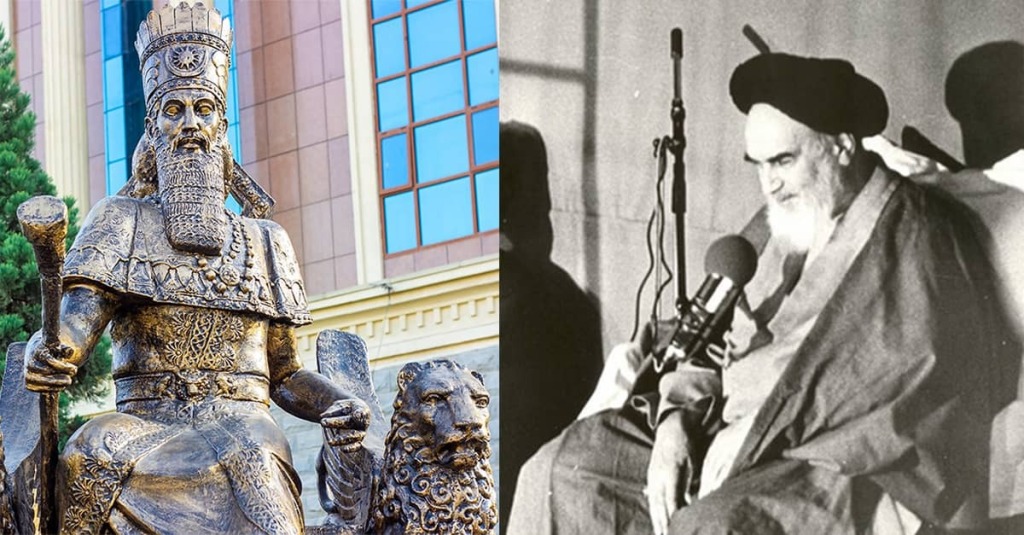
By 550 B.C., Cyrus the Great had built the largest empire the ancient world had ever seen — stretching from Eastern Europe to Asia. Isaiah records that the Lord anointed Cyrus, King of Persia, to release the Jewish people from Babylonian captivity and to fund the rebuilding of the Temple. That is the Persia the modern world has completely forgotten.
The ancient Persians were Zoroastrians, not Muslims. Islam did not arrive until Arab armies conquered the land in the 7th century A.D. The Persians absorbed Islam, but they were never fully Arabic in their customs or culture. They kept their language, their literature, their distinct identity — and they eventually embraced Shia Islam over the Sunni tradition, a distinction that would define centuries of conflict to come.
By the 11th century, Turkish peoples had swept across the Iranian plateau in successive waves. Out of this crucible emerged a new dynasty in 1501, of Turkic-speaking origin but thoroughly Persian in culture. The Safavid dynasty made a historic decision: They declared Shia Islam the official religion of Persia, launching a systematic conversion of the population. This was not merely theological; it was also geopolitical.
The great rival to their west was the Sunni Ottoman Empire, which had conquered Constantinople and stretched from Hungary to Arabia. The Safavids drew a sharp sectarian line. Shia Islam became the theological foundation of Persian national identity. Iran was never part of the Ottoman Empire. It was the Ottoman Empire’s most formidable rival, a distinction that shaped the entire modern Middle East.
The 19th century brought a new kind of conquest — not armies, but trade agreements, telegraph lines, and banking concessions.
Britain and Russia engaged in what historians call “The Great Game,” a contest for influence across central Asia and Persia.
In 1908, British engineers discovered oil in Khuzestan. The Anglo-Iranian Oil Company — which would become British Petroleum, today known as BP — was born. Britain extracted vast wealth from Persian soil, while Iranians grew to further resent their presence on the land. There was a growing nationalism and national identity that wanted to reject Western influence in Persia. By the end of the 19th century, the Iranian government was a vassal state to British and Russian influence and interests in the region.
In 1921 Reza Khan, a military officer seized power and was crowned a monarch and the Shah in 1925. He was a nationalist and a modernizer — suppressing tribal autonomy, building infrastructure, expanding universities, and renaming the country “Iran” in 1935. He suppressed the Islamic clergy and built a secular state modeled on Atatürk’s modern secular Turkey.
During World War II, Britain and the Soviet Union jointly occupied Iran and forced Reza Khan to abdicate, installing his son, Mohammad Reza Pahlavi, into power.
In 1951, Iran’s democratically elected prime minister nationalized Iran’s oil industry. Britain responded with an economic blockade. The Eisenhower administration, persuaded by British intelligence, authorized the CIA to execute a covert coup: Operation Ajax. In August 1953, the prime minister was overthrown and the Shah was restored to power.
For many Iranians, in the 1950s there was a growing resentment of Western power and influence that did not allow for self-determination. And the Shah was increasingly seen as a puppet of the West in his own country. The Shah led several cultural and political reforms, including land reform, education programs, and expanded rights for women.
There was a growing number of political groups and fronts that coalesced in Tehran — made up of secular liberals, nationalist, Marxists, students, and the radicalized Shia Muslims who resented Western influence, capitalism, and of course, their own Shah.
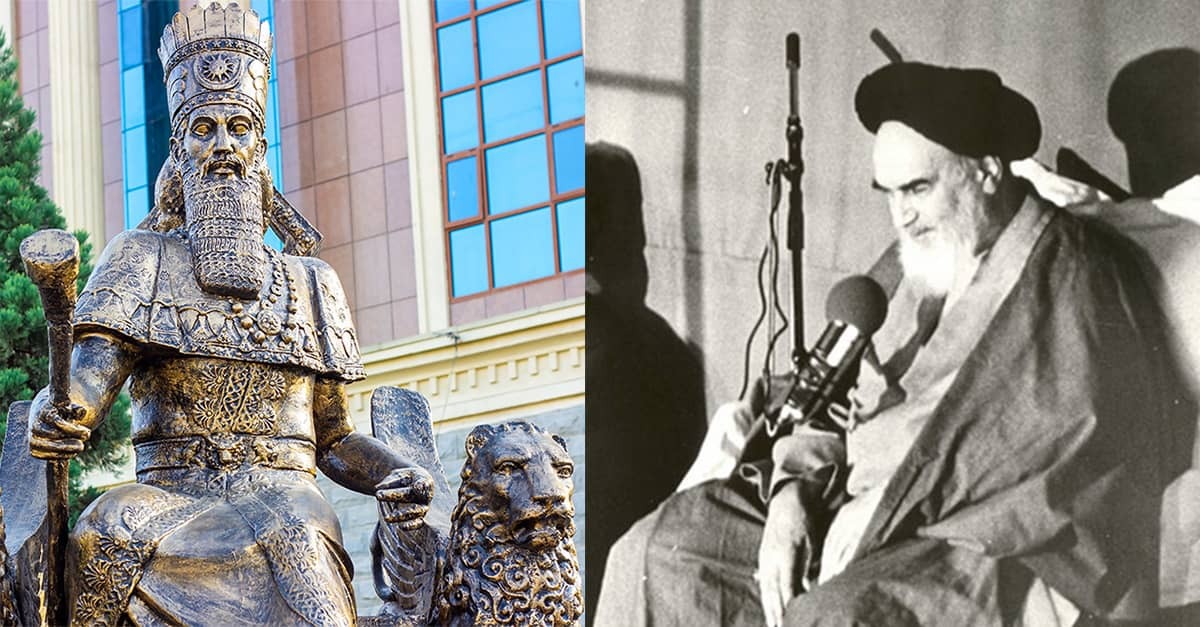
One of the biggest critics was the Ayatollah Ruhollah Khomeini, who was exiled in 1964 after denouncing the Shah’s reforms. His own genius was in his ability to organize coalitions of people. He united radical Islamists demanding Sharia law and Shia supremacy with Marxist students and leftist intellectuals who despised Western imperialism. These were ideologically incompatible allies — a red-green alliance. Khomeini knew these ideas were incompatible, but it did not matter as his primary goal was toppling the government.
The Ayatollah promised different things to different factions — and delivered only to the Muslim clerics: an Islamic Republic.
The Marxists and leftists who helped topple the Shah were later imprisoned and executed by the very Islamic Revolution they had built but couldn’t control.
On February 1, 1979, Khomeini returned from exile to a crowd of millions of Iranians who were praising him in the streets as a liberator. Ten days later, the Islamic Republic was declared. The secular, pro-Western monarchy was gone. In its place rose a theocratic regime animated not by Persian nationalism or freedom but by an eschatological Islamic vision — the pursuit of a global caliphate and the destruction of Israel and the West.
And that is the Iran that no American president was willing to confront fully — until now. That is also the Iran that refused to end their ambitions of a nuclear weapon.
As Christians we must understand that all nations rise and fall under the sovereign hand of God. And we must understand what we are dealing with before we can understand and appraise how it’s being handled.
The story of Iran is complex, but it is not an Arab nation. It is filled with proud Persian people, even Christians who claim the name of Christ and have endured much persecution and suffering at the hands of the Islamic regime.
The Persian people once had a much better government and self-determination for their people, and it is very likely they could have that one day soon. The story is far from over, but let’s pray unto that end.
If you like this article and other content that helps you apply a biblical worldview to today’s politics and culture, consider making a donation here.