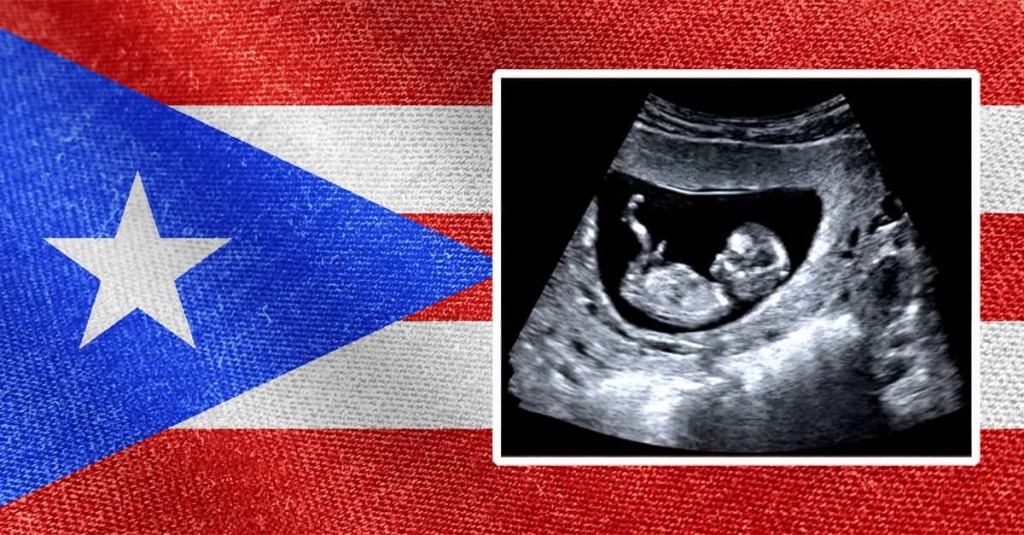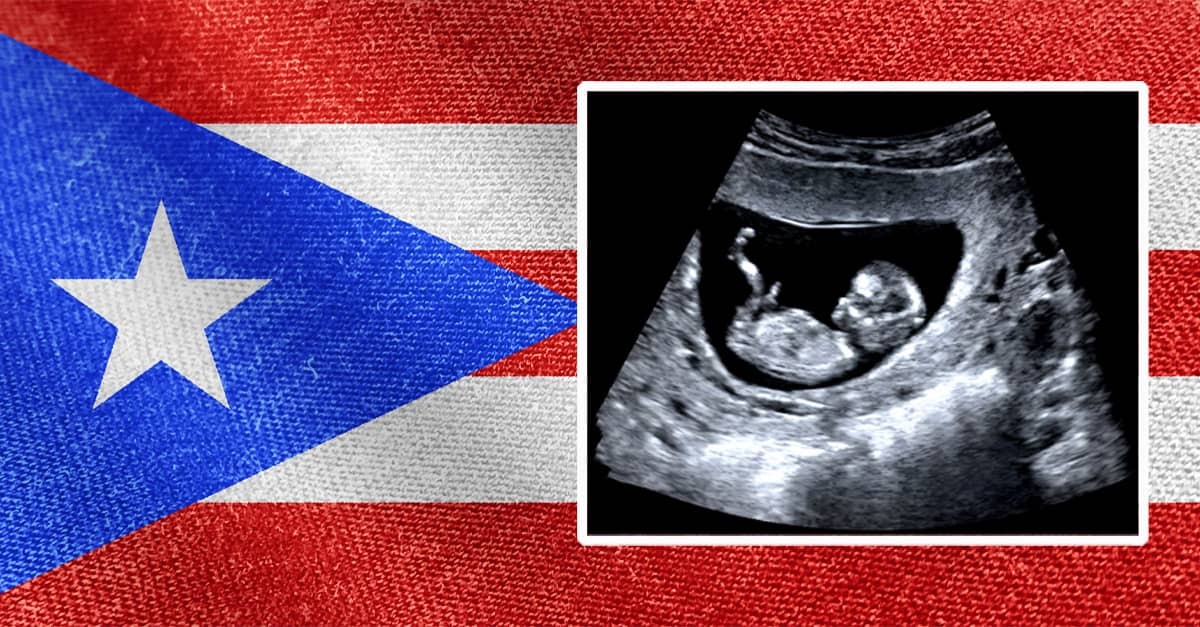
Puerto Rico just passed a law recognizing unborn babies as human beings under the penal code, impacting cases that involve the murder of pregnant women and revealing society’s contradictions regarding life and abortion.
On Thursday, Puerto Rico Gov. Jenniffer González signed into law a measure that recognizes unborn babies as human beings under the territory’s penal code. The amendment to Senate Bill 923 alters the legal definition of murder to include the killing of a fetus, establishing consistency between Puerto Rico’s civil and criminal provisions.
The legislation was named after Keishla Rodríguez, a pregnant woman murdered in April 2021, whose killer — former boxer Félix Verdejo — received two life sentences for the double homicide.
Gov. González stated that the law “aims to maintain consistency between civil and criminal provisions by recognizing the unborn child as a human being.” While supporters argue the measure simply ensures harsher punishments for those who kill pregnant women, critics fear it opens the door to eventually criminalizing the abortion industry in Puerto Rico, where the procedure remains legal.
The law explicitly states that it applies when suspects “intentionally and knowingly” kill a pregnant woman, resulting in the death of the conceived child “at any stage of gestation.”
So how should we think about this?
First, Puerto Rico joins a significant majority of American jurisdictions in protecting unborn life through the criminal code.
Thirty-eight states plus the federal government now recognize unborn children as victims of homicide in at least some circumstances. Of these states, 27 provide protection throughout the entire period of prenatal development, while others limit protection to specific gestational stages. This makes Puerto Rico’s law part of an established legal tradition, not a radical departure.
Second, these fetal homicide laws operate independently from abortion law, though critics refuse to acknowledge the distinction.
Puerto Rico’s law, like similar statutes across America, focuses on third-party violence against a pregnant woman. It targets criminals who harm or kill expectant mothers and their children, not medical procedures.
The federal Unborn Victims of Violence Act, signed in 2004, explicitly exempts abortion and medical treatment from prosecution. Most state laws contain similar carveouts. Yet opponents persistently claim these protections somehow threaten abortion access, revealing their real fear — that recognizing fetal personhood in any legal context undermines abortion’s philosophical foundation.
Third, the law exposes the fundamental contradiction at abortion’s core.
If an unborn child can be the victim of murder when that baby is wanted but not a baby when it is unwanted, then we’re not making medical decisions — we’re making value judgments about human dignity based solely on a baby’s desirability.
The imago Dei doesn’t change based on the mother’s wish to keep a baby or to end a baby’s life. What changes is whether we subjectively choose to acknowledge the human dignity and worth of an unborn child.
Puerto Rico’s law simply affirms what biology and common sense already tell us: A developing human life has been killed when a pregnant woman is murdered.
California pioneered this legal framework in 1970 when it amended its penal code in Section 187 to define murder as “the unlawful killing of a human being, or a fetus, with malice aforethought.” Tragically, this change came too late for Hollywood actress Sharon Tate and her unborn son, Paul Richard Polanski.
When Charles Manson’s cult followers gruesomely murdered the eight-and-a-half-month pregnant actress in August 1969, no separate charges could be brought for the death of her child. The Manson Family members were convicted of five murders that night, but not six. California’s 1970 amendment ensured future prosecutors wouldn’t face those limitations.
But the amendment proved its worth in 2004 when Scott Peterson was convicted of first-degree murder for killing his wife, Laci, and murder in the second degree for their unborn son, Conner. Laci was eight months pregnant when Peterson murdered her on Christmas Eve 2002. The case became a watershed moment, inspiring Congress to pass the federal Unborn Victims of Violence Act, also known as “Laci and Conner’s Law,” which President Bush signed in April 2004.
This federal statute recognizes a “child in utero” as a legal victim if injured or killed during any of over 60 federal crimes of violence, defining the term as “a member of the species Homo sapien, at any stage of development, who is carried in the womb.”
Here’s what abortion advocates won’t admit, and it’s the elephant in the room: These laws could theoretically apply to abortion itself. The only reason they don’t is because the abortion industry treats abortion of any unwanted child as a non-person.
California’s penal code contains explicit exceptions for acts “solicited, aided, abetted, or consented to by the mother of the fetus.” The federal law similarly exempts abortion. But notice what this means: the exact same developing human being is either a “child” deserving of legal protection or disposable tissue, depending entirely on whether the mother wants the baby or not.
That is not healthcare. That is not medicine. That is the culture of death on display.
When we recognize unborn children as human beings worthy of protection from criminal violence but simultaneously claim they’re not human beings when slated for abortion, we’ve abandoned any pretense of scientific or philosophical consistency.
We’re simply declaring that human worth depends on being wanted — a principle that should terrify anyone committed to human rights and equal protection under the law.
While Puerto Rico’s new law doesn’t resolve this contradiction, it does — once again — raise universal awareness that keeps the abortion industry on high alert. If it is enough to concern the ACLU, Christians had better take notice and confront it.
If you like this article and other content that helps you apply a biblical worldview to today’s politics and culture, consider making a donation here.