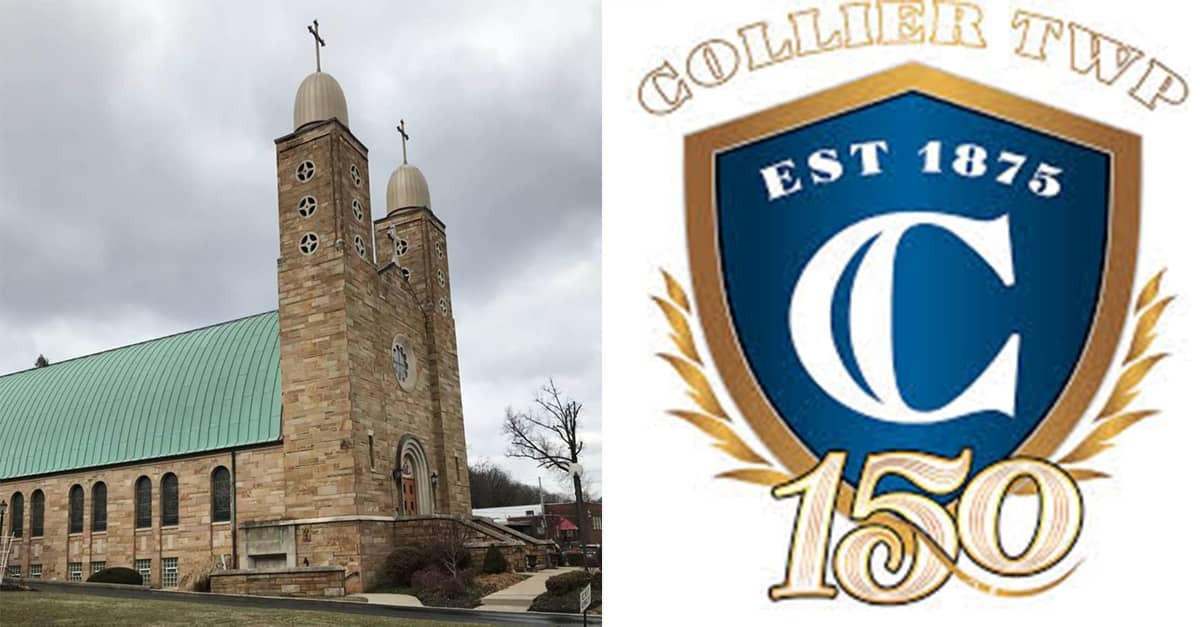
Holy Trinity Ukrainian Catholic Church says that Collier officials illegally used zoning laws to limit the church’s ability to build a chapel on its own property and to restrict its religious use — even as the township failed to apply the same laws to secular organizations, including dog kennels.
According to a lawsuit filed on January 8 in the U.S. District Court in Pittsburgh, a Pennsylvania township discriminated against Holy Trinity Ukrainian Catholic Church by subjecting the church to restrictive zoning rules and limiting what religious practices it can conduct on its own property.
The suit states that the church, which adheres to Byzantine Catholicism, sought to expand on its nearly 41-acre property but has been repeatedly denied permission to carry out its desired plans by officials within Collier Township.
Attorneys with First Liberty Institute, Troutman Pepper Locke LLP, and the Independence Law Center, which all represent Holy Trinity in the suit, argue that Collier imposes zoning restrictions on churches and cemeteries that it does not impose on residential homes, commercial buildings, or public and private recreational facilities. As a result, Holy Trinity and other churches are required to seek conditional-use permits to build, while secular entities — including motels, dog kennels, and professional services businesses — are not.
The lawsuit cites a nearby 92,500-square-foot complex featuring classrooms, an auditorium, and meeting space built by a local carpenters’ union on its 19-acre property as an example of disparate treatment.
Holy Trinity sought approval for its proposed Shrine Project, which included a 13,000-square-foot chapel housing a sanctuary, social hall, museum crypt, gift shop, and a small retreat center with 18 guest rooms, along with a bell tower. The shrine was intended to honor Mary, the mother of Jesus.
The church spent more than $160,000 on design and site development and engaged architects, builders, and engineers to plan the project. The suit also alleges the church met with Bob Caun, Collier’s director of planning, zoning, and land development, who provided feedback and recommendations at the time and raised no objections.
Over the next several months, the church responded to township inquiries and still received no negative feedback. Despite this, the Collier Planning Commission denied the project, citing potential economic costs to residents, even though the church had agreed to cover all associated expenses, including road modifications.
At a public hearing, attendees reportedly laughed when church leader Fr. Jason Charron said the project would be funded through donations and God’s providence.
After it was denied, Holy Trinity submitted a scaled-down proposal. Months later, during another planning commission meeting, members questioned how the church would finance the project. According to the suit, before church representatives could respond, commission Chairman Wayne Chiurazzi allegedly said, “Please don’t tell me Jesus is going to pay for it.”
The commission ultimately approved the revised proposal but imposed eight conditions, including limits on building size; restrictions on when and how long bells could be rung; a ban on bell use except for funerals or memorial services; and a ban on using the chapel for any event or gathering other than funerals or memorial services.
The lawsuit claims that in failing to demonstrate any compelling government interest for these restrictions, Collier Township has “blatantly violated” the Religious Land Use and Institutionalized Persons Act (RLUPIA), in addition to the First Amendment. RLUPIA prohibits government from treating religious institutions less favorably than secular ones through zoning regulations or from substantially burdening religious exercise without a compelling government interest pursued through the least restrictive means. The lawsuit explained,
“First, the Township’s zoning ordinances facially discriminate against religious land use by denying the Church the right to construct a church building anywhere within the Township as of right…. To do so, the Township needed to identify a compelling interest justifying its burdens and use the least restrictive means to further that interest. It failed to do either.
The Township failed to identify any compelling governmental interest—or any interest at all—in denying the Chruch’s plans for use of its own property. And it failed to calibrate the use restrictions it did impose in any way, much less ensure they were the least restrictive means available. The Township’s conditions are not only arbitrary and discriminatory but also highly restrictive impositions on the Church’s religious life, which cannot satisfy RLUIPA or the First Amendment.”
“The Township has shown clear discrimination in applying strict limitations on the church but giving free reign to comparable secular activities and neighboring organizations,” said Jeremy Dys, senior counsel for First Liberty Institute. “Religious freedom means precious little if religious organizations cannot use their property for religious purposes.”
Attorneys for Holy Trinity are asking the court to force Collier to remove its unconstitutional restrictions and allow the church to implement its original building plan and be left alone to operate in peace.

How can America claim to be the land of religious freedom, a land with the constitutional right to the free exercise of religion and the right to property, when a planning commission can tell a church what it can — and cannot — build on its own land or even what religious observances it can conduct?
If these claims are true a church spent over $100,000 and years trying to get approval to build a chapel on its own land only to be micromanaged by a bureaucracy over who gets to engage in religious services and how often and for how long it may ring its bells.
Such government control over a church is why so many fled to America to begin with, so that the state could not tell them how, when, and where they could worship.
The Constitution does not tolerate the government’s treating religious organizations and religious people less favorably than secular ones. That principle has been affirmed repeatedly over the last few decades, most notably in Carson v. Makin, Kennedy v. Bremerton, and Shurtleff v. City of Boston.
If the township allows other groups to build on their property, while at the same time restricting a church from building on its property, it is violating the Constitution. The RLUPIA was passed by Congress for the purpose of preventing local governments from violating religious liberty through zoning laws.
The problem is that too many government bureaucrats don’t truly understand religious liberty. They see secularism as the standard rather than its own belief system and view religious organizations as somehow subordinate to the current de facto cultural milieu; as such, they think it’s perfectly within their job description to hold religious individuals and religious organizations to different (and stricter) rules and standards than they do secular individuals and organizations.
Unfortunately, many other townships, cities, and states have made that same mistake before finding themselves unexpectedly facing the legal consequences. And when this case goes before a federal judge, Collier Township will almost certainly learn that same hard lesson.
If you like this article and other content that helps you apply a biblical worldview to today’s politics and culture, consider making a donation here.