Despite the Supreme Court landmark ruling on this issue in Mahmoud v. Taylor, public schools continue to deny parents their constitutional right to protect their children from ideological curricula that undermine their religious beliefs.
U.S. District Court Judge Dennis L. Saylor has upheld a Massachusetts father’s right to opt his five-year-old son out of LGBTQ-themed storybooks being read in kindergarten.
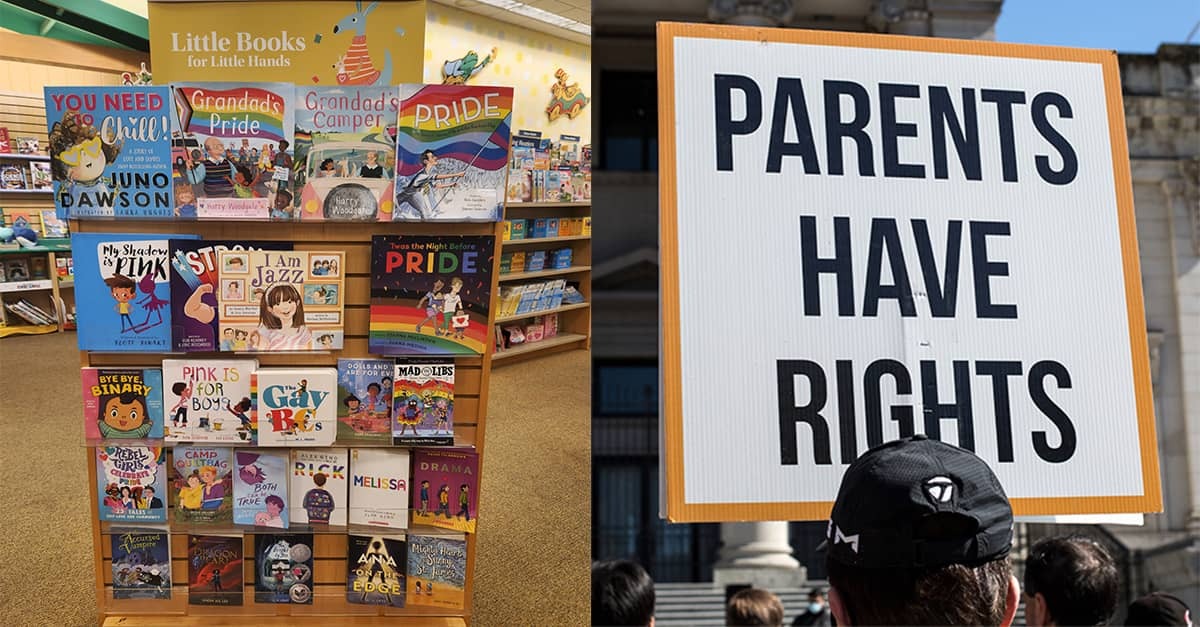
The case of Alan L. v. Lexington Public Schools involved storybooks introducing same-sex romance, pride celebrations, and sexualized themes and images to children just learning to read. The father, a devout Christian, simply wanted to be notified and allowed to opt his child out of such readings so he could raise him according to Christian faith. His request was denied.
Officials at Joseph Estabrook Elementary School said the opt-out request was “overly broad” and would not give advance notice about LGBTQ content. Even after the father made his objections clear, they exposed his child to the books. It took a court case for the father to receive what common sense and school officials should have protected all along: respect for his parental rights and his religious freedom.
Judge Saylor found that the father was likely to win on his First Amendment claim and that the materials posed a “very real threat of undermining” the beliefs he wanted to pass on to his son. He also recognized that what children learn early shapes them deeply and that forced exposure can harm a child’s moral and spiritual growth.
This case did not arise in a vacuum. Its outcome was made possible by the Supreme Court’s June 2025 ruling in Mahmoud v. Taylor, a decision that affirmed that parents have a constitutional right to opt their child out of curriculum that undermines their religious beliefs.
For years, even as courts acknowledged the long history of parental rights, many still deferred to school districts on the grounds that curriculum decisions fell squarely within educational authority. That deference often proved decisive, even when parents raised serious religious liberty objections.
Mahmoud altered that balance. In a 6-3 decision, the U.S. Supreme Court squarely rejected the notion that a school’s control over curriculum automatically overrides parental rights, at least where religious opt-outs are concerned. The Court made clear that when public schools compel students to participate in instruction that substantially interferes with parents’ right to determine their child’s religious formation, the Constitution demands accommodation.
That clarification gave lower courts what they previously lacked: binding precedent on the precise question before them. Judge Saylor’s ruling reflects this shift, and it is likely the first of many cases in which parents prevail because courts are now required to apply Mahmoud’s reasoning.
These decisions by the courts are not radical but wholly consistent with more than 100 years of precedent recognizing parental rights as fundamental. The Supreme Court has repeatedly held that the Constitution gives parents, not the state, the responsibility and authority to direct the upbringing and education of their children.
What Mahmoud and this case make clear is that this protection does not disappear when a child walks into a public school classroom.
For Christians, this resonates at a soul level. Scripture calls parents to train up their children in the way they should go. That is not just symbolic. It is a daily, practical, and personal calling. When the state steps into that role and forces its own views about sexuality and identity on children, it goes well beyond the authority God has given it.
School officials insist that books like Prince & Knight, Maiden & Princess, and You Have a Voice are about “inclusion,” “diversity,” and “kindness,” but they’re really a Trojan horse. They utilize colorful pictures and smiling faces that are intended to indoctrinate children and normalize LGBTQ lifestyles. This Day in June, for example, shows “whimsical” images from pride parades, including leather bondage outfits, drag queens, men dressed as nuns, and public displays of same-sex affection, including kissing. These are not “neutral” messages, especially for kindergarteners.
The concept of irreparable harm, which Judge Saylor mentioned, is important. Once a child sees something that goes against the family’s faith, especially at a young age, it cannot be undone. Parents cannot turn back the clock and protect their child from what has already been shown. The harm is real and lasting. That is why the courts had to act.
Liberty Counsel Founder Mat Staver captured the heart of the issue when he said,
“This ruling reinforces that parents have the right to direct the religious upbringing of their children. Forcing children to be exposed to offensive instruction that is antithetical and hostile to their parents’ religious beliefs is unconstitutional. Parents have the First Amendment right to direct the education and provide for the welfare of their children free from government coercion that conflicts with their faith.”
For Christians, the new school emphasis of pushing sexual content on students puts families in an impossible position: comply with state-mandated messaging or withdraw from public education. That is not a real choice for many families, especially those without the resources for private school or homeschooling.
This is a time for both gratitude and vigilance. We can be thankful that the Supreme Court is still defending religious liberty and parental rights — and that other courts are starting to follow suit.
But parents must also stay alert, because their rights are under threat. Many school officials will insist they are the ones who get to decide all curriculum decisions and many will attempt to intimidate parents by calling them “hateful” or “disruptive.” Others will quietly but firmly refuse to grant an opt-out. The fact that this father had to go through the stress and trouble of a lawsuit, even after the Mahmoud decision, shows how far some institutions have moved from honoring families or adhering to the law.
As such, parents must be extremely vigilant about their child’s education. This includes monitoring curriculum notices, classroom practices, reading materials, and informal discussions, as controversial material is often slipped in through supplemental books or guest lessons. By the time parents find out, the exposure has already occurred. When possible, parents should volunteer in the classroom or drop by unannounced and quietly observe what’s going on.
If parents discover that LGBTQ ideology or sexualized concepts are being normalized or presented in ways that conflict with their faith, they must act quickly and confidently. Mahmoud v. Taylor makes clear that parents have the constitutional right to demand an opt-out when instruction substantially interferes with religious formation. That right is not optional, and it does not depend on whether school officials agree with a family’s beliefs.
Parents should formally request notice and an opt-out in writing. If that request is denied, delayed, or dismissed, they should not accept that answer as final. Legal help is available, and parents should seek it when needed. Organizations such as Alliance Defending Freedom, First Liberty Institute, and Liberty Counsel regularly defend parental and religious rights and often take these cases at no cost to families. These groups exist for moments exactly like this.
Parents are no longer on uncertain legal ground. The Supreme Court has spoken, and lower courts are now following their lead. Parents who stay informed, assert their rights, and are willing to push back when necessary will not only successfully protect their own children but help protect other children by reminding school officials that parents, not the state, are in charge of raising and shaping their children.
If you like this article and other content that helps you apply a biblical worldview to today’s politics and culture, consider making a donation here.