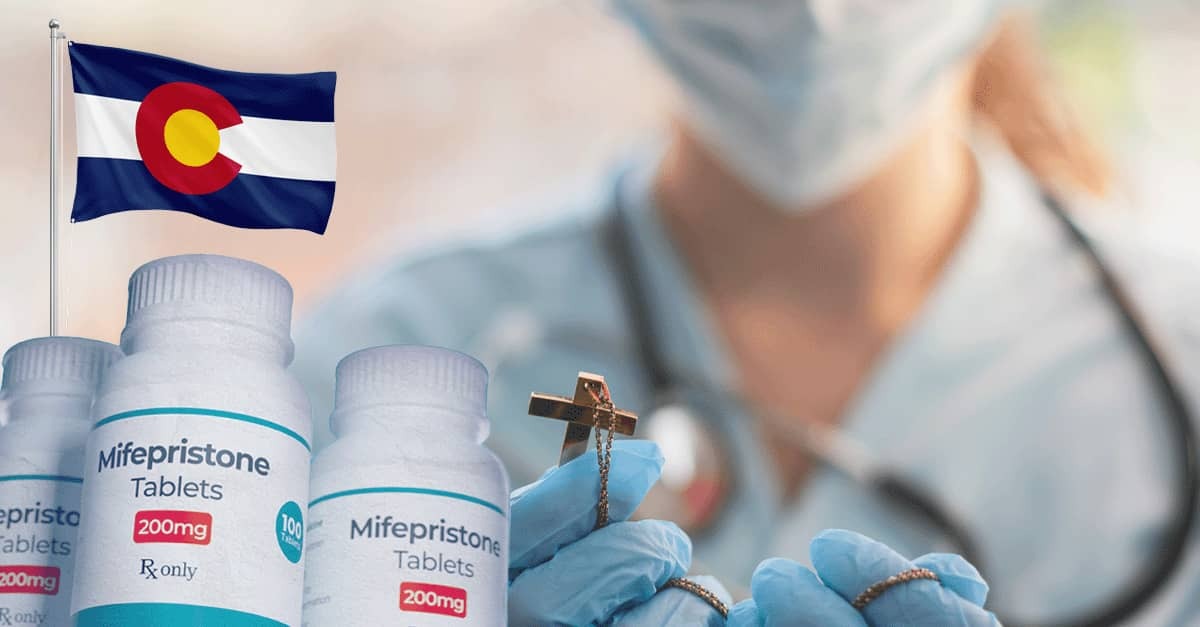
Colorado politicians tried to make it illegal for medical professionals to help women choose life after taking the abortion pill and were not only slapped down by the courts but ended up exposing their own “pro-choice” hypocrisy.
In a major victory for pro-life medical professionals who challenged the state’s attempt to prohibit abortion pill reversal (APR) treatment, Colorado officials have agreed to pay $700,000 in attorneys’ fees to settle a lawsuit brought by nurse practitioner and certified nurse midwife Chelsea Mynyk.
The settlement, finalized as part of Bella Health and Wellness v. Weiser, ends the state’s legal battle with Mynyk, who was represented by Alliance Defending Freedom (ADF) attorneys. It follows an August 2025 ruling that permanently blocked enforcement of a 2023 Colorado law that sought to ban medical professionals from prescribing progesterone to reverse the effects of the abortion pill mifepristone.
ADF Senior Counsel Kevin Theriot praised the outcome, saying the case reaffirmed healthcare providers’ constitutional right to offer life-affirming medical care consistent with their faith.
“Government officials can’t silence medical professionals and prevent them from saving lives,” Theriot said. “Many women regret their chemical abortions, and some choose to reverse the effects of the first abortion drug, which can save their baby’s life. But Colorado’s law wrongly attempted to deny women the freedom to make that choice.”
Colorado passed one of the country’s first laws banning medical professionals from reversing chemical abortions in April 2023. The law, which classifies APR as “deceptive” and “unprofessional conduct,” slapped violators with penalties of up to $20,000 for each incident. A conviction could also result in the revocation of medical licenses.
The lawsuit that ultimately overturned the ban began with Bella Health and Wellness, a Catholic, pro-life healthcare center founded by mother-daughter nurse practitioners Dede Chism and Abby Sinnett.
The pair drew their inspiration from a medical mission trip to the Andes Mountains of Peru, where they cared for villagers in remote regions and felt called to dedicate their work to affirming the dignity of every human life. That experience led them to open Bella Health and Wellness in the Denver area as a life-affirming OB-GYN clinic guided by Catholic principles.
Since its founding, Bella has grown to serve more than 28,000 registered patients, expanding its services beyond women’s healthcare to include men and children. In what is a common and accepted medical practice, the clinic routinely prescribes progesterone for women with low hormone levels or who are at risk of miscarriage.
In line with its pro-life mission, Bella also provides progesterone to women who have taken the first abortion pill but changed their minds and now wish to continue their pregnancies. The APR treatment has saved at least 7,000 babies, and medical professionals report that it has a high likelihood of successfully preserving a pregnancy if administered promptly after mifepristone.
Colorado’s ban directly threatened Bella’s operations. Without legal protection, its providers could have been forced to pay crippling fines or lost their medical licenses if they continued their faith-based mission.
On April 14, 2023, the Becket Fund for Religious Liberty filed suit on behalf of Bella Health and Wellness in federal court, arguing that Colorado’s law violated the clinic’s First Amendment right to the free exercise of religion. The court issued emergency relief, preventing enforcement of the law while the case proceeded.
During an April 24, 2023, hearing, state officials told the court that they would not enforce the ban, claiming they would act “as if the law never existed” while new regulations were developed by state medical, nursing, and pharmacy boards. But in September 2023, those boards doubled down on the restrictions, reaffirming that offering APR would be considered professional misconduct.
Bella again sought court protection, and in October 2023, the district court granted an injunction, ruling that Colorado likely violated the clinic’s religious freedom in multiple ways. Under that protection, Bella and its providers helped numerous women continue their pregnancies, resulting in at least 16 healthy births since the lawsuit started, according to court filings.
After more than a year of discovery, the court found that the state provided no valid medical or safety justification for banning progesterone to reverse the effects of abortion pills while allowing it for other purposes. On August 1, 2025, the district court made its injunction permanent, holding that Bella’s practitioners have the constitutional right to “freely practice their religion” by helping women who choose life for their unborn children.
“This ruling ensures that faith-based healthcare professionals can serve patients according to their conscience and medical judgment,” Becket attorneys said in a statement following the ruling.
While Bella’s victory secured protections for its clinic, Mynyk joined the lawsuit after receiving a February 2024 letter from the Colorado State Board of Nursing. The letter informed her she was under investigation for allegedly violating the Nurse Practice Act by offering APR treatments.
Mynyk said she intervened because she, too, felt religiously obligated to provide care for women who wanted to continue their pregnancies after taking abortion pills. Her involvement helped broaden the case’s reach, guaranteeing that protections reached beyond a single clinic to other pro-life practitioners across the state.
The August 2025 decision effectively shielded all faith-based healthcare providers in Colorado from prosecution under the 2023 ban. The recent $700,000 settlement compensates ADF for its legal work on Mynyk’s behalf.

The Colorado settlement marks one of the most consequential pro-life victories in years because it exposes the growing intolerance of a medical establishment that claims to champion “choice” while criminalizing the choice to save a life. When Colorado banned APR treatments in 2023, it waged an ideological war against women who change their minds and the professionals who try to help them.
APR treatments are based on progesterone therapy, a treatment safely used for decades to prevent miscarriage and support early pregnancy. Yet Colorado singled it out because it disrupts the abortion industry’s narrative that once a woman begins a chemical abortion, she must finish it. That’s coercion.
By permanently blocking enforcement of the ban, the court sent a message that no state can punish doctors and nurses for helping women choose life. The $700,000 settlement will hopefully incentivize other states not to try and go down this misguided path.
Most importantly, this marks a true pro-life win as it will allow pregnancy centers and OB-GYN clinics tell women about APR treatment and save lives as abortion pill usage increases.
The abortion industry has long told America that “choice” means the choice to end a life. The Colorado legal battle shows that women who have taken an abortion pill can still choose life — and exposes the hypocrisy of those who claim to stand for women while denying them the right to change their minds.
If you like this article and other content that helps you apply a biblical worldview to today’s politics and culture, consider making a donation here.