If the Supreme Court rules that presidents cannot use tariffs as an emergency tool against foreign powers, the doctrine of separation of powers will be weaponized against the executive authority’s very purpose: protecting the nation.
On November 5, the nine U.S. Supreme Court justices heard arguments that will determine whether an American president can protect his citizens from economic warfare, or whether he must wait for a Congress that moves at the speed of continental drift while China bleeds us dry.
The case concerns President Donald Trump’s use of tariffs under the International Emergency Economic Powers Act (IEEPA), but make no mistake: The fight over tariffs isn’t just about trade. It’s about survival.
If the Court clips the President’s wings, every nation that’s been feeding on American labor will celebrate. Congress won’t save us. Half of it would rather please global allies than protect American families. This case tests whether we still have the will to defend ourselves.
A Skeptical Supreme Court?
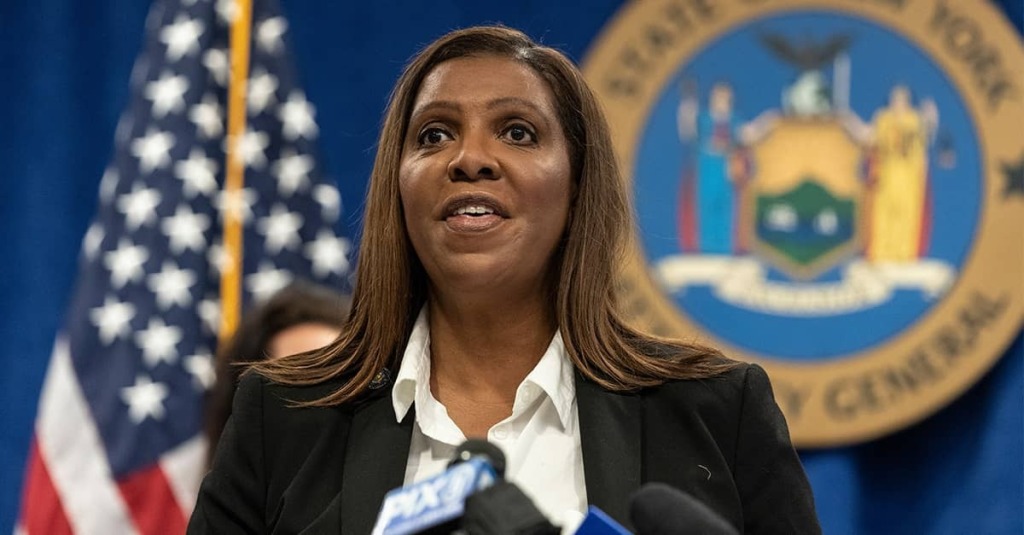
The oral arguments revealed deep skepticism from multiple justices. Chief Justice John Roberts repeatedly called tariffs a “tax,” a characterization that threatens the administration’s case. If tariffs are taxes, and only Congress can impose taxes under Article I of the Constitution, then the president has overstepped.
Justice Neil Gorsuch hammered on the “major questions doctrine,” a constitutional principle that says the President must have clear authorization from Congress before assuming new powers that have a significant economic or political impact. Justice Amy Coney Barrett asked whether the president could really impose tariffs on Spain and France under emergency powers.
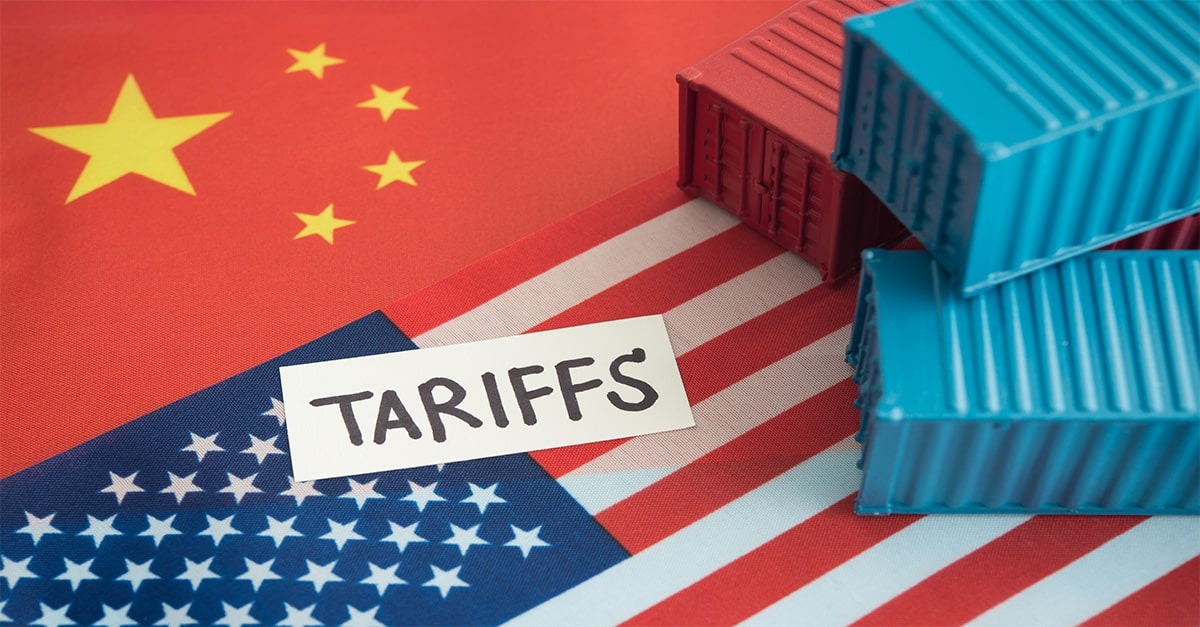
The administration’s argument rests on the word “regulate” in the International Emergency Economic Powers Act (IEEPA). If the president can “regulate” trade during emergencies, he can impose tariffs. Trump invoked IEEPA in February against China, Mexico, and Canada over drug trafficking, then again in April with tariffs ranging from 10 to 50 percent on goods from almost every nation, citing the trade deficit as an “extraordinary and unusual threat.”
Solicitor General John Sauer warned that ruling against Trump would expose America to “ruthless trade retaliation” and “ruinous economic consequences.” The challengers argue that Congress never intended to give presidents blank-check authority to impose taxation without representation.
Roughly $90 billion in tariff revenue already collected could be refunded if the Court rules against the administration. But the real stakes are far higher than money.
The Authority to Protect
Romans 13:4 describes the magistrate as “God’s servant for your good,” a minister who bears the sword as an avenger who carries out God’s wrath on the wrongdoer. Government exists to protect the innocent and punish the guilty. That protection extends beyond military defense to economic wellbeing.
When a president sees the economic destruction of his people unfolding but must wait months or years for Congress to act, he becomes unable to fulfill his most basic duty. The question before the Court isn’t technical. It’s whether we will have leaders who can lead when threats emerge, or whether we will tie their hands and watch our adversaries exploit the paralysis.
China has gutted entire American communities over the last three decades. Millions of jobs were shipped overseas and strategic industries hollowed out, leaving us dependent on hostile powers for essential goods. When the COVID pandemic hit, we couldn’t manufacture our own masks and medicine. This is a national security crisis that has devastated families and communities.
President Trump saw the emergency. He acted. Now the question is whether the Constitution allows such action, or whether it requires him to wait for a Congress incapable of rapid response.
Why Congress Won’t Save You
Congress is broken. Not because its members are all corrupt (though some are) but because the system is designed for deliberation and slow movement. That’s appropriate for many functions. It’s catastrophic when facing adversaries who take advantage of American weakness at lightning speed.
Half of Congress has been captured by globalism, the belief that American workers should sacrifice their livelihoods on the altar of “free trade” and international cooperation. These politicians speak more of obligations to foreign nations than to American families.
Bear in mind that even as the Supreme Court was hearing oral arguments in this case, the minority party in the U.S. Senate had leveraged process and procedure to keep the government shut down for more than a month, a power play that withholds paychecks from air traffic controllers and U.S. military personnel and puts the nation at risk.
Congressional gridlock isn’t a bug when it comes to trade protection, it’s a feature that foreign powers can and will weaponize. China doesn’t wait for its legislature to debate for months. Neither does Russia. And neither should we — if we plan to survive as a sovereign nation.
The Signal to Our Enemies
If the justices rule that the American president is powerless to respond quickly to economic threats, watch what happens. Beijing accelerates. Moscow capitalizes. They know any aggressive move will be met not with decisive action but with Congressional hand-wringing and eventual inaction.
Russia invaded Ukraine knowing Western response would be hamstrung. China militarizes the South China Sea knowing international institutions are toothless. A Supreme Court ruling that even our own president (and all future ones) cannot act swiftly will be interpreted worldwide as another sign of American decline.
This matters to Christians because economic devastation fractures families, and fractured families produce children vulnerable to every false gospel the culture offers.
The Wisdom of Decisive Leadership
“The prudent sees danger and hides himself, but the simple go on and suffer for it” (Proverbs 22:3). A leader who sees economic warfare and cannot act is not exercising prudence. He’s been paralyzed by a system that values process over protection.
The biblical pattern for leadership involves decisive action in crisis. Moses didn’t call a committee meeting when Pharaoh’s army pursued Israel. David didn’t wait for strategic planning when facing Goliath. Nehemiah didn’t petition Persian bureaucracy for impact studies before rebuilding Jerusalem’s walls. They acted.
Justice Brett Kavanaugh exposed the absurdity of the challengers’ position, “Does it make sense to give the president power to completely block trade with embargoes, but not the power to impose a 1 percent tariff? The greater power includes the lesser. If the president can shut down trade entirely in an emergency, he can regulate it with tariffs.”
The challengers would grant the president authority for the most extreme action while denying him moderate steps to address the same emergency. It makes sense only if your goal is ensuring the president cannot protect American interests at all.
What This Means for Americans
If the Supreme Court rules against Trump, the government may have to refund $90 billion in tariff revenue. That money goes to businesses, not consumers. Small businesses will be at a disadvantage compared to large corporations with teams of lawyers.
Future presidents will be hamstrung. Any attempt to protect American workers will require congressional approval, which means it will either never happen or be watered down into meaninglessness.
China, Russia, and other adversaries will know they have a free hand. They can steal intellectual property, dump products to destroy American industries, manipulate currency, and prey on American workers, knowing the president cannot respond immediately. And that’s not just President Trump but all presidents.
The doctrine of separation of powers will be weaponized against executive authority’s very purpose: protecting the nation. Yes, Congress has the power to tax. But the President has the duty to protect. When those principles collide in a genuine emergency, who should prevail?
The Church Must Speak
Christians must understand: This isn’t about trade policy or constitutional interpretation. It’s about whether America retains the capacity for self-defense in a world where economic warfare has become as consequential as military conflict.
The same progressive forces that have undermined religious liberty, attacked the family, promoted sexual confusion, and celebrated the killing of the unborn are now arguing the President should be powerless to protect American workers from foreign aggression. This is not coincidental. It’s the same ideology that says America is not good, American workers don’t deserve protection, and our leaders should be constrained from acting in the national interest.
For decades, Christians have been told to stay in our lane, to focus on “spiritual matters” and leave economics to the experts. Those experts have produced three decades of devastation. They’ve enriched themselves while Rust Belt towns became graveyards of American industry.
The Gospel calls us to care about justice, about the strong exploiting the weak, about the foreigner taking advantage of the vulnerable (Jeremiah 22:3). When foreign powers plunder American workers, when our government cannot defend its people, the Church cannot remain silent.
The Test Before Us
The Supreme Court will issue its ruling in the coming months. Some analysts believe the decision could be fractured, potentially producing an effective win for the administration despite a divided court.
But the legal outcome is secondary to the spiritual question: Do we still have the civilizational will to protect ourselves? Or have we become so committed to processes and procedures that we’ve forgotten government’s first duty is protecting its people?
Those who want a neutered executive branch in trade policy want a neutered church in the public square. They want pastors too timid to speak prophetically, fathers too passive to protect their families, and a faith domesticated into irrelevance.
Wake up. The fight over tariffs is ultimately about whether we believe our leaders should lead, our protectors should protect, and our nation should survive. Those who would render the President impotent to defend American workers are the same people who would render the Church impotent to defend biblical truth.
The Supreme Court may decide the legal question. But the Church must decide whether America is worth defending, whether the Gospel speaks to how nations protect their people, and whether we will speak truth or retreat into comfortable irrelevance.
Christians must stand for freedom, stand for the authority of leaders to lead. When the institutions designed to protect us are paralyzed by process, judgment falls on us all.
If you like this article and other content that helps you apply a biblical worldview to today’s politics and culture, consider making a donation here.