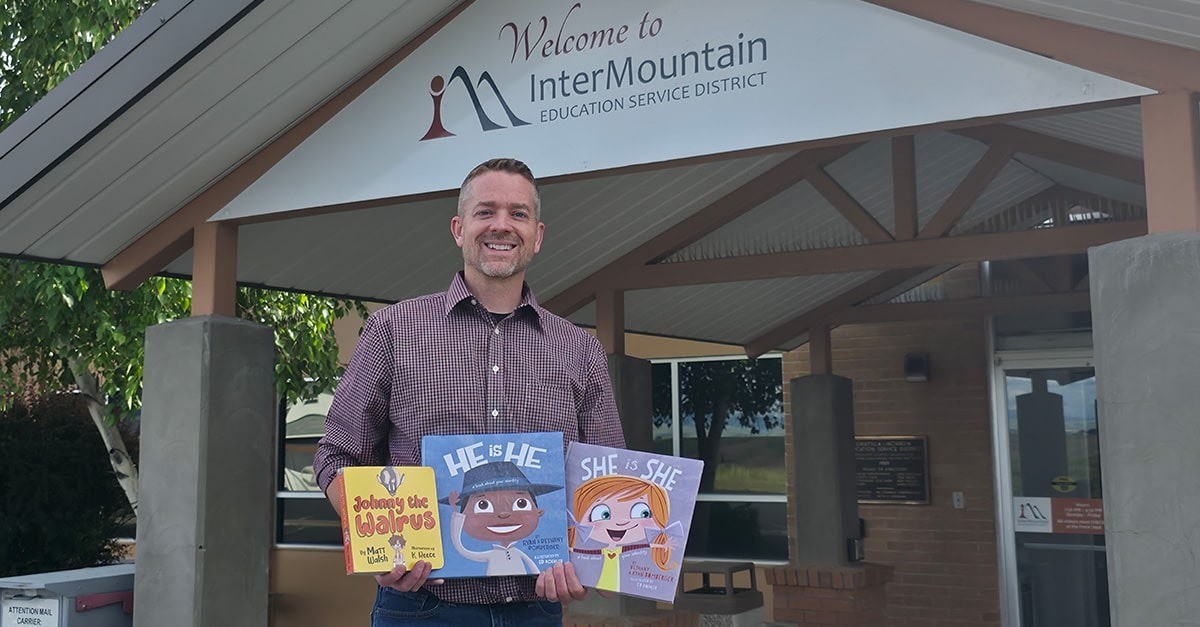
In a case testing the Supreme Court’s ruling in Kennedy v. Bremerton, a Christian social worker has asked the Ninth Circuit to uphold his right to free expression — a right fully granted to school employees who share the state’s secular views.
Alliance Defending Freedom (ADF) has appealed the case of licensed clinical social worker Rod Theis to the U.S. Court of Appeals for the Ninth Circuit, arguing that an Oregon school engaged in discrimination and violated his right to express his beliefs like other staffers.
Theis has worked with the InterMountain Service District in Oregon for 17 years. Theis is an education specialist, a position that requires him to travel to the 17 school districts that InterMountain serves. He administers standardized tests to students and evaluates their academic level and behavioral assessments to determine their needs.
The schools Theis works in provide him an office to perform the assessments, where his only interaction with students is administering the tests. His office is marked with a sign which reads “Staff Only”.
InterMountain permits teachers and staff to decorate their offices with pictures, posters, books, and other items that express their personal interests and beliefs. InterMountain does not require employees to receive permission before decorating their offices.
Other staff have decorated their offices with items expressing polarizing views on political and moral topics, including posters promoting LGBTQ views, pro-union sentiments, Black Lives Matter posters, and views on immigration policy.
Many staff also decorate their offices with toys, children’s books, and other items to make their offices feel welcoming to students.
Theis decided to decorate one of his offices with a children’s book entitled “Johnny the Walrus” and another office with two children’s books called, “He is He” and “She is She”.
The books express Theis’s belief that God creates people as male or female and celebrate living the way God made them.
For two years, Theis displayed “Johnny the Walrus” without any incident. The book tells the story of a boy who goes through a phase of wanting to look and act like a walrus but eventually grows out of it.
It wasn’t until Theis decorated his office with “He is He” and “She is She” that a teacher complained to leadership that his books were offensive. No parent or student ever complained about any of the books.
School leadership interrogated Theis about the books and about his religious beliefs. InterMountain then told Theis that he was no longer allowed to display the books and banned him from expressing a “binary view of gender,” threatening to fire him if he failed to self-censor.
Theis thereafter filed a lawsuit, claiming that the district was engaging in viewpoint discrimination and violating his First Amendment right to free expression.
A district court ruled that the case must be evaluated under the Supreme Court’s 2022 decision in Kennedy v. Bremerton School District. In that case, the Supreme Court ruled that Bremerton School District had violated football coach Joe Kennedy’s First Amendment rights by barring him from praying at midfield after football games.
Bremerton had argued that by praying in view of the public and students, Kennedy’s prayers could be seen as government speech and an endorsement of his religion by the school district.
The Supreme Court, however, found that government employees do not shed all right to free expression simply by being on school grounds. The Court ruled that the government can only limit a person’s freedom of expression if it is in the performance of an employee’s specific job duties.
The Supreme Court justices ruled that simply because a student may see a teacher or coach engaging in religious expression does not mean that action is an unconstitutional government endorsement of that speech.
In Theis’s case, the district court agreed that Theis’s display of the books was not government speech but still sided with InterMountain, ruling that Theis’s speech shifted to government speech if a student saw the books.
ADF has now appealed Theis’s case to the U.S. Court of Appeals for the Ninth Circuit, arguing that the district court’s ruling in InterMountain’s favor misses the entire point of the Supreme Court’s ruling in Kennedy.
In that case, the justices wrote that under this reasoning schools would feel required to
“order [teachers] not to engage in any ‘demonstrative’ conduct of a religious nature’ within view of students, even to the point of being forbidden from folding their hands or bowing their heads in prayer before lunch.
Such a rule would be a sure sign that [the Court’s] Establishment Clause jurisprudence had gone off the rails…Not only could schools fire teachers for praying quietly over their lunch, for wearing a yarmulke to school, or for offering a midday prayer during a break before practice,” but “[u]nder the [d]istrict’s rule, a school would be required to do so.”
ADF also argues that InterMountain has engaged in viewpoint discrimination against Theis’s religious beliefs, which should trigger strict scrutiny, the highest level of judicial review.
In addition to allowing other staff to express their viewpoints, including on the topic of gender, the school makes available books to students that discuss pro-LGBT views, suicide, drug and alcohol use, and sexually explicit and violent content. One book displayed features two boys kissing on the cover. Some of these books have resulted in parental complaints, yet they are still on display.
While InterMountain allows these books, it bans Theis’s, which he has only ever discussed with one student who asked him about the book outside of Theis’s job duties and has never resulted in a student or parent complaint.
ADF argues that InterMountain is not only censoring Theis’s personal expression, but it is doing so out of animus towards his personal views, which deviate from the district’s own preferred beliefs on gender.
“This case isn’t about books; it’s about public officials telling an employee that he isn’t allowed to express a view that differs from their own,” said ADF Senior Counsel Tyson Langhofer, who is also director of the ADF Center for Academic Freedom.
“Our legal system is built on the truth that the government can’t silence a speaker just because it disapproves of what he says. In the same way, InterMountain can’t censor Rod’s freedom of expression by forcing him to remove children’s book covers used as decoration in his office. We are urging the court to protect his First Amendment freedom to express his views just as other teachers at the school are allowed to do.”
Theis makes clear he has no animosity towards those who identify as transgender.
“I want every student I work with to experience kindness, dignity, and respect during their time with me,” he said. “This is an important aspect of what I do in the educational environment. Government officials are wrong to tell me I can’t express my sincere religious beliefs about male and female. Every American, including my coworkers, has the same freedom to express their own views on the subject.”

This case should have been a slam dunk for Theis. The district court got right up to the finish line, recognizing the precedent set in Kennedy, but then dropped the ball when it came to applying the Supreme Court’s reasoning in that and other recent religious liberty rulings.
A student simply seeing a school staffer’s personal expression does not make that expression impermissible government speech.
The civil rights violation becomes even clearer when factoring in InterMountain’s viewpoint discrimination. According to the suit, InterMountain’s only defense for allowing scores of left-leaning personal expressions while censoring Theis was that it was “unaware” of other staff expressing views on gender identity.
That is exceedingly hard to believe, but even if it were somehow true, it would not excuse the discrimination.
The reality is this: If these allegations are true, InterMountain is purposefully seeking to silence Theis’s views because it doesn’t like them, while allowing other staff to engage in all manner of ideological and political expression it does agree with.
That is blatantly unconstitutional.
The Ninth Circuit must take up this case, accurately apply the Supreme Court’s precedent in Kennedy, and reaffirm the right of school employees to express their beliefs — even if the school doesn’t agree with those beliefs.
If you like this article and other content that helps you apply a biblical worldview to today’s politics and culture, consider making a donation here.