While claiming to know the doctrinal beliefs of all the world’s major religions, the AAP won’t acknowledge that the decreasing vaccination rate is also due to declining public trust in medical institutions that push political propaganda and dismiss patient concerns.
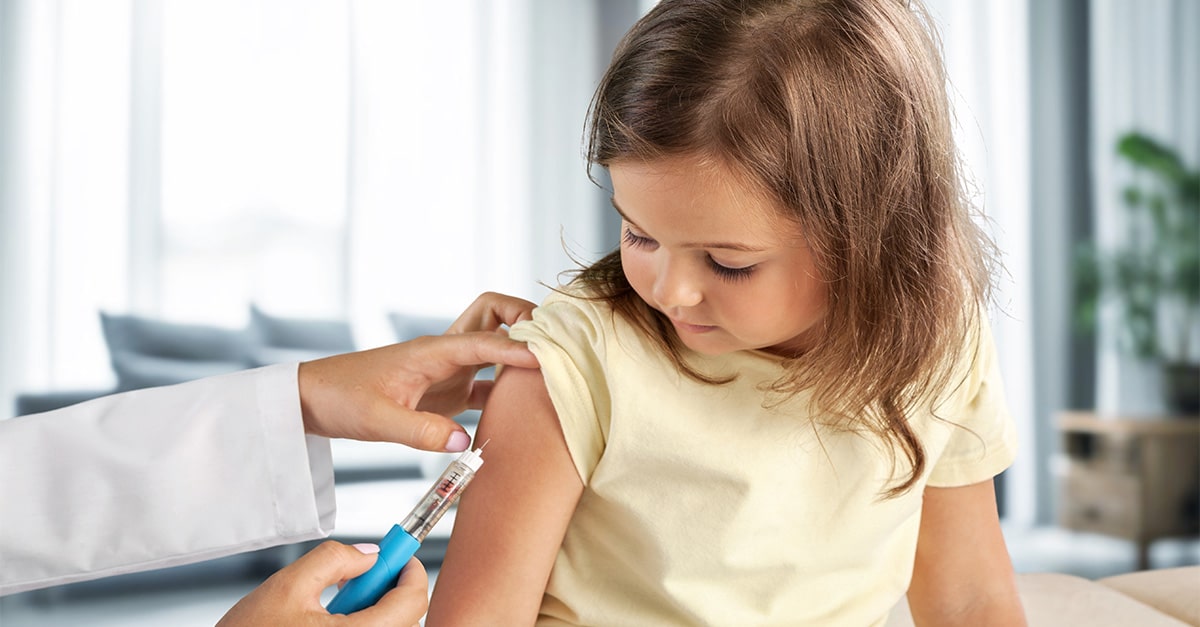
The American Academy of Pediatrics (AAP) has released a policy statement calling for states to ban all non-medical exemptions to vaccinations, including religious exemptions, for children attending school or childcare. The organization cites concerns over disease outbreaks for its new position.
“Childhood immunization is one of the greatest accomplishments of modern medicine,” the AAP wrote. “In the United States, for children born from 1994–2003, data analysis and modeling suggest that routine childhood immunization will have prevented approximately 500 million cases of illness, 32 million hospitalizations, and 1.1 million deaths, eventually saving $540 billion in direct costs and $2.7 trillion in societal costs.”
The AAP stated that because some individuals, such as infants or those with medical complications, may be unable to receive vaccines or develop sufficient immunity, everyone else must be vaccinated to keep disease outbreaks at bay.
“These individuals benefit from the effectiveness of immunizations through high rates of vaccination in their community,” it wrote. “When nearly all individuals for whom a vaccine is not contraindicated have been appropriately immunized, the risk of illness or spread of a contagious vaccine-preventable infectious agent to those who do not have the direct benefit of immunization is minimized.”
The AAP claims that health professionals believe it is necessary for 90 percent of a population to be vaccinated to achieve “community vaccination coverage,” which is known colloquially as “herd immunity.” For some diseases, a 95 percent vaccination rate is required.
Because of this, the AAP argues, nonmedical exemptions to vaccination requirements should be eliminated.
AAP contends that certain temporary medical exemptions to vaccination mandates are permissible because only a small percentage of children have medical conditions that would preclude them from taking vaccines.
According to the AAP, 45 states have laws permitting religious exemptions to vaccine requirements, while 15 states have laws allowing for “personal beliefs,” “philosophical,” or “conscientious objection” exemptions.
The AAP entered into theological territory by asserting: “Among the major world religious traditions, none include scriptural or doctrinal guidelines that preclude adherents from being vaccinated.”
AAP asserts that religious objections to vaccination “developed independently of the major world religions” and may have developed in small communities.
“Just as with other types of doctrines, those related to vaccines might even be developed by small communities or individuals in ways that are completely independent from antecedent scriptural or doctrinal traditions but are, nonetheless, thought of as ‘religious’ commitments by those who hold them,” AAP wrote.
In practice, AAP writes that “nonmedical exceptions based on religious belief can substantially limit the public health value of vaccine requirements for school attendance. There is no practicable way for schools or other involved community partners to distinguish fairly among religious or other nonmedical claims. State-level policies that differentiate among these types of claims serve only to introduce opportunities for uneven application, which in turn leads inevitably to disparities in immunization coverage and schools that are less safe.”
AAP claims that there is a higher rate of outbreak of diseases among communities in which there are higher rates of exemption, stating that this creates a greater risk for those communities and for other communities also.
AAP notes a declining vaccination rate in the U.S. and an alleged increase in nonmedical exemptions.
The rate of vaccination has declined since the outbreak of COVID-19. In the 2019-2020 school year, data provided by the Centers for Disease Control and Prevention (CDC) showed that 95 percent of kindergarteners were vaccinated for measles, mumps, and rubella (MMR); diphtheria, tetanus, and acellular pertussis (DTaP); poliovirus; and varicella.
That rate has declined since then, with under 93 percent of incoming schoolchildren having been fully vaccinated in the 2023-2024 school year.
Exemptions rose to 3.3 percent of students, with non-medical exemptions accounting for 93 percent of those exemptions.
According to the Center for Infectious Disease Research and Policy (CIDRAP) at the University of Minnesota, the higher rate of exemptions may be the cause of the measles outbreak in the U.S. this year. They claim that of the 1,319 confirmed cases of measles this year, 92 percent have been in people, mainly children, who are unvaccinated or whose vaccination status is unknown.
As such, the AAP supports the elimination of all non-medical exemptions to vaccine requirements in order for children to attend school.
Dr. Jesse Hackell, lead author of the policy position, stated, “We recommend that vaccination is required for participation in certain public activities, such as school and daycare, and if you choose not to vaccinate, you’re essentially choosing to exclude yourself from those settings.”
Civil rights attorney Sujata Gibson argued that the AAP’s position ignores the Supreme Court’s recent ruling in Mahmoud v. Taylor.
“The Court reaffirmed that parents have a fundamental right to raise their children according to their religious beliefs, and any government policy infringing on this right faces strict scrutiny — the highest legal standard. Blanket bans on religious exemptions, as the AAP proposes, fail this test,” she stated.
“Forcing families to choose between their faith and their children’s education is unnecessary. Forty-five states already balance public health with religious accommodations, proving it’s possible to protect both. States can no longer rely on vague claims of ‘public health’ to justify mandatory medical interventions. Under strict scrutiny, they must provide concrete evidence — something the AAP’s proposal lacks. The Supreme Court’s message is clear: a child’s access to public education cannot be conditioned on a family violating their deeply held religious convictions.”

The AAP, which seems to think it is qualified to make blanket statements about the doctrines of all of the world’s major religions, is clearly laying the blame for falling vaccine rates at the feet of those with sincere religious beliefs, which it believes are illegitimate or insincere.
What the AAP neglects to mention in its statement is that falling vaccination rates are the result of numerous factors, many of which are the direct consequence of the lack of trust Americans increasingly have in their medical institutions.
The same CDC researchers who collected the data on the decreasing number of kindergarteners being vaccinated issued a theory on the reason behind it.
“These results could indicate changes in attitudes toward routine vaccination transferring from hesitancy about COVID-19 vaccination, or toward any vaccine requirements arising from objections to COVID-19 vaccine mandates, as well as a potential for larger decreases in coverage or increases in exemptions,” they stated.
Bingo.
Why would vaccination rates start dropping after 2020? Because America’s government and medical institutions rushed a fraudulent and dangerous vaccine that not only didn’t work but caused severe harm or even death to tens of thousands of Americans.
They not only lied and claimed the vaccine was completely safe and effective but protected pharmaceutical companies behind emergency authorization privileges that disincentivized the companies to take proper safety measures.
Those companies cannot be held accountable for the suffering they caused.
Many Americans were subjected to mandates that forced them to be vaccinated just to work or return to school, and those that refused were shamed and bullied.
And America’s once revered medical associations like the AAP pushed for all of that.
But the lack of trust goes far beyond vaccines. Institutional trust is at an all-time low because of a pattern of behavior that shows America’s medical associations aren’t qualified to make policy recommendations for Americans nor do they have the public’s best interest at heart.
Take the AAP, for example. The country’s leading association for doctors caring for children vociferously champions the supposed necessity of gender drugs and surgeries in children. Despite the ever-growing troves of evidence that these so-called “gender transitions” inflict substantial and irreparable harms while offering no discernible benefit, AAP has nonetheless repeatedly doubled-down on its support for prescribing off-label drugs and mutilating surgeries to confused, mentally ill, and traumatized children.
Dr. Hillary Cass, who performed the U.K. National Health Service’s systemic review finding no benefit to gender transitions, said that it is the AAP’s political leanings that explain its refusal to follow the evidence.
She said that AAP is “misleading the public” and is a “fairly left-leaning organization” that is “fearful of making any moves that might jeopardize trans health care right now,” speculating that they are feeling “political duress” to simply go along with whatever the transgender movement demands.
Doctors aren’t supposed to make medical decisions based on political beliefs or to win favor with the pharmaceutical industry. A refusal to follow the evidence due to ideological or monetary interests has led Americans to believe that our medical institutions can’t be trusted.
This article isn’t seeking to adjudicate doctrinal beliefs about vaccines or whether falling vaccination rates are positive or negative. Certainly Christians and conservatives have differing views on vaccines. But people of various beliefs have concerns about the safety and efficacy of all vaccines, and many have religious or moral concerns regarding the use of aborted fetal cell lines allegedly used in the development of vaccines.
All of that falls squarely at the feet of America’s medical institutions and vaccine manufacturers.
Getting people to trust vaccines again will take time, transparency, and proof that the vaccinations are safe, effective, and ethical. Doctors and the medical associations that represent them must also be willing to have open, honest discussions with patients and parents about the potential side effects of vaccines, not bury them under layers of propaganda.
In other words, the American Academy of Pediatrics needs to quit playing politics and get back to its core mission — honestly caring for the health and well-being of children and supporting parents as they make decisions on what they deem best for their children.
If you like this article and other content that helps you apply a biblical worldview to today’s politics and culture, consider making a donation here.