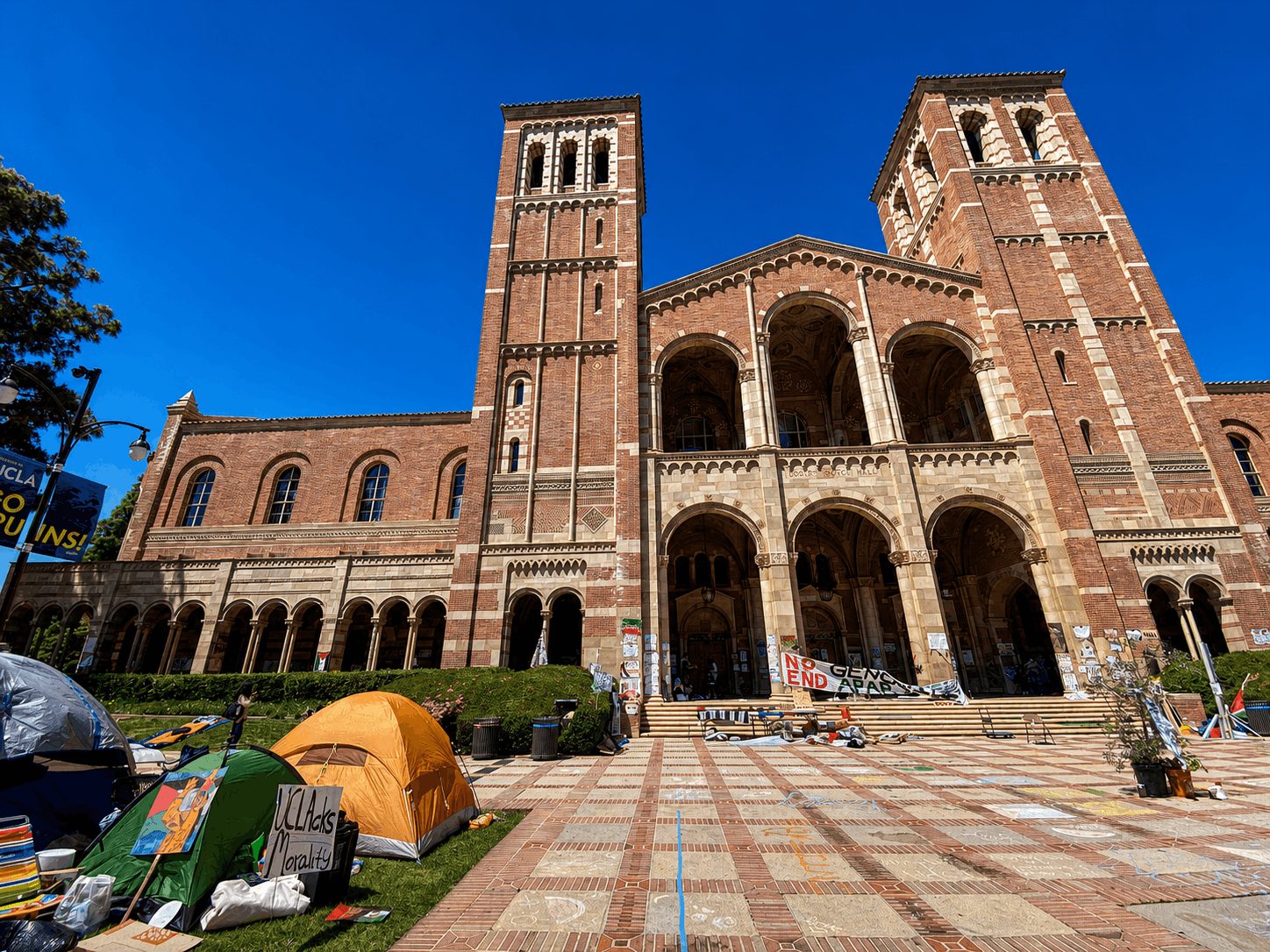
College campuses have become flashpoints for antisemitic harassment, revolutionary activism, and serious questions about free speech. America must protect Jewish students without handing bureaucrats a blank check to police controversial ideas, biblical truth, or protected expression.
The Point
Antisemitism is evil. Censorship is not the cure. A constitutional republic must protect Jewish students from unlawful threats, harassment, exclusion, and violence while preserving the freedom to speak, debate, and proclaim the truth.
Update (May 31, 2026): The Antisemitism Awareness Act discussed below passed the House in May 2024 but did not become law; a new version, H.R. 1007, was introduced in February 2025. President Trump’s administration has since moved through executive action and civil-rights enforcement. Executive Order 14188 directed federal agencies to use appropriate legal tools against unlawful antisemitic harassment and violence. In May 2026, the Justice Department announced a 15-city National Awareness & Action Tour and a new Anti-Semitism Advisory Committee. DOJ also filed lawsuits alleging civil-rights violations against Harvard University and the University of California over the treatment of Jewish and Israeli students. The enduring question is whether government can protect students and enforce the law without treating protected speech as unlawful conduct.
Orginal: It’s getting old. The protests across America’s college campuses continue. In-person classes and commencement ceremonies have been cancelled. Parents are demanding refunds. Donors are rescinding contributions. American higher education is now plagued with formerly elite academic institutions that have witnessed the vilest expressions of hatred towards the Jewish people. Civility and integrity are no longer regarded, and antisemitism still doesn’t seem to be slowing down.
But can antisemitism be confronted without actually addressing its antecedent root cause? Last week, the U.S. House of Representatives passed the Antisemitism Awareness Act, sponsored by New York Republican Michael Lawler, to cement the definition of antisemitism currently used by government agencies, including the Department of Education, to enforce civil rights protections under Title VI. It overwhelmingly passed, 320-91, with over 70 Democrats and just 21 Republicans voting against it. Moreover, the bill itself is similar to language used in an executive order issued by former President Donald Trump in 2019.
So why was this not a slam dunk, and why are some conservatives divided over the bill? There is no doubt that antisemitism is evil and it must be rejected by all. Full stop. But not just any form of legislation, no matter how popular, expedient, or fashionable, is adequate to address antisemitism and its Marxist purveyors on college campuses.
Any bill of this nature must simultaneously, carefully safeguard freedom of speech, conscience, and assembly from the very authoritarians who would misuse and abuse it when given the chance.
By now, I don’t have to tell you that conservatives are divided on this bill because this bill doesn’t add much clarity but instead gives more discretionary power to bureaucrats.
Lest we forget, America has a history of legislative victories in moments of crisis that later turned out to be real defeats for constitutional freedom and civil liberty. The Patriot Act, which was originally designed to only counter terrorism, was a perfect example of this.
Conservatives should be able to say two things without hesitation: Antisemitism is evil, and the First Amendment still matters. Jewish students deserve protection from threats, harassment, exclusion, and violence. At the same time, no bureaucrat should be handed a blank check to treat protected speech as unlawful merely because it is offensive or controversial.
The problem arises if, and when, any overzealous federal bureaucrat utilizes such a bill to punish or censor conservatives, Christians, or even historic principles that are by no means antisemitic, nor are they the intended culprit of the legislation.
Now, you might ask, could such a thing happen? Is this bill actually going to do that, or is it going to stop what we’re seeing on campus?
According to Jewish conservative Ben Shapiro and other notable conservative thought leaders, the bill fails to provide clarity on two main premises.
First, it relies on a borrowed definition of antisemitism from the IHRA, or the International Holocaust Remembrance Alliance. You might ask, “Well, what’s the problem with that?” The definition itself is not contained within the House bill and it was first introduced as a non-legally binding, working definition of antisemitism. And here’s what it says:
“Antisemitism is a certain perception of Jews which may be expressed as hatred towards Jews; rhetorical and physical manifestations of antisemitism are directed towards Jewish or non-Jewish individuals…”
Now is that clear to you? The definition here is broad and imprecise. It even includes non-Jewish individuals. How, and what does that even mean?
The second, more contested piece of the legislation is that while it relies on the IHRA working definition of antisemitism, it also includes specifically cited examples like “Using the symbols and images associated with classic antisemitism (e.g., claims of Jews killing Jesus or blood libel) to characterize Israel or Israelis.”
No doubt, as we have seen some use the phrase “Christ is King” as an antisemitic slur, we immediately recognize the truth claim above all should never be surrendered, not even for contemporary culture nor a political moment. While some might abuse Christian language, truth claims, and symbols as racial and ethnic slurs, there can be no confusion that Christian orthodoxy and biblical doctrine must never, ever be co-opted or surrendered.
And do not take that as my opinion alone. Many Jewish conservatives have already argued that that’s exactly what this bill makes possible in the hands of an overly aggressive, authoritarian, administrative state.
So how should Christians respond? Colossians 2:8, NIV, says, “See to it that no one takes you captive through the hollow and deceptive philosophy, which depends on human tradition and the elemental spiritual forces of this world rather than on Christ.”
Antisemitism is evil. Period. Full stop. Yes, we must confront it. We also must not be naïve about the antecedent of antisemitism today.
Christians should examine the ideologies animating campus activism with care. Revolutionary rhetoric, hostility toward Israel, and contempt for Western institutions often overlap, but precision matters: not every protester is an antisemite, and criticism of Israeli policy is not automatically antisemitic. The line is crossed when activism becomes unlawful harassment, intimidation, exclusion, or violence.
While we do need a more precise legal definition of antisemitism, we must also recognize the troubling observations that many conservatives have made about this bill. We must also be mindful that the Gospel of Jesus Christ is for the Jew first and also the Gentile, and when sharing the Gospel we must risk offending our neighbors – even our Jewish neighbors whom we dearly love.
The answer is not silence, and it is not censorship – it is moral clarity under the rule of law: protect Jewish students. Punish unlawful conduct. Preserve free speech. And refuse to surrender biblical truth to either mobs or bureaucrats.
Your education should prepare you for more than a career – it should prepare you to stand for truth when the culture demands silence. At Liberty University, you’ll grow in wisdom, courage, and purpose through a fully accredited Christian education designed to help you lead with conviction wherever God calls you. Become a Champion for Christ. Apply today.
When hatred enters the quad and truth is pressured into silence, courage must step forward. Make your tax-deductible gift today to help the Standing for Freedom Center defend biblical truth, religious liberty, and the freedom to speak without fear.